Get your free personalized podcast brief
We scan new podcasts and send you the top 5 insights daily.
In the crowded Inflammatory Bowel Disease (IBD) market, most drugs focus on immune suppression. MRM Health’s lead asset differentiates itself with a novel mechanism of action. It aims to restore the microbiome and heal the gut's epithelial lining, addressing the root cause of inflammation rather than just managing symptoms.

Related Insights
Unlike traditional approaches, Immunethep's vaccine doesn't kill bacteria. Instead, it neutralizes a virulence mechanism bacteria use to shut down the immune system. This restores the body's natural ability to fight infection, a novel strategy analogous to checkpoint inhibitors in oncology.
![Solving Antimicrobial Resistance, Vaccines, Antibiotics | Immunethep 🇵🇹 | E55 [Sponsored] thumbnail](https://d3t3ozftmdmh3i.cloudfront.net/staging/podcast_uploaded_episode/38602414/38602414-1775472100828-2b361bd18cd64.jpg)
To enter the competitive ulcerative colitis market, MRM Health is positioning its drug in an underserved population: mild-to-moderate UC patients who have failed conventional treatments but are hesitant to move to aggressive, immunosuppressive advanced therapies. This creates a valuable intermediate step-up option for physicians and patients.
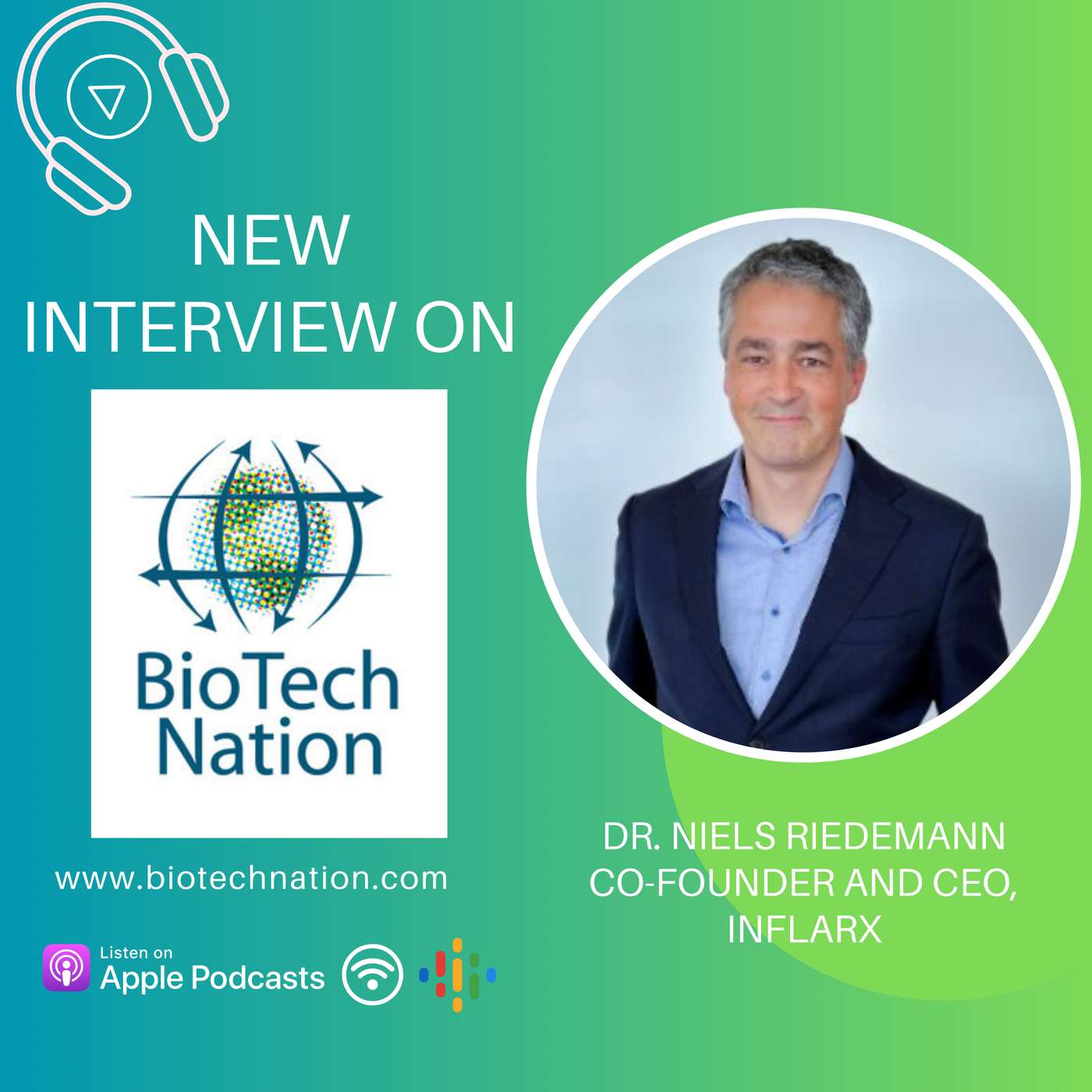
InflaRx's strategy targets the C5a pathway, implicated in many inflammatory conditions. By focusing on this single mechanism, their drug could potentially treat a wide range of diseases, from skin conditions to kidney disease, effectively creating a valuable "pipeline in a drug."
Crohn's disease is a higher bar for drug approval than ulcerative colitis, often due to fibrotic strictures. Abivax has presented preclinical data suggesting its drug has anti-fibrotic properties. This is a key differentiator, as therapies that fail in Crohn's often lack this effect, providing a mechanistic rationale for potential success.

The drug's mechanism avoids maximum suppression, instead aiming for a precise balance—"not too much, not too little." This "Goldilocks" approach to intercepting BAF and APRIL cytokines is key to resolving inflammation and stabilizing kidney function without causing excessive immunosuppression, a critical differentiator in autoimmune therapies.

The company's strategy for its IL-23 inhibitor isn't just a single drug approval. They follow an established industry model where one successful drug becomes a pipeline for multiple related inflammatory indications like psoriasis, Crohn's, and ulcerative colitis, dramatically expanding its market potential over time.
Despite many approved drugs for Inflammatory Bowel Disease (IBD), single-mechanism therapies consistently fail to get more than 30% of patients into remission. This recognized "therapeutic ceiling" exists because IBD is a multi-faceted disease. The next breakthrough requires attacking multiple biological pathways simultaneously with combination drugs to achieve significantly higher efficacy.

Despite significant progress in managing symptoms for autoimmune conditions, very few treatments fundamentally alter the disease's course. The major unmet needs and investment opportunities lie in therapies that can induce remission or target common underlying pathologies like fibrosis, moving beyond mere symptom relief.

Aphaia's approach to metabolic disorders isn't hormone replacement. They use a targeted glucose formulation to "wake up" dormant sensing cells in the lower small intestine. This restores the body's natural ability to produce hundreds of regulatory hormones, fixing the root cause rather than just treating symptoms with high-dose injections.

The TL1A biological target is attracting massive investments, not just for its promise in IBD, but for its potential across numerous inflammatory conditions. With data expected in up to seven different diseases, investors see a Humira-like opportunity to develop a single molecule into a multi-billion dollar franchise, justifying huge valuations and deals.