Get your free personalized podcast brief
We scan new podcasts and send you the top 5 insights daily.
The tension between left and right political ideologies is not a flaw but a feature, analogous to a "swarm of AIs" with competing interests. This dynamic creates a natural balance and equilibrium, preventing any single, potentially destructive ideology from going "off the rails" and dominating society completely.

Related Insights
The rare agreement between libertarian billionaire Elon Musk and socialist senator Bernie Sanders on AI's threat to jobs is a significant indicator. This consensus from the political fringe suggests the issue's gravity is being underestimated by mainstream policymakers and is a sign of a profound, undeniable shift.

Influencers from opposite ends of the political spectrum are finding common ground in their warnings about AI's potential to destroy jobs and creative fields. This unusual consensus suggests AI is becoming a powerful, non-traditional wedge issue that could reshape political alliances and public discourse.

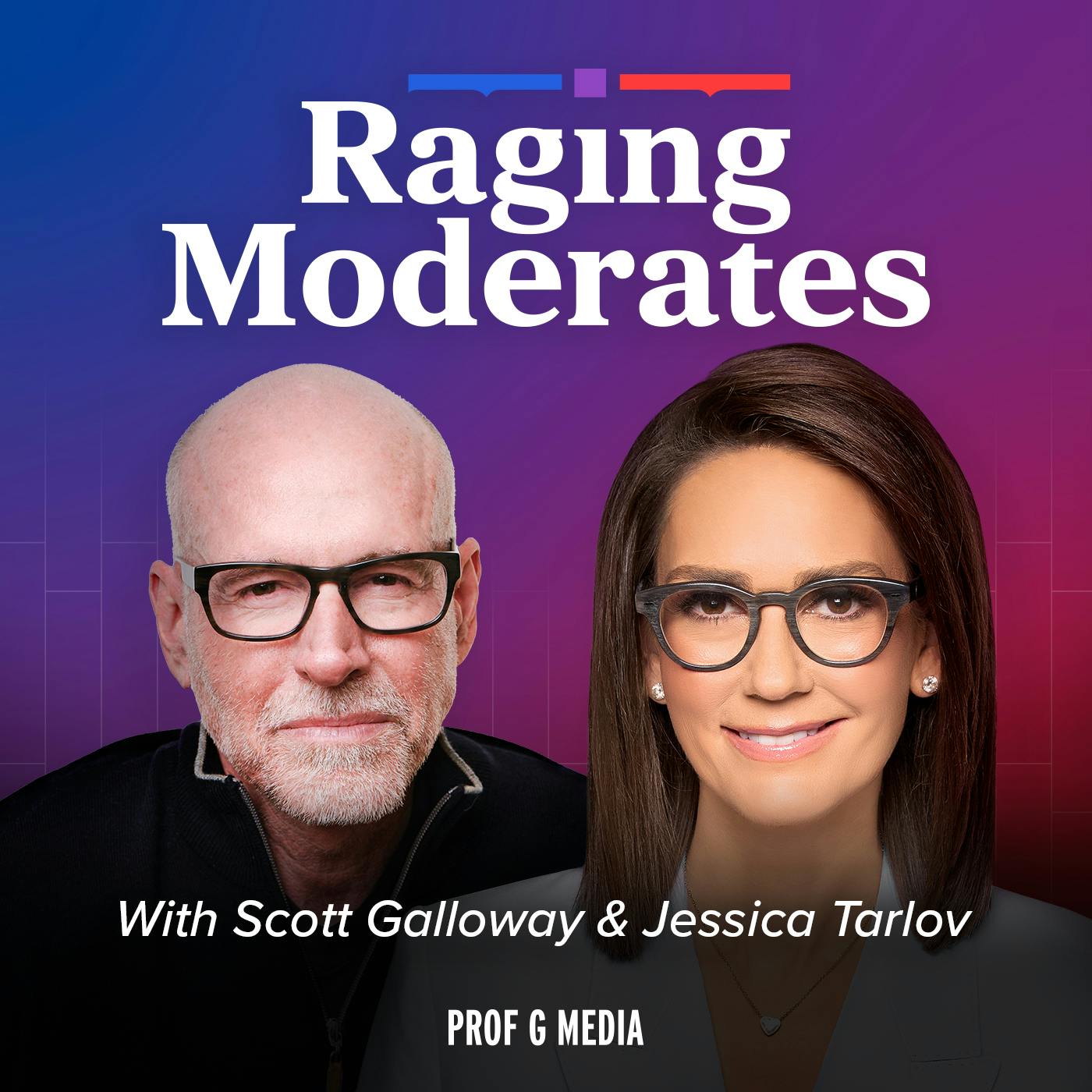
People often agree on the facts of a political event but arrive at opposite conclusions because their internal 'threat monitors' are calibrated differently. One person's 'alarming authoritarian move' is another's 'necessary step for order,' leading to intractable debates.

Microsoft's AI chief, Mustafa Suleiman, announced a focus on "Humanist Super Intelligence," stating AI should always remain in human control. This directly contrasts with Elon Musk's recent assertion that AI will inevitably be in charge, creating a clear philosophical divide among leading AI labs.
The political battle over AI is not a standard partisan fight. Factions within both Democratic and Republican parties are forming around pro-regulation, pro-acceleration, and job-protection stances, creating complex, cross-aisle coalitions and conflicts.
The economic and societal impact of AI is forcing politicians across the aisle to collaborate. From co-sponsoring legislation on AI-driven job loss to debating state vs. federal regulation, AI is creating common ground for lawmakers who would otherwise rarely work together.

The AI debate is becoming polarized as influencers and politicians present subjective beliefs with high conviction, treating them as non-negotiable facts. This hinders balanced, logic-based conversations. It is crucial to distinguish testable beliefs from objective truths to foster productive dialogue about AI's future.
Using the 'horseshoe theory,' the analysis posits that the far-left and far-right often meet on extreme issues, such as antisemitism. This convergence serves as a critical litmus test for dangerous ideas. When ideologies from opposite ends of the spectrum align, it signals a significant societal risk.
While making powerful AI open-source creates risks from rogue actors, it is preferable to centralized control by a single entity. Widespread access acts as a deterrent based on mutually assured destruction, preventing any one group from using AI as a tool for absolute power.

The best political outcomes emerge when an opposing party acts as a 'red team,' rigorously challenging policy ideas. When one side abandons substantive policy debate, the entire system's ability to solve complex problems degrades because ideas are no longer pressure-tested against honest opposition.
