Get your free personalized podcast brief
We scan new podcasts and send you the top 5 insights daily.
In a refreshingly candid take, former professional trader Pete Najarian confirms that options trading is a form of gambling. Unlike long-term stock ownership, the fixed expiration date of an option contract creates a time-bound, high-stakes outcome that mirrors the dynamics of a wager, albeit an educated one.

Related Insights
Pete Najarian's strategy relies on identifying "unusual option activity." This isn't a high volume of small trades, but rather a single, massive order (e.g., 5,000 contracts). Such a large, concentrated bet often indicates an institution or wealthy individual has high conviction about an asset's future direction.
Financial personality Vivian Tu warns against platforms marketing "prediction markets" as an investment class. She clarifies they are simply a modern form of gambling on outcomes, akin to sports betting, and will likely deplete wealth rather than build it.

Speculation is often maligned as mere gambling, but it is a critical component for price discovery, liquidity, and risk transfer in any healthy financial market. Without speculators, markets would be inefficient. Prediction markets are an explicit tool to harness this power for accurate forecasting.

The CEO distinguishes 'betting' from 'gambling.' He defines gambling not by the activity but by its structure: creating an artificial risk where the house has stacked odds. In contrast, trading on natural, pre-existing risks in a fair, market-based system is fundamentally different.

Options are an excellent tool for risk management, not just speculation. When you have a high-conviction view that feels almost certain (e.g., "there is no way they'll hike"), buying options instead of taking a large vanilla position can protect the portfolio from a complete wipeout if your seemingly infallible view is wrong.

The host advises a recovering gambler to get into investing by highlighting its parallels to professional gambling. Using quotes from Warren Buffett and a blackjack expert, she frames it as a game where research and rational decisions beat hunches, effectively channeling his desire for 'action' into a constructive pursuit.
To manage risk, trader Pete Najarian follows a simple rule: if an option doubles in value, sell half of the position. This recovers the initial investment, eliminating all capital risk and allowing the remaining position—the "house money"—to potentially grow further without the threat of a loss.
An asset's price is ultimately determined by what someone is willing to pay, making the market a game of predicting collective human emotion, much like trading baseball cards. Even fundamentally sound assets can crash if sentiment turns negative, meaning investors are gambling on the emotional state of others.

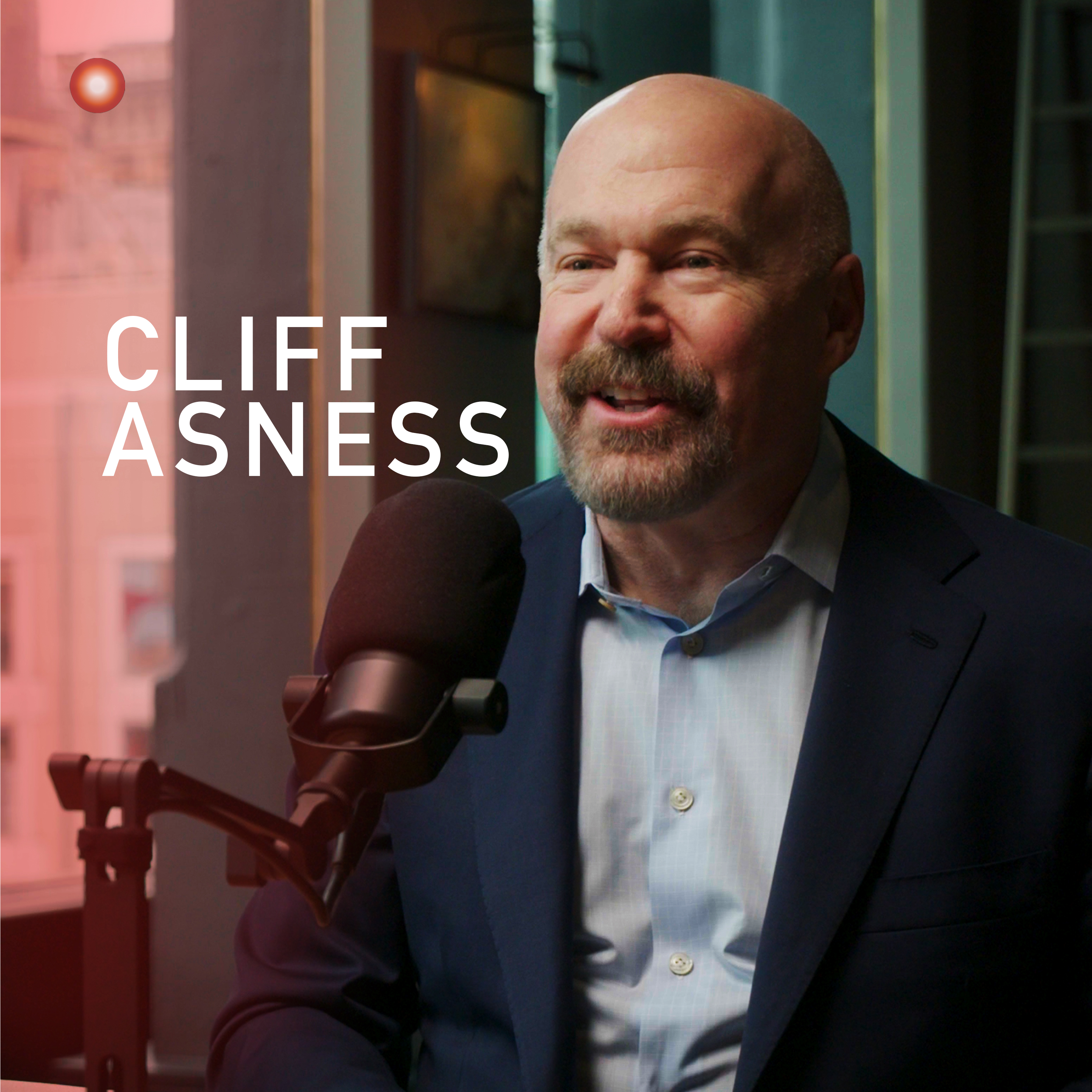
Cliff Asness argues that modern trading apps have "gamified" investing to the point where users treat it like sports betting. They adopt flawed strategies like the Martingale system, which guarantees ruin without an infinite bankroll, confusing speculation with a viable investment process.
Framing investing as a form of gambling—even low-volatility, long-term strategies—forces an honest acknowledgment of inherent risk. This mindset prevents the dangerous and false assumption that investing is a guaranteed, "only up" phenomenon, leading to better decision-making.