Get your free personalized podcast brief
We scan new podcasts and send you the top 5 insights daily.
Inspired by Nike's approach with athletes, Gap fosters deep, family-like relationships with its talent partners. This moves beyond transactional briefs to create a comfortable, collaborative environment where both the brand and talent can push creative boundaries together.
Related Insights
While a strong personal style is valuable, a CMO's primary role is to operate at the intersection of who they are and what the brand represents. The job isn't to be a "rock star" imposing a singular vision, but to deeply understand the brand's DNA—what its community loves about it—and amplify that truth.
![Why you need to know your e.l.f.ing numbers with Kory Marchisotto [Uncensored Renegades] thumbnail](https://img.transistorcdn.com/26qfoz7hFm2pva8nC1NvuTOrbTndCNI1cWQmLXEY_W0/rs:fill:0:0:1/w:1400/h:1400/q:60/mb:500000/aHR0cHM6Ly9pbWct/dXBsb2FkLXByb2R1/Y3Rpb24udHJhbnNp/c3Rvci5mbS8zY2Zk/YTM5OWVmNjE0Njcw/NjFlMTBhYWE1OGNm/Y2Y0NS5wbmc.jpg)
In its turnaround, Gap resists the urge to simply recreate its '90s heyday. Instead, CMO Fabiola Torres insists on looking forward, aiming to define the brand for 2026. The company's rich archives serve as inspiration for new, current creative, not as a blueprint to be copied.
To gauge if an influencer genuinely 'feels the brand,' Rohan Oza makes a final meeting with the artist—not just their agent—a core part of the negotiation. This direct interaction is crucial for assessing authentic passion, which leads them to go 'above and beyond' a standard endorsement deal.

The most effective influencer collaborations aren't just transactional. They share three key traits: the influencer genuinely believes in the product, they creatively connect with the brand's DNA, and they consistently go above and beyond contractual obligations. This authenticity resonates with consumers.

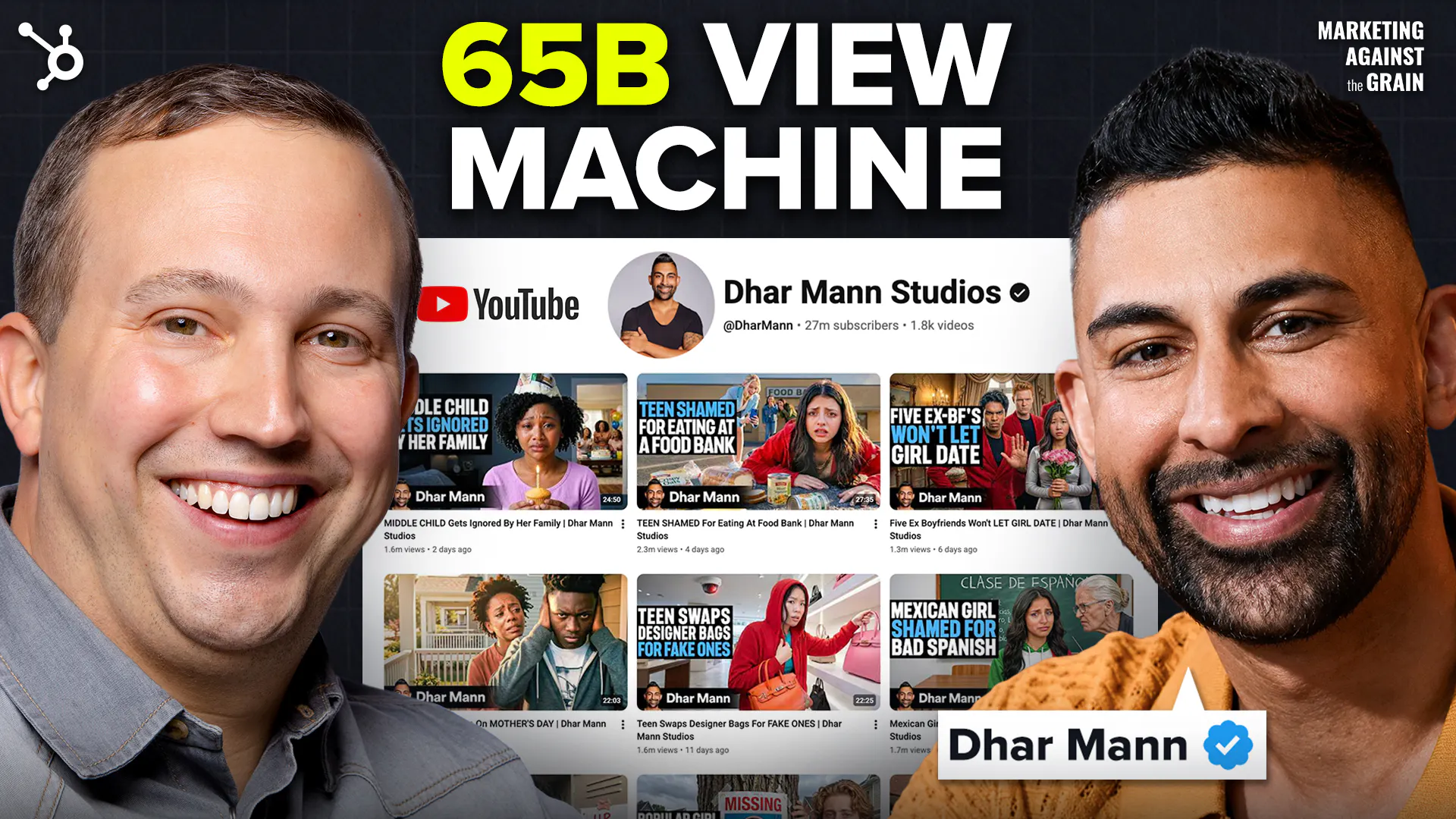
Dhar Mann's most successful brand campaigns, like with the NFL, began with the brand's CMO directly asking for his creative vision. This contrasts with the typical multi-layered, brief-driven approach that stifles creativity. True collaboration starts by trusting the creator's expertise and bypassing the bureaucracy that kills innovative ideas.
To revitalize Gap, the marketing team began treating the brand as a distinct persona. This approach gives the brand a voice in meetings, making strategic decisions more tangible and aligning the team around a unified character and mindset.
To grow from zero to 1,300 influencers, Gap built its internal team with people who are creators themselves, like a department head with 50,000 followers. This strategy ensures they speak the same language as partners, turning rigid briefs into collaborative conversations that yield more authentic content.
Instead of just asking players to promote the NFL, Tim Ellis focused on their personal goals (e.g., fashion, gaming). By consistently making them "look cool," he earned their trust and enthusiastic collaboration.

To regain cultural relevance, a brand can't just claim to be cool. Using a classroom analogy, Gap's CMO explains the strategy was to stop acting like an eager 'front-row' brand and instead move to the 'back of the room,' a place where coolness is subtly earned through actions, not assertions.
While attending every major shoot, Gap's CMO doesn't micromanage the creative director. Instead, she focuses on intangible elements like the talent's expression and the overall mood. Her goal is to capture confidence and uplift, not just generic happiness, ensuring the brand's essence is authentically represented.