Get your free personalized podcast brief
We scan new podcasts and send you the top 5 insights daily.
Despite a stock surge since ChatGPT's launch, IBM is poorly positioned for the current AI build-out. Capital is flowing into GPUs, memory, networking, and hyperscale cloud—categories where IBM isn't a major player. This led to a massive stock drop when the company reset expectations for its server business.

Related Insights
IBM is struggling because current AI investment flows into GPUs, memory, and hyperscale cloud, areas where it's not a major player. Despite its Red Hat asset, its core software, consulting, and infrastructure businesses are losing customer budget share to the physical AI build-out, causing its stock to drop.

The enormous capital expenditure on AI by Google and Meta isn't just about positive ROI; it's a defensive, existential bet. They are driven by a fear of missing the next major computing platform and ending up irrelevant, like IBM in the 90s or Microsoft in the early mobile era.

Contrary to the AI growth narrative, immense CapEx is transforming 'cap-light' tech giants into capital-intensive businesses. This spending pressures margins, reduces returns on capital, and mirrors historical capital cycles where infrastructure builders rarely reaped the primary rewards.

Companies like Oracle and Broadcom face market corrections as investors confront the difficult realities of the AI buildout. Lower-than-expected margins, data center delays, and high capital expenditures are injecting a dose of reality into the previously overhyped infrastructure trade.

IBM's stock plunged 13% after an Anthropic blog post about an *existing* AI capability (COBOL modernization). This indicates investors are finally grappling with the long-term disruptive implications of AI on legacy businesses, reacting to the strategic threat itself rather than waiting for a specific new product launch.

Arvind Krishna predicts that the largest AI models will become commodities with low switching costs. This belief underpins IBM's strategy to *not* compete in building frontier models, but rather to partner with providers and focus on smaller, specialized enterprise models where they can build a moat.

IBM's CEO argues the AI bubble is in data center construction. The committed build-out requires an additional $1-2 trillion in new annual revenue to justify the investment—a figure he believes is unrealistic, meaning many infrastructure bets will fail.
IBM CEO Arvind Krishna's strategy rests on the conviction that most enterprises will remain hybrid, avoiding lock-in to one public cloud. This creates a durable market for IBM's management software. The second pillar is focusing on deploying trusted AI in regulated industries, ceding the consumer space to others.
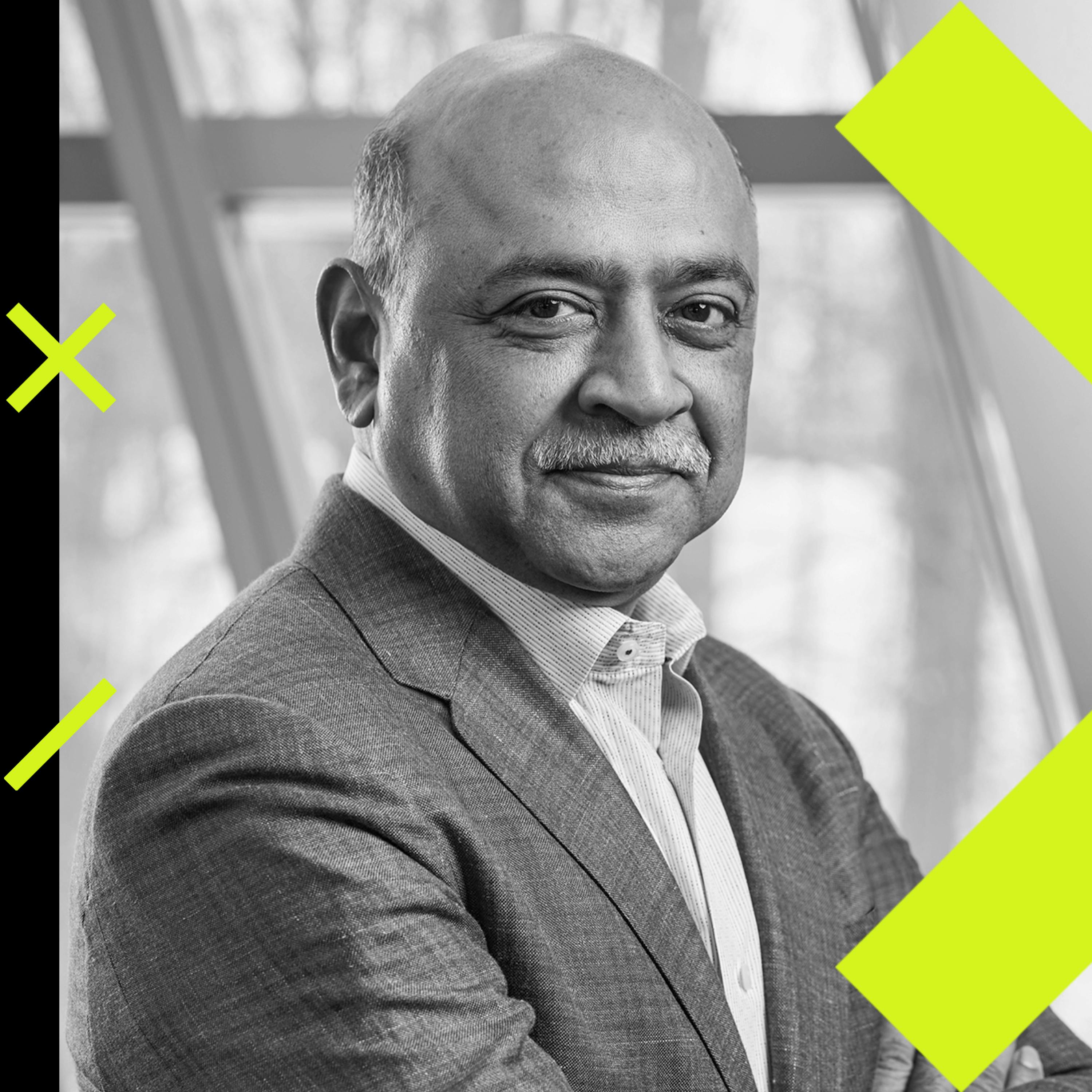
Responding to the AI bubble concern, IBM's CEO notes high GPU failure rates are a design choice for performance. Unlike sunken costs from past bubbles, these "stranded" hardware assets can be detuned to run at lower power, increasing their resilience and extending their useful life for other tasks.
For years, tech giants generated massive free cash flow with minimal capital investment, supporting high stock prices. The current AI boom requires enormous spending on data centers and hardware, reversing this dynamic and creating new risks for investors if the spending doesn't yield proportionate returns.
