Get your free personalized podcast brief
We scan new podcasts and send you the top 5 insights daily.
According to research from Anthropic, the most likely future scenario involves AI agents creating massive productivity multipliers. This will enable small, agile teams to compete with large enterprises by doing the work of organizations 100x to 1000x their size, revolutionizing knowledge work.

Related Insights
Instead of eliminating roles, AI's primary organizational impact is amplifying small, elite, cross-functional teams. A single 10x engineer, 10x designer, and top PM working together can now achieve what previously required a much larger 'swarm,' making these once 'anemic' teams incredibly robust.

The exponential growth in AI agent capabilities creates a plausible scenario where a single entrepreneur can manage a vast array of automated tasks, from development to operations. This raises the possibility of a "solopreneur" achieving a billion-dollar valuation without a traditional human workforce.

The true disruption from AI is not a single bot replacing a single worker. It's the immense leverage granted to individuals who can deploy thousands of autonomous AI agents. This creates a massive multiplication of productivity and economic power for a select few, fundamentally altering labor market dynamics from one-to-one replacement to one-to-many amplification.
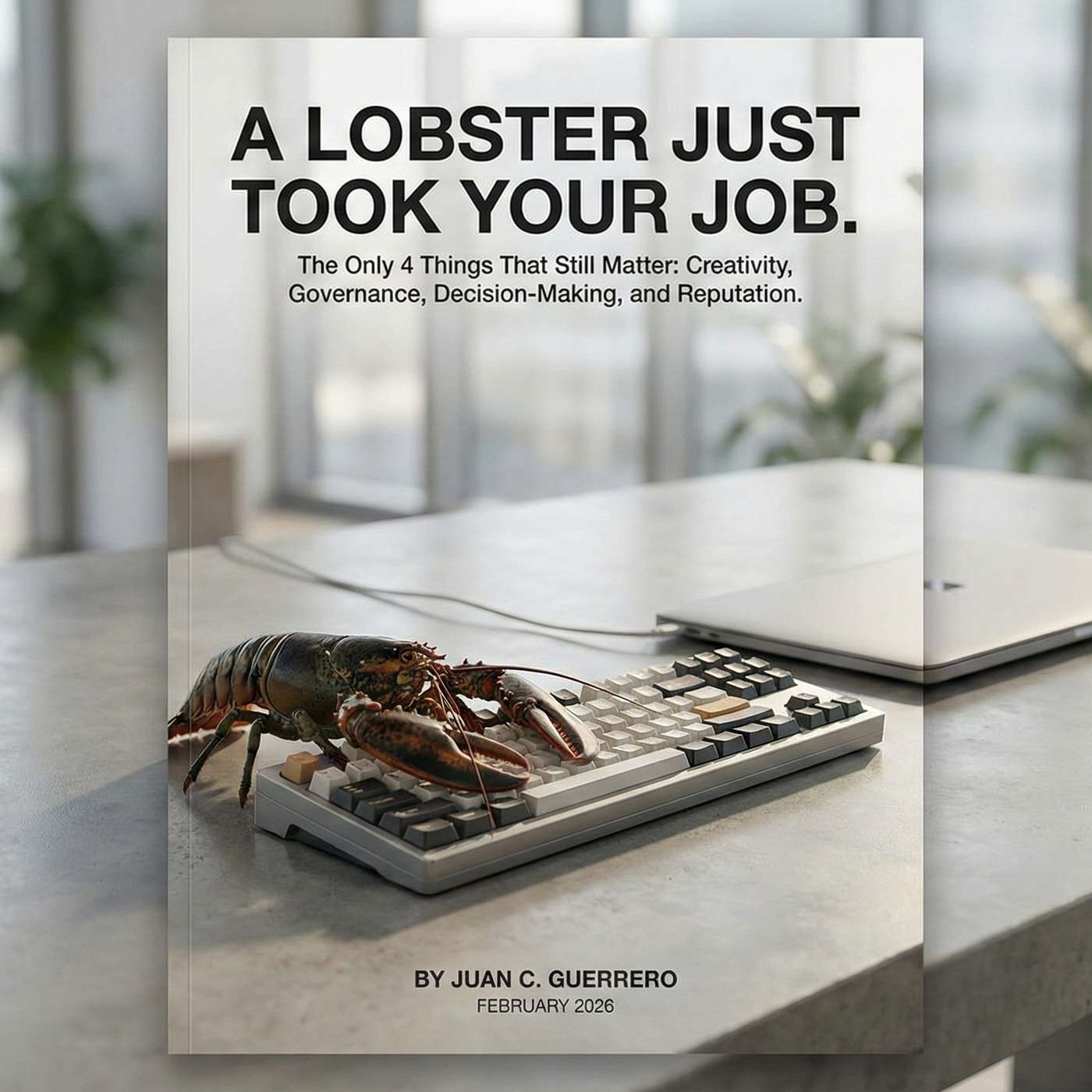
The most dramatic productivity gains come not from a single AI assistant, but from a human operator orchestrating multiple specialized agents concurrently. This model involves setting up 5-15 agents with specific roles and controlled tool access to perform complex tasks in parallel.
OpenAI and Anthropic's explicit strategy involves recursive self-improvement by creating AI that can perform ML research at a human level. They aim to scale this to millions of "AI researcher equivalents," believing this will accelerate progress far beyond competitors who rely on human talent.

The next evolution of work will involve humans acting as orchestrators for "swarms" of specialized AI agents. A manager will direct a team of agents—each trained for a specific function like email marketing or media buying—to collaboratively execute complex projects with high levels of autonomy.
The future of productivity isn't just using AI tools; it's about individuals leveraging a personal "army" of specialized AI agents. A new employee equipped with these agents can replace entire teams, leading to a rapid thinning of corporate hierarchies within the next 1-2 years.

The next leap in productivity isn't just using an AI assistant for synchronous tasks. It's becoming an "IC manager of agents," overseeing a team of 20-30 AI agents working concurrently on long-running, asynchronous tasks, creating a massive leverage factor.

The future of knowledge work isn't just collaborating with a single AI assistant. The next step is managing a team of AI bots, which will then evolve into overseeing an entire organizational chart of bots managing other bots. An individual worker's role will shift from a doer to a manager of a vast, scalable, digital workforce.

The concept of an employee is evolving to "Bring Your Own Agent" (BYOA). A single individual, equipped with their personally trained AI agents, can manage the output of an entire department, such as marketing. This creates massive leverage and earning potential for skilled individuals.
