Get your free personalized podcast brief
We scan new podcasts and send you the top 5 insights daily.
Jensen Huang reframes the AI race with China, arguing it's not about who originates the models but who integrates them into the economy most effectively. He cites the last industrial revolution, where European inventors created the tech but America's superior commercial exploitation led to its dominance. This means broad adoption is the key to winning.

Related Insights
Jensen Huang defines winning the global AI race not as controlling every AI model, but as ensuring the American tech stack—from chips to computing systems and platforms—is used by 90% of the world. This strategy avoids the national security risks seen in industries like solar and telecommunications, where the U.S. lost its infrastructure leadership.

Huang argues open models are essential for the U.S. to win the "AI race." He reveals 80% of the $400 billion in recent VC funding for AI-native companies went to startups using open models. This broad-based innovation, enabled by open source, is a core American strength that closed, frontier-only models cannot replicate.
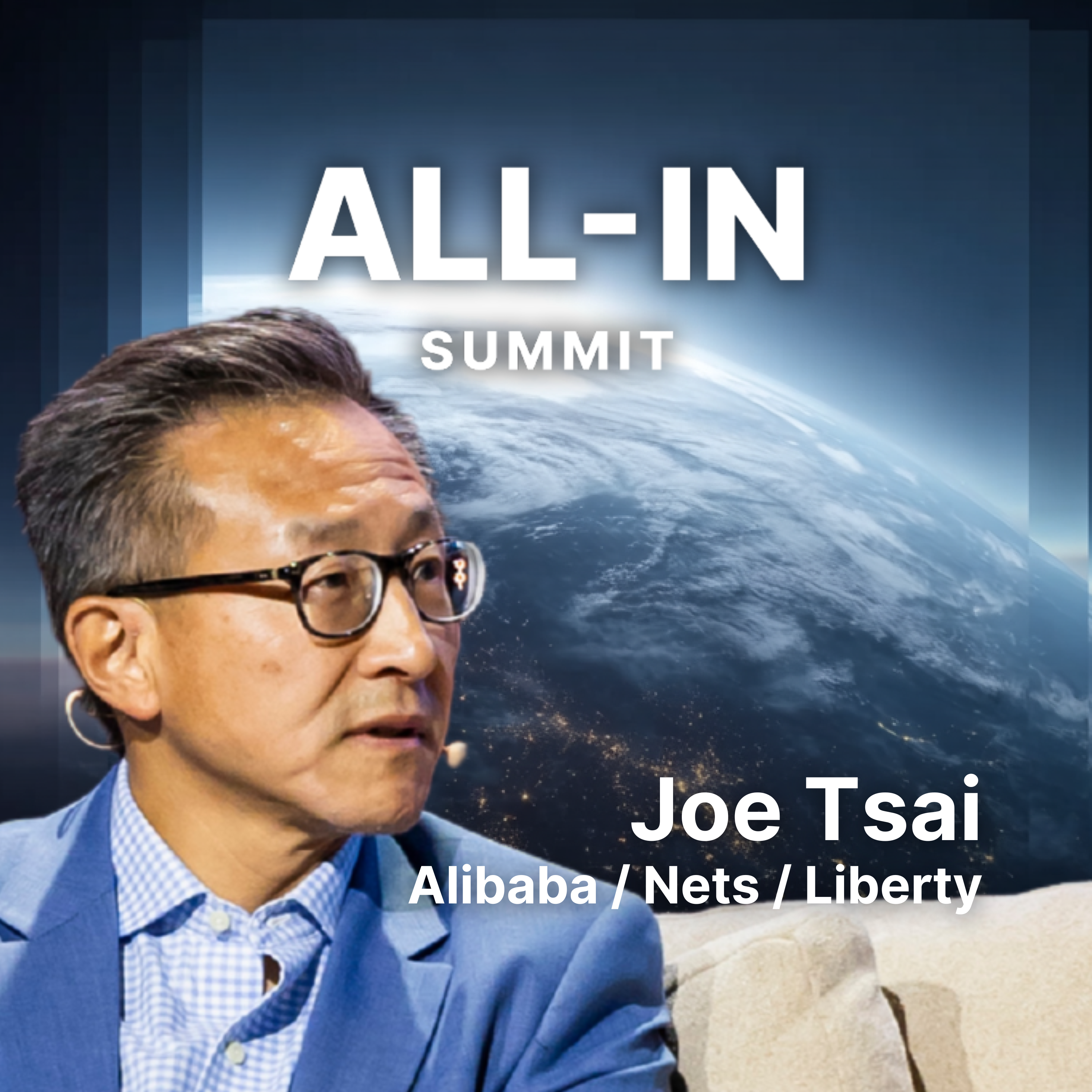
Joe Tsai reframes the US-China 'AI race' as a marathon won by adoption speed, not model size. He notes China’s focus on open source and smaller, specialized models (e.g., for mobile devices) is designed for faster proliferation and practical application. The goal is to diffuse technology throughout the economy quickly, rather than simply building the single most powerful model.
Challenging the narrative of pure technological competition, Jensen Huang points out that American AI labs and startups significantly benefited from Chinese open-source contributions like the DeepSeek model. This highlights the global, interconnected nature of AI research, where progress in one nation directly aids others.

The dominant U.S. strategy views the AI model itself as the primary source of value capture. In contrast, the Chinese model aims to commoditize the AI model and capture value in complementary layers like advanced manufacturing, robotics, and energy systems.

A technological lead in AI research is temporary and meaningless if the technology isn't widely adopted and integrated throughout the economy and government. A competitor with slightly inferior tech but superior population-wide adoption and proficiency could ultimately gain the real-world advantage.

China's AI strategy appears to be accepting 'good enough' 80% capability from domestic chips while outpacing the US in adoption across robotics, drones, and other integrations. This challenges the American assumption that having the absolute best models guarantees victory, as historical innovation arcs show that being first to adopt is often the decisive factor.

While the US focuses on creating the most advanced AI models, China's real strength may be its proven ability to orchestrate society-wide technology adoption. Deep integration and widespread public enthusiasm for AI could ultimately provide a more durable competitive advantage.

Winning the AI race isn't just about technological superiority. It requires a three-part strategy: having the best qualitative models, ensuring they are widely adopted globally, and securing the entire physical supply chain they depend on. Exquisite models no one uses are irrelevant.

The ultimate measure of success in the AI race isn't just technical superiority on a benchmark test, but market dominance and ecosystem control. The winning nation will be the one whose models and chips are most widely adopted and built upon by developers globally.