Get your free personalized podcast brief
We scan new podcasts and send you the top 5 insights daily.
Reports of OpenAI considering legal action against Apple over the ChatGPT integration reveal deep strategic tensions. Apple's lackluster integration and exploration of competitors like Google and Anthropic suggest they view OpenAI as a disposable partner, not a cornerstone of their AI ecosystem.

Related Insights
Despite OpenAI securing an initial Siri integration, Google's long-standing relationship with Apple won the more significant partnership. This shows that for AI model distribution, powerful incumbent relationships can be more decisive than speed, pressuring challengers like OpenAI to build their own hardware and distribution channels.

Massive investments like Amazon's $50B into OpenAI, coupled with Apple's partnership with Google, suggest the formation of powerful, competing AI ecosystems. These blocs will battle for dominance across hardware, cloud, and enterprise services, defining the next tech era.

By integrating Google's Gemini directly into Siri, Apple poses a significant threat to OpenAI. The move isn't primarily to sell more iPhones, but to commoditize the AI layer and siphon off daily queries from the ChatGPT app. This default, native integration could erode OpenAI's mobile user base without Apple needing to build its own model.

Apple considers OpenAI a direct existential threat, not a potential partner. With OpenAI developing hardware like AirPods competitors and having ambitions for an "iPhone killer," Apple is unwilling to work with a company actively trying to put it out of business.
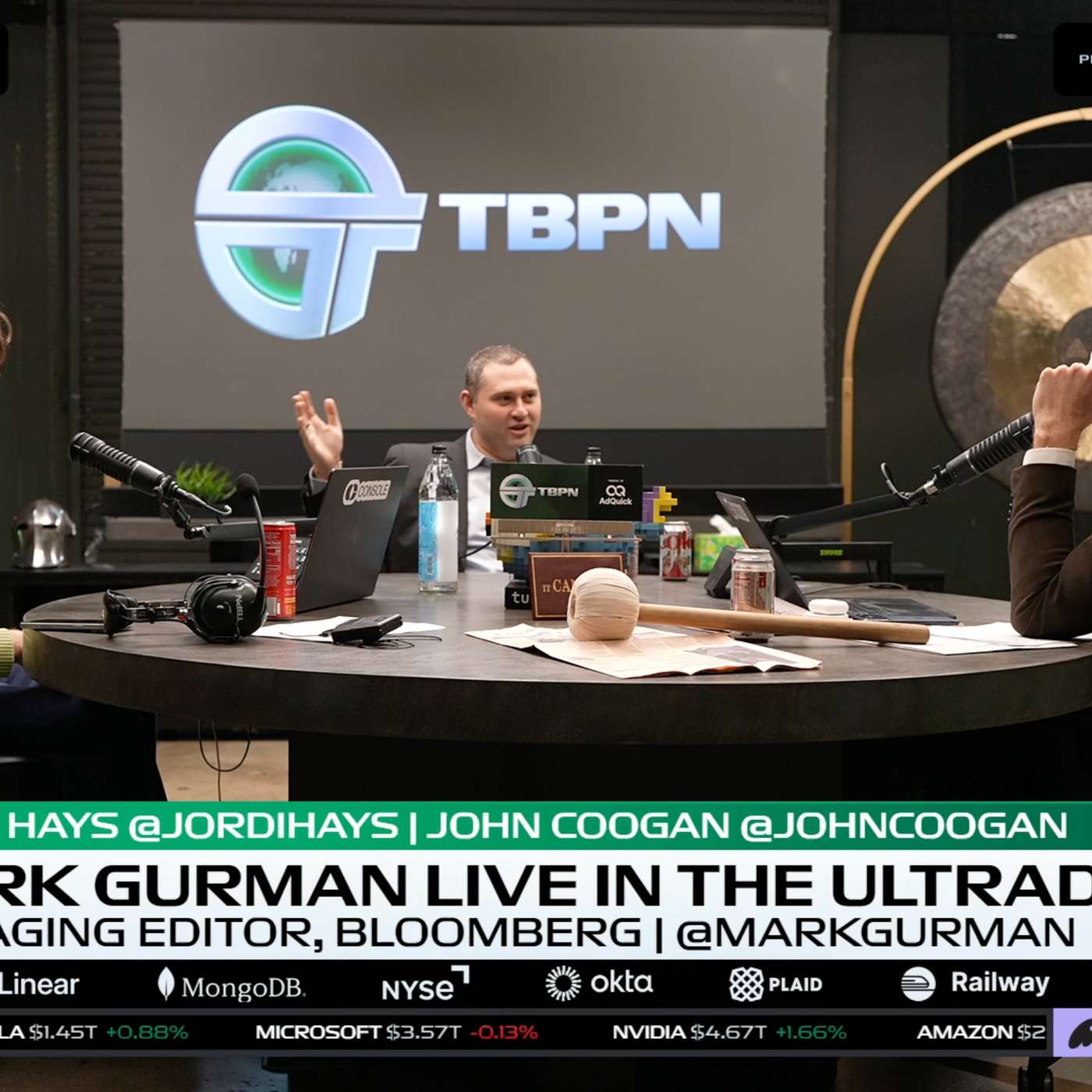
Apple is avoiding massive capital expenditure on building its own LLMs. By partnering with a leader like Google for the underlying tech (e.g., Gemini for Siri), Apple can focus on its core strength: productizing and integrating technology into a superior user experience, which may be the more profitable long-term play.
Contrary to the narrative that Apple is wisely waiting out the AI hype, reporter Mark Gurman asserts their AI strategy has been a "disaster." He claims the tech giant was "completely caught off guard" by ChatGPT and its anti-chatbot stance was a major mistake, revealing a significant strategic miss, not a deliberate, patient approach.

Apple's partnership with Google for Siri was less about Google's technological superiority and more a strategic move to avoid empowering OpenAI, which is increasingly becoming a direct competitor in consumer hardware like smart glasses and audio devices. Giving OpenAI access to Apple's ecosystem would train a future rival.
According to Bloomberg's Mark Gurman, Apple's 2018 hiring of Google's AI chief was a strategic disaster that left the company far behind in AI. The subsequent multi-billion-dollar deal to integrate Google's Gemini model into Siri is a stark admission of this failure, forcing Apple to rely on a direct competitor for core functionality.

As OpenAI targets the enterprise market, it increasingly competes with its key investor, Microsoft. This growing rivalry is highlighted by a potential Microsoft lawsuit over OpenAI's cloud usage, indicating a fundamental strain in their strategic partnership as they vie for the same customers.
Apple's choice to partner with Google for its Siri overhaul highlights a strategic decision to avoid a direct hardware competitor like OpenAI. OpenAI's reported hardware ambitions and recent leadership turmoil likely made the more stable, familiar partnership with Google—a historical collaborator—the safer bet for Apple.