Get your free personalized podcast brief
We scan new podcasts and send you the top 5 insights daily.
The psychological thriller 'Karma: The Dark World' is set in 1984 East Germany but serves as a thinly veiled critique of the anxiety and oppression of modern Chinese corporate work culture. This demonstrates how developers use foreign historical settings as a clever way to explore sensitive domestic themes that would otherwise be censored.

Related Insights
Online, there is 'Cool China'—a futuristic, creative nation—and 'Real China,' which includes youth unemployment and economic struggles. Western audiences overwhelmingly consume the former, filtering out the grim realities that circulate within China's own internet.

The Chinese government tolerates the international version of Steam, creating a 'magical limited space' for uncensored games. This allows millions of Chinese players to access titles that would never pass official approval, and provides a massive, accessible market for international developers without requiring a formal Chinese launch.
The developer of 'Wuchang: Fallen Feathers' patched the game to make historical figures unkillable after intense backlash and review-bombing from nationalist Chinese gamers. This pre-emptive self-censorship occurred without any known direct government mandate, revealing a powerful new pressure on creators from their own audience.
During its struggle in the "console wars," Sega approved *Sega Gaga*, a game by developer Tez Okano that was a meta-commentary on the company's failures. This act of self-parody showcased an unusual corporate culture willing to embrace creative risk and self-criticism as a last-ditch effort to innovate.
Games like 'Black Myth: Wukong' are succeeding globally with aesthetics and stories that are 'Chinese culture, loud and proud.' This marks a shift away from the previous belief among Asian developers that they needed Western-coded themes like wizards and castles to achieve international appeal, signaling a new era of cultural confidence.
Gaming is more likely to be the spearhead of China's cultural soft power than film or music. The interactive nature of gameplay transcends language and narrative censorship barriers that constrain other media, allowing Chinese creative products to find a global audience in a way movies and TV shows have struggled to.
In the game *Sega Gaga*, combat involves weakening opponents by launching insults. Developer Tez Okano sourced this dialogue directly from his coworkers, recording things people actually said in the office. This demonstrates a radical approach to authenticity, turning internal company stress into a core gameplay feature.
Within China, 'Nei Yu' (domestic entertainment) is often a pejorative term. It refers to an insular, tightly controlled industry with unwritten patriotic rules that stifle artistic expression, making it unattractive for ambitious and globally-minded creators.
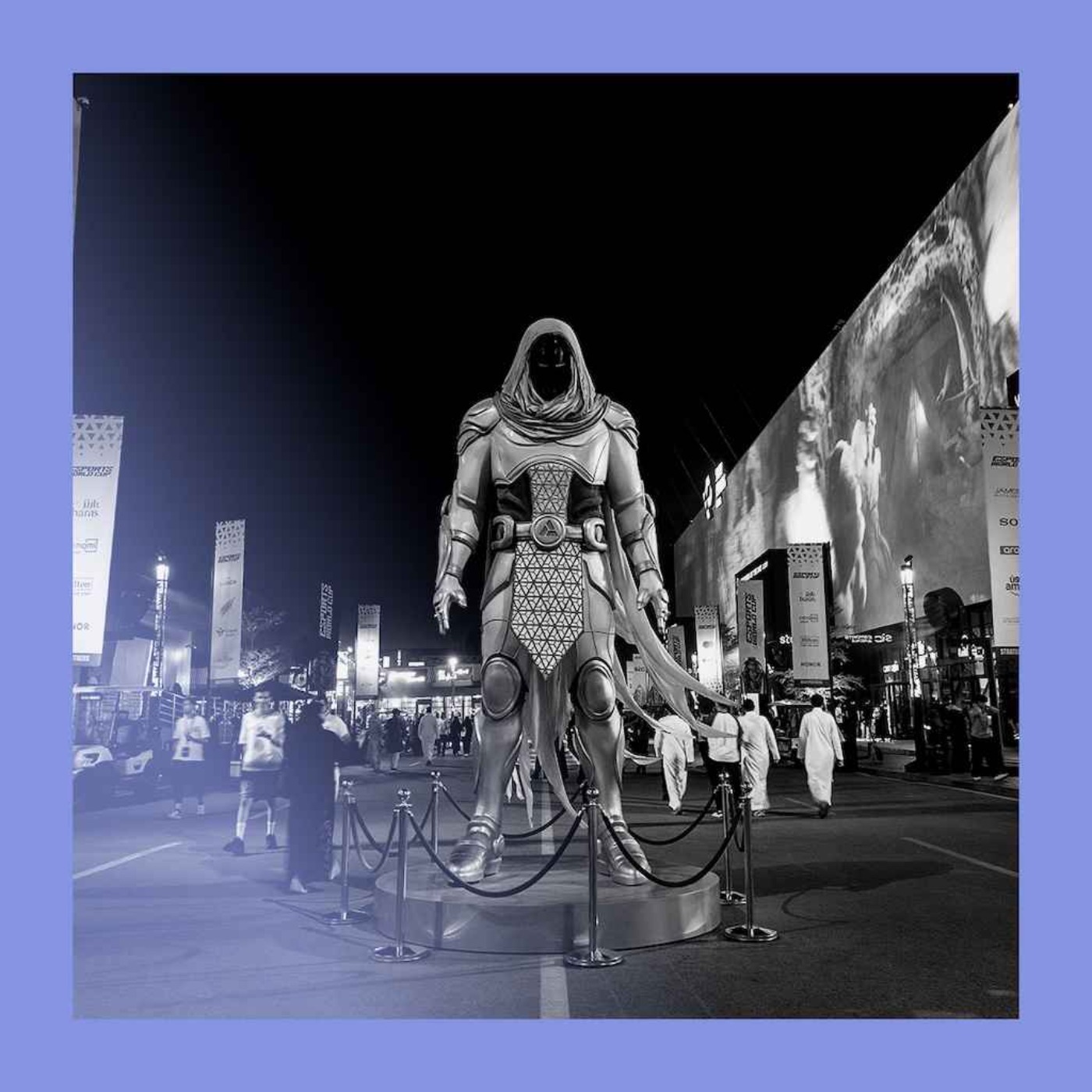
Beyond financial returns and 'game washing,' Saudi Arabia's push into the gaming industry is a long-term soft power strategy. The goal is to create games based on the region's myths and legends, similar to how China successfully exported its culture through games like 'Black Myth Wukong,' thereby shaping its global image.
Chinese studios like Game Science (Black Myth: Wukong) are delivering technologically advanced AAA titles in just 2.5-3.5 years with small core teams. By leveraging tools like Unreal Engine, they bypass the need for proprietary engines and achieve a level of efficiency that challenges the lengthy, high-cost development cycles common in the West.