Get your free personalized podcast brief
We scan new podcasts and send you the top 5 insights daily.
NVIDIA's investment in Safe Superintelligence (SSI) is a strategic bet on long-term, non-commercial AGI research. By providing next-gen chips and capital after gaining 'rare access' to SSI's tech, NVIDIA signals it values foundational breakthroughs as much as near-term enterprise AI applications, securing its position at the forefront of fundamental research.

Related Insights
NVIDIA's deep investment in OpenAI is a strategic bet on its potential to become a dominant hyperscaler like Google or Meta. This reframes the relationship from a simple vendor-customer dynamic to a long-term partnership with immense financial upside, justifying the significant capital commitment.

Concerns about NVIDIA investing in startups that then buy its chips are overblown. These deals are a strategic necessity to support an ecosystem of NVIDIA users (like OpenAI) against Google, which leverages its own TPU chips to create captive customers (like Anthropic).

Strategic investments in AI labs, like NVIDIA's in Thinking Machines, are increasingly structured as complex deals trading equity for access to cutting-edge chips. This blurs the line between traditional venture capital and resource allocation, making compute access a form of currency as valuable as cash for capital-intensive AI startups.

NVIDIA's multi-billion dollar deals with AI labs like OpenAI and Anthropic are framed not just as financial investments, but as a form of R&D. By securing deep partnerships, NVIDIA gains invaluable proximity to its most advanced customers, allowing it to understand their future technological needs and ensure its hardware roadmap remains perfectly aligned with the industry's cutting edge.

Ilya Sutskever's new company, focused on fundamental AI research, is attracting growth-stage capital for a high-risk, venture-style bet. This model—allocating massive funds to exploratory research with paradigm-shifting potential—blurs the lines between traditional venture and growth equity investing.
NVIDIA funds OpenAI's compute purchases (of NVIDIA chips) with an equity investment. This effectively gives OpenAI a discount without lowering market prices, while NVIDIA gains equity in a key customer and locks in massive sales.
![Dylan Patel - Inside the Trillion-Dollar AI Buildout - [Invest Like the Best, EP.442] thumbnail](https://megaphone.imgix.net/podcasts/799253cc-9de9-11f0-8661-ab7b8e3cb4c1/image/d41d3a6f422989dc957ef10da7ad4551.jpg?ixlib=rails-4.3.1&max-w=3000&max-h=3000&fit=crop&auto=format,compress)
Unlike other tech giants, NVIDIA's funding of open-source models directly drives its primary revenue source. Every successful open-source model, regardless of who trains or uses it, ultimately runs on NVIDIA hardware, making them the "house" that always wins.

Beyond selling chips, NVIDIA strategically directs the industry's focus. By providing tools, open-source models, and setting the narrative around areas like LLMs and now "physical AI" (robotics, autonomous vehicles), it essentially chooses which technology sectors will receive massive investment and development attention.

NVIDIA embraces the concept of "zero billion dollar markets," investing heavily in initiatives that have no immediate revenue potential. This long-term R&D strategy, like their decade-long work in autonomous driving, is key to creating and eventually dominating future markets.
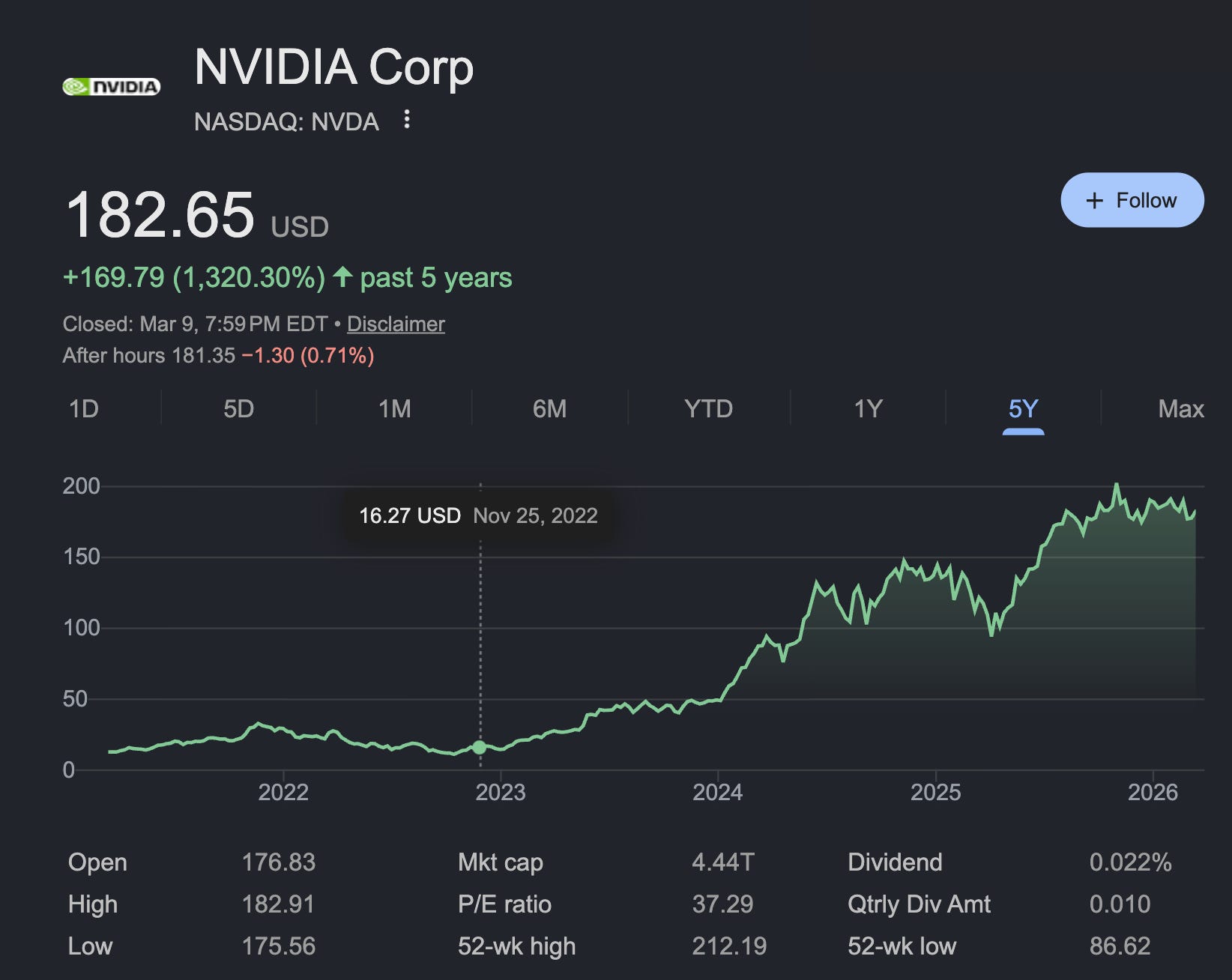
NVIDIA investing in startups that then buy its chips isn't a sign of a bubble but a rational competitive strategy. With Google bundling its TPUs with labs like Anthropic, NVIDIA must fund its own customer ecosystem to prevent being locked out of key accounts.
