Get your free personalized podcast brief
We scan new podcasts and send you the top 5 insights daily.
The stock may be attractively priced because investors see Meta's massive AI spend as black-or-white: a home run or a total failure. The likely reality is a middle ground where the core ad business benefits immensely, even if grander platform ambitions fall short—an outcome the current price may not reflect.

Related Insights
Instead of selling AI directly to consumers, Meta provides AI tools to its 15 million business advertisers. This makes ads smarter and more effective, increasing ad revenue. This profitable ad machine then funds Meta's massive, long-term AI ambitions, creating a powerful flywheel.

Meta's valuation is suppressed relative to other mega-caps because investors are uncomfortable with Mark Zuckerberg's massive spending on speculative AI and Reality Labs projects. The core ad business is thriving, but he's growing expenses even faster, prioritizing long-term vision over short-term shareholder returns.

While increased CapEx signals strength for cloud providers like Microsoft and Google (who sell that capacity to others), the market treats Meta's spending as a pure cost center. Every dollar Meta spends on AI only sees a return if it improves its own products, lacking the direct revenue potential of a cloud platform.

Meta's $130B investment in AI data centers is being strategically de-risked. Mark Zuckerberg has signaled that if its consumer AI plans underperform, Meta can pivot to selling its excess compute power to other companies. This positions Meta as a potential competitor to AWS and Google Cloud, turning a huge capital expenditure into a plausible revenue-generating asset.

Meta's huge AI capex, despite no hit product yet, is based on proprietary data from its massive platform. Unlike the speculative Metaverse venture, this investment is a direct response to observed exponential growth in user engagement with AI content, even if users publicly claim to dislike it.

Unlike cloud providers that can sell compute to other companies, Meta's huge CapEx is an internal bet. Investors are skeptical because the return must be realized almost entirely through its ad business, a less direct and riskier proposition than selling AI infrastructure directly.

Despite having the fastest-growing ad business, Meta's stock fell after it raised its CapEx forecast to $145B for AI without a clear monetization plan. This contrasts sharply with competitors like Google and Microsoft, who demonstrate clear returns on their AI investments, making Meta's story relatively weaker for investors.
While the market awaits new AI-native products from Meta, its real AI success is in its core business. A 9% CPM increase in a weak economy indicates its ad-serving algorithm's effectiveness improved by double digits in a single quarter, a massive financial win.
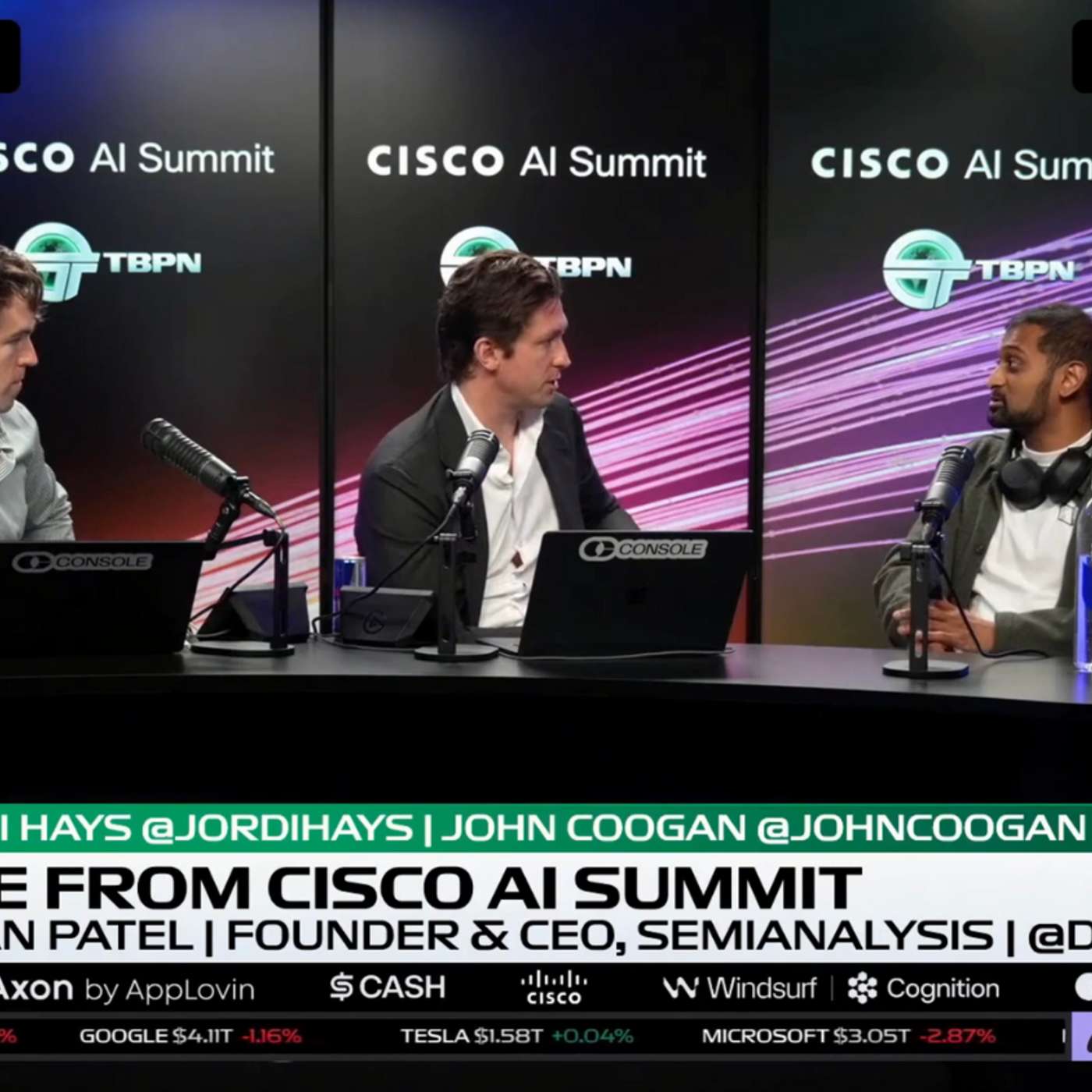
Despite record 33% revenue growth, Meta's stock plummeted after increasing its AI CapEx forecast. Unlike its peers, Meta failed to provide a compelling narrative linking the massive spend to clear business outcomes, proving that for investors, the "why" matters as much as the numbers.
Unlike competitors who justify CapEx with clear cloud revenue, Meta's massive spending is for a long-term, fuzzy AGI goal. This makes it difficult for public markets to value the company, as it lacks a direct enterprise platform to absorb and monetize that compute in the short term, creating investor uncertainty.
