Get your free personalized podcast brief
We scan new podcasts and send you the top 5 insights daily.
Even one of history's most brilliant minds, Isaac Newton, fell victim to financial mania. He invested in the South Sea Company, sold for a profit, but then FOMO drove him to reinvest at the peak, leading to massive losses. This demonstrates that emotional discipline, not just intelligence, is crucial for investing success.

Related Insights
Unlike surgery or engineering, success in finance depends more on behavior than intelligence. A disciplined amateur who controls greed and fear can outperform a PhD from MIT who makes poor behavioral decisions. This highlights that temperament is the most critical variable for long-term financial success.
![[REPLAY] Morgan Housel – The Psychology of Money (Capital Allocators, EP.155) thumbnail](https://static.libsyn.com/p/assets/f/b/7/6/fb76e1c8bfb69e8dd959afa2a1bf1c87/CA_Square_logo_light_background_6.26.24.jpg)
True investment prowess isn't complex strategies; it's emotional discipline. Citing Napoleon, the ability to simply do the average thing—like not panic selling—when everyone else is losing their mind is what defines top-tier performance. Behavioral fortitude during a crisis is the ultimate financial advantage.
Instead of succumbing to the "Fear of Missing Out," top investors deliberately practice "Thoughtfully Missing Out." This means consciously deciding not to pursue trendy investments that fall outside their clearly defined circle of competence, which prevents costly mistakes.

A guest offers a more precise alternative to the cliché that history rhymes: Voltaire's observation that "history never repeats itself, man always does." This insight pinpoints human nature—greed, fear, and FOMO—as the constant driver of speculative manias, even as the specific assets and technologies change.

Post-mortems of bad investments reveal the cause is never a calculation error but always a psychological bias or emotional trap. Sequoia catalogs ~40 of these, including failing to separate the emotional 'thrill of the chase' from the clinical, objective assessment required for sound decision-making.

The emotional drivers of FOMO (buying high) and panic (selling low) make the simplest investment advice nearly impossible to follow. A diversified, 'all-weather' portfolio protects against these predictable human errors better than high-risk concentrated bets.
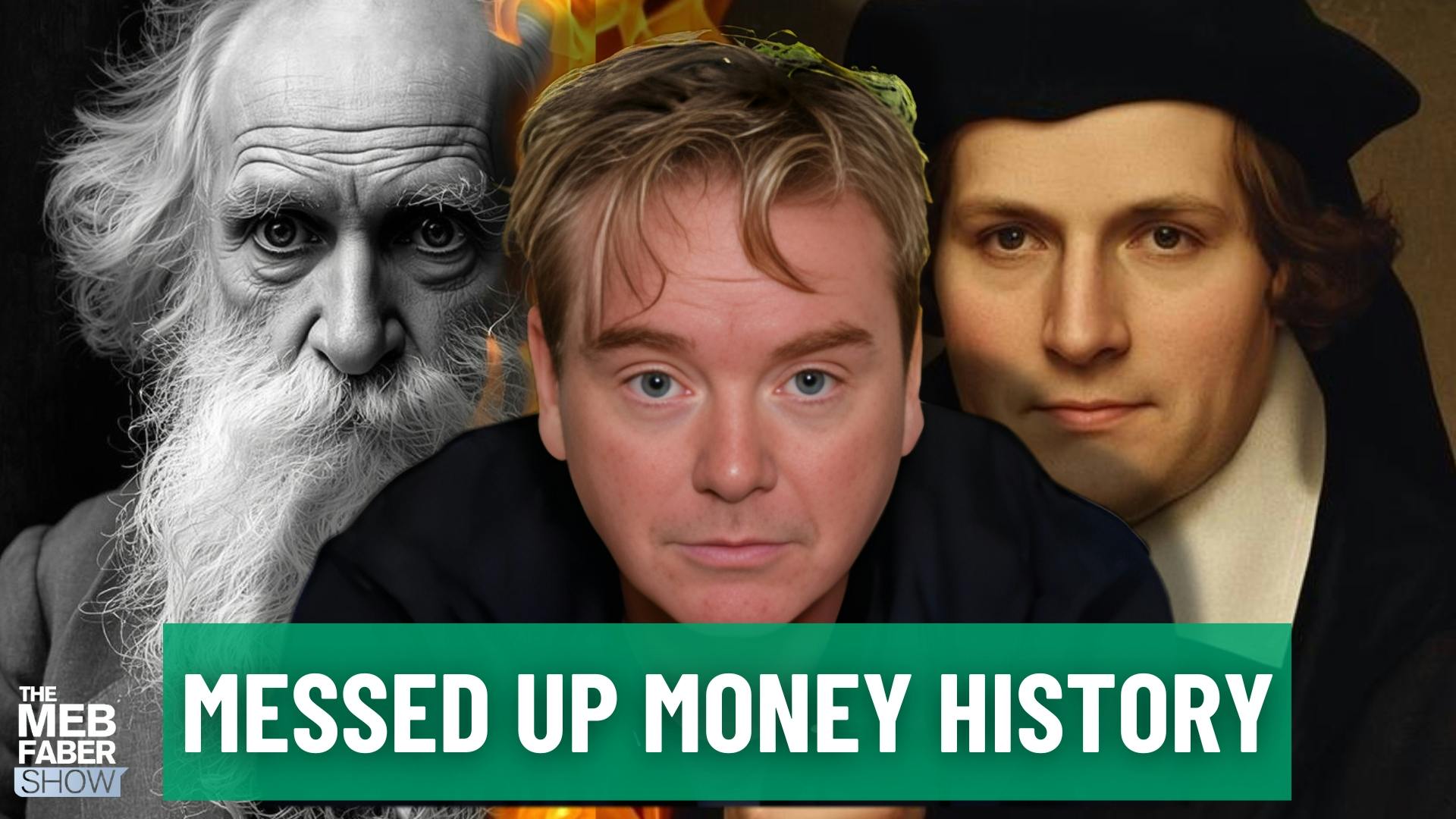
The fathers of physics and biology both lost their fortunes in financial speculation—Newton in the South Sea Bubble and Darwin in railways. This demonstrates that intellectual brilliance in one domain does not translate to financial markets, which are governed by psychology and mercurial forces.
Warren Buffett's early partner, Rick Gurren, was as skilled as Buffett and Munger but wanted to get rich faster. He used leverage, got wiped out in a market downturn, and missed decades of compounding. This illustrates that patience and temperament are more critical components of long-term success than raw investing intellect.
Mala Gaonkar combats investment fads by replacing the "Fear of Missing Out" (FOMO) with "Thoughtfully Missing Out" (TOMO). This framework encourages her team to consciously and deliberately pass on hyped opportunities that fall outside their defined circle of competence, avoiding costly mistakes.

Finance is one of the only fields where behavior is more important than knowledge. An amateur with no formal training but immense patience can financially outperform a highly educated expert who succumbs to fear and greed. It's not about what you know; it's about how you act.
