Get your free personalized podcast brief
We scan new podcasts and send you the top 5 insights daily.
The shift from 'prompt engineering' to 'context engineering' reframes AI interaction. Instead of just conversing with an AI, you are designing the entire information ecosystem—including specs, visuals, and data—that the model needs to perform its task effectively.

Related Insights
People struggle with AI prompts because the model lacks background on their goals and progress. The solution is 'Context Engineering': creating an environment where the AI continuously accumulates user-specific information, materials, and intent, reducing the need for constant prompt tweaking.

The key skill for using AI isn't just prompting, but "context engineering": framing a problem with enough context to be solvable. Shopify's CEO found that mastering this skill made him a better communicator with his team, revealing how much is left unsaid in typical instructions.

With AI agents, the key to great results is not about crafting complex prompts. Instead, it's about 'context engineering'—loading your agent with rich information via files like 'agents.md'. This allows simple commands like 'write a cold email' to yield highly customized and effective outputs.

While prompt engineering is the interface, context engineering is the "magic" for production systems. It involves strategically managing what information (session history, knowledge base) fits into the model's limited context window. This art directly impacts both cost and performance.

The early focus on crafting the perfect prompt is obsolete. Sophisticated AI interaction is now about 'context engineering': architecting the entire environment by providing models with the right tools, data, and retrieval mechanisms to guide their reasoning process effectively.

Moving beyond simple commands (prompt engineering) to designing the full instructional input is crucial. This "context engineering" combines system prompts, user history (memory), and external data (RAG) to create deeply personalized and stateful AI experiences.
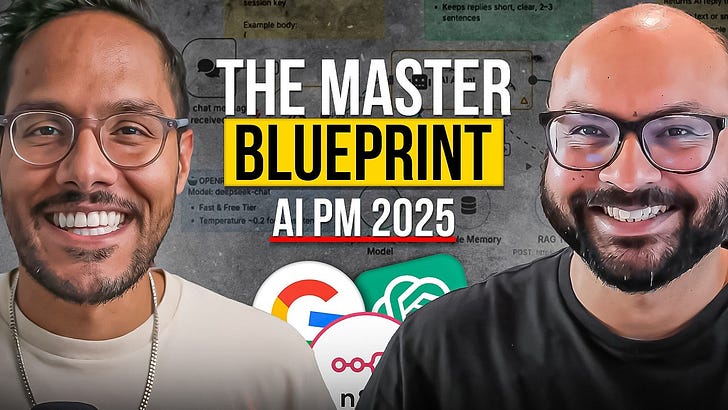
To generate high-fidelity results, go beyond text. A 'full stack' prompt provides the AI with functional specs (what it does), visual wireframes (how it looks), and structured data (what it contains). This multi-modal approach yields more robust and controllable prototypes.
"Context Engineering" is the critical practice of managing information fed to an LLM, especially in multi-step agents. This includes techniques like context compaction, using sub-agents, and managing memory. Harrison Chase considers this discipline more crucial than prompt engineering for building sophisticated agents.
The focus in AI has shifted from crafting the perfect prompt (prompt engineering) to providing the right information (context engineering), and now to building the entire operational environment—tooling, systems, and access—that enables a model to perform complex tasks. This new paradigm is called harness engineering.

While prompt engineering focuses on crafting the human message, context engineering is a broader discipline that also manages the flow of information from a potentially large number of tool calls, a key challenge in building effective agents.
