Get your free personalized podcast brief
We scan new podcasts and send you the top 5 insights daily.
Drugs within the same class, like CDK4-6 inhibitors, can produce vastly different cellular outcomes (e.g., cell death vs. arrest). This is because higher concentrations cause them to bind to unintended secondary targets, a phenomenon known as promiscuity.

Related Insights
Modern antibody-drug conjugates (ADCs) like trastuzumab deruxtecan can kill nearby cancer cells that don't express the target protein. This 'bystander effect' is a game-changer, allowing ADCs to be effective even in tumors with varied (heterogeneous) protein expression, which has historically been a major clinical challenge.

The varying outcomes of two similar Lilly ADCs (LY405/LY410) demonstrated that how a patient's body metabolizes the drug's payload is a critical factor. Absence of the CYP2D6 enzyme, crucial for a Topo-one payload, led to severe toxicity and death, highlighting a key variable beyond the linker and target.
Different TROP2-targeted ADCs using the same class of payload (topo-1 inhibitor) display distinct primary toxicities, such as diarrhea versus stomatitis. This highlights that subtle differences in drug-to-antibody ratio and linker technology create unique pharmacological profiles, making the drugs clinically distinct despite their apparent similarities.

A new class of CDK4-only inhibitors is being developed not by adding a mechanism, but by subtracting one. The thesis is that the CDK6 inhibition in current blockbuster CDK4/6 drugs contributes more to toxicity (neutropenia) than efficacy. This targeted approach aims to create a superior drug with a better safety profile for combinations.

The same cancer-driving mutation behaves differently depending on the cell's internal "wiring." For example, a drug targeting a mutation works in melanoma but induces resistance in colorectal cancer due to a bypass pathway. This cellular context is why genetic data alone is insufficient.

For complex biologics with many binders, chasing astronomical affinity is counterproductive and risks off-tumor toxicity. A better strategy is to use binders with modest affinity and leverage the massive avidity gained from multiple binding sites. This provides a 'finer dial' to tune specificity and improve the therapeutic window.

Unlike older antibody-drug conjugates (ADCs), newer agents are designed so their chemotherapy payload can diffuse out of the target cell and kill nearby tumor cells that may not even express the target antigen. This "bystander effect" significantly enhances their anti-tumor activity.
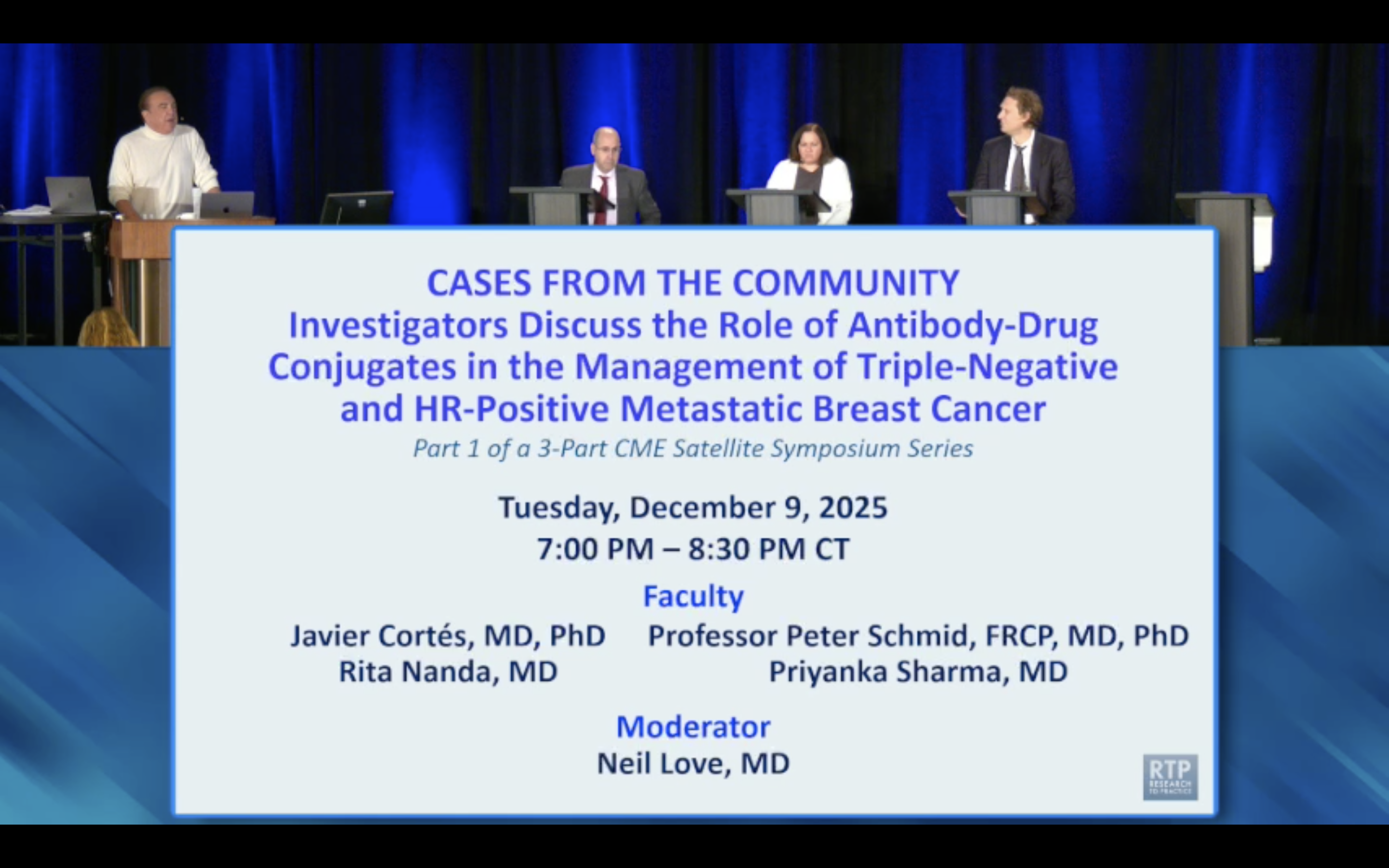
Despite both being Trop-2 targeted antibody-drug conjugates, Sacituzumab Govitecan and Datopotomab duroxotein have distinct side effects due to different linkers and payloads. Sacituzumab causes neutropenia and diarrhea, while Datopotomab is linked to stomatitis and ocular issues, requiring unique management strategies.

New CDK inhibitors that also target CDK2 show great activity in models resistant to current CDK4/6 agents. Instead of being reserved for later use, they are already being tested in frontline trials. The strategy, similar to that of ALK inhibitors in lung cancer, is that using the best drug first may prevent or significantly delay the onset of resistance.

To accurately compare drug efficacy in cell lines, researchers should look beyond dose concentration. The better method is to measure downstream biological effects, like protein phosphorylation or cell cycle arrest percentage, to establish pharmacodynamic equivalence.