Get your free personalized podcast brief
We scan new podcasts and send you the top 5 insights daily.
A paradox exists in modern conflict: while technology like drones and sensors makes the battlefield incredibly lethal and difficult to operate on, political leaders remain optimistic about using war as a tool of statecraft. They consistently believe they can achieve a decisive victory despite overwhelming evidence to the contrary.

Related Insights
Decades of technological dominance, particularly in battlefield medicine ensuring a 'golden hour' for wounded soldiers, has fundamentally lowered America's societal risk tolerance for casualties. This creates a strategic vulnerability against adversaries willing to accept massive losses, questioning if the US has the stomach for a high-intensity conflict where such advantages are nullified.

The proliferation of satellites and drones has created a "transparent battlefield" where forces are under constant observation. This blanket of sensors makes it incredibly difficult for armies to move, concentrate forces, or achieve surprise, fundamentally changing traditional military doctrines that rely on maneuver.
While fears focus on tactical "killer robots," the more plausible danger is automation bias at the strategic level. Senior leaders, lacking deep technical understanding, might overly trust AI-generated war plans, leading to catastrophic miscalculations about a war's ease or outcome.
The war in Ukraine marks a historical inflection point in military technology. For the first time since the 19th century, the primary method of killing a soldier is no longer a bullet or artillery shell, but a drone. This fundamentally changes battlefield tactics and defense strategies.

Since Vietnam, the public's unwillingness to watch televised atrocities has made total war impossible. Conflicts now devolve into asymmetric battles where the weaker side bleeds the stronger empire until political will at home evaporates, making decisive "victory" a relic of the past.

Against an enemy employing asymmetric warfare, achieving total victory may be impossible without resorting to indiscriminate killing and infrastructure destruction. Since modern Western societies lack the moral appetite for such tactics, decisive military wins become elusive.

Modern conflicts are not fought for clear victories but as a mechanism to funnel wealth from the public to military, financial, and technical industrial complexes. This framework makes seemingly illogical, perpetual wars make financial sense for a select few.

Drones establish a lethal "kill zone" that restricts ground movement and forces soldiers into hiding. Paradoxically, large logistics drones are also the primary means of survival, delivering all essential supplies like food, water, and ammunition to these otherwise inaccessible frontline positions, enabling the fight to continue.

Advanced sensors, drones, and satellites make it nearly impossible for either side in the Ukraine war to concentrate large forces without being immediately detected and destroyed. This technological shift enforces a static, sluggish front line characterized by small, dismounted infantry movements.
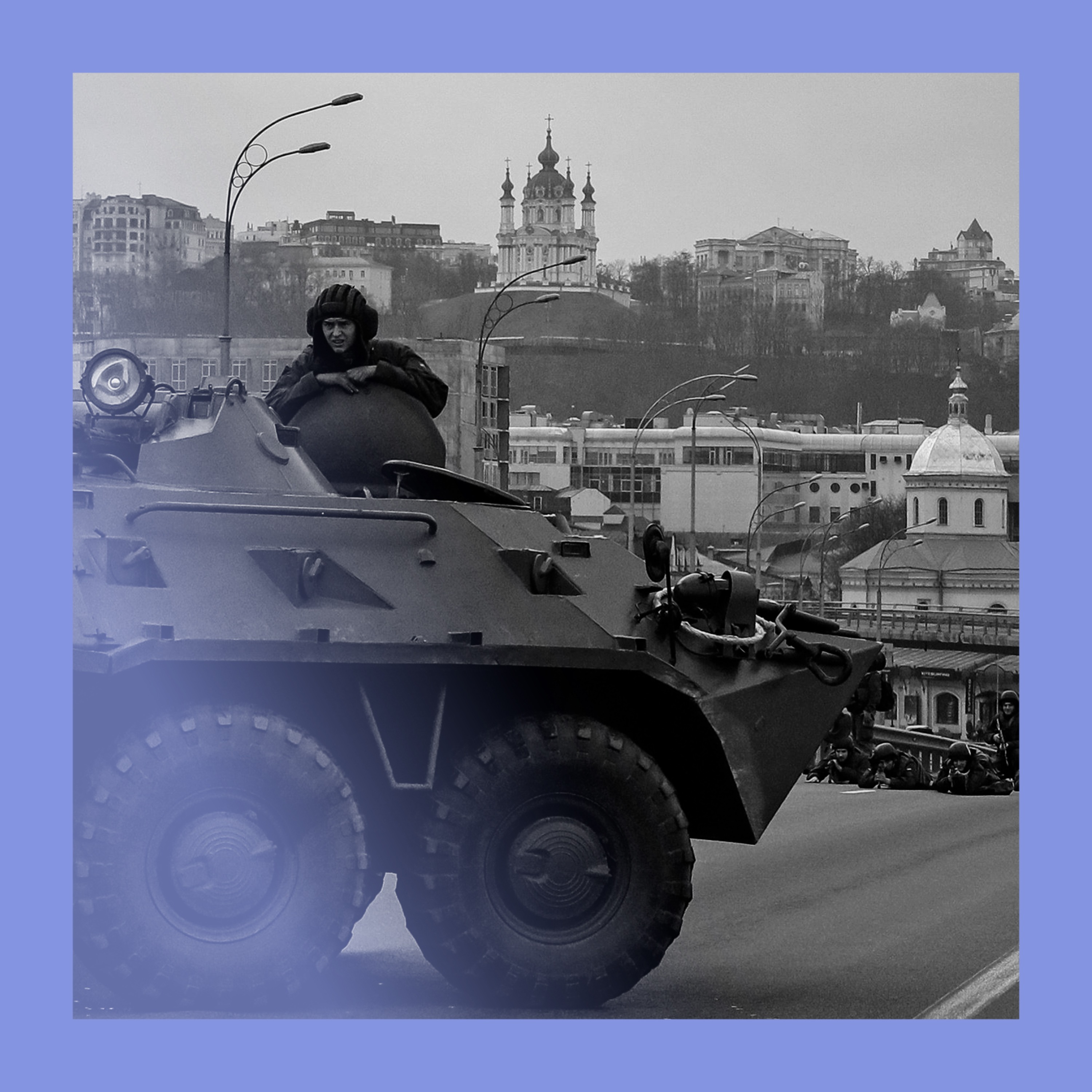
The rise of drones is more than an incremental improvement; it's a paradigm shift. Warfare is moving from human-manned systems where lives are always at risk to autonomous ones where mission success hinges on technological reliability. This changes cost-benefit analyses and reduces direct human exposure in conflict.
