Get your free personalized podcast brief
We scan new podcasts and send you the top 5 insights daily.
The novel drug relacorilant overcomes taxane resistance in ovarian cancer by targeting glucocorticoid receptors. It blocks stress-induced steroid signaling that promotes anti-apoptotic proteins, effectively re-sensitizing tumors to chemotherapy. This represents a completely new mechanism of action for this patient population.

Related Insights
The treatment landscape for platinum-resistant ovarian cancer has rapidly evolved into a biomarker-driven paradigm. Clinicians must now test for and choose between therapies targeting distinct markers like folate receptor alpha (mirvetuximab), HER2 (T-DXd), and PD-L1 (pembrolizumab), requiring a sophisticated sequencing strategy.

The drug exhibits a multimodal mechanism. It not only reverses chemoresistance and halts tumor growth but also 'turns cold tumors hot' by forcing cancer cells to display markers that make them visible to the immune system. This dual action of direct attack and immune activation creates a powerful synergistic effect.

After numerous failed trials suggested immunotherapy was ineffective in ovarian cancer, the KEYNOTE B96 study marks a turning point. Combining pembrolizumab with chemotherapy showed statistically significant improvements in both progression-free and overall survival in platinum-resistant patients, reviving the entire therapeutic class for this disease.

The B96 trial's positive outcome in historically immunotherapy-resistant ovarian cancer is not just about adding pembrolizumab. The regimen's success is attributed to the thoughtful use of continuous weekly paclitaxel, a form of metronomic chemotherapy known to have favorable immunogenic effects, which was a deliberate, science-backed choice.

After a decade with no new therapies improving survival, the landscape for platinum-resistant ovarian cancer is transforming. The recent successes of mirvetuximab, the pembrolizumab/paclitaxel combo, and relacorilant/nab-paclitaxel have all demonstrated statistically significant overall survival benefits, heralding a new era of effective options.
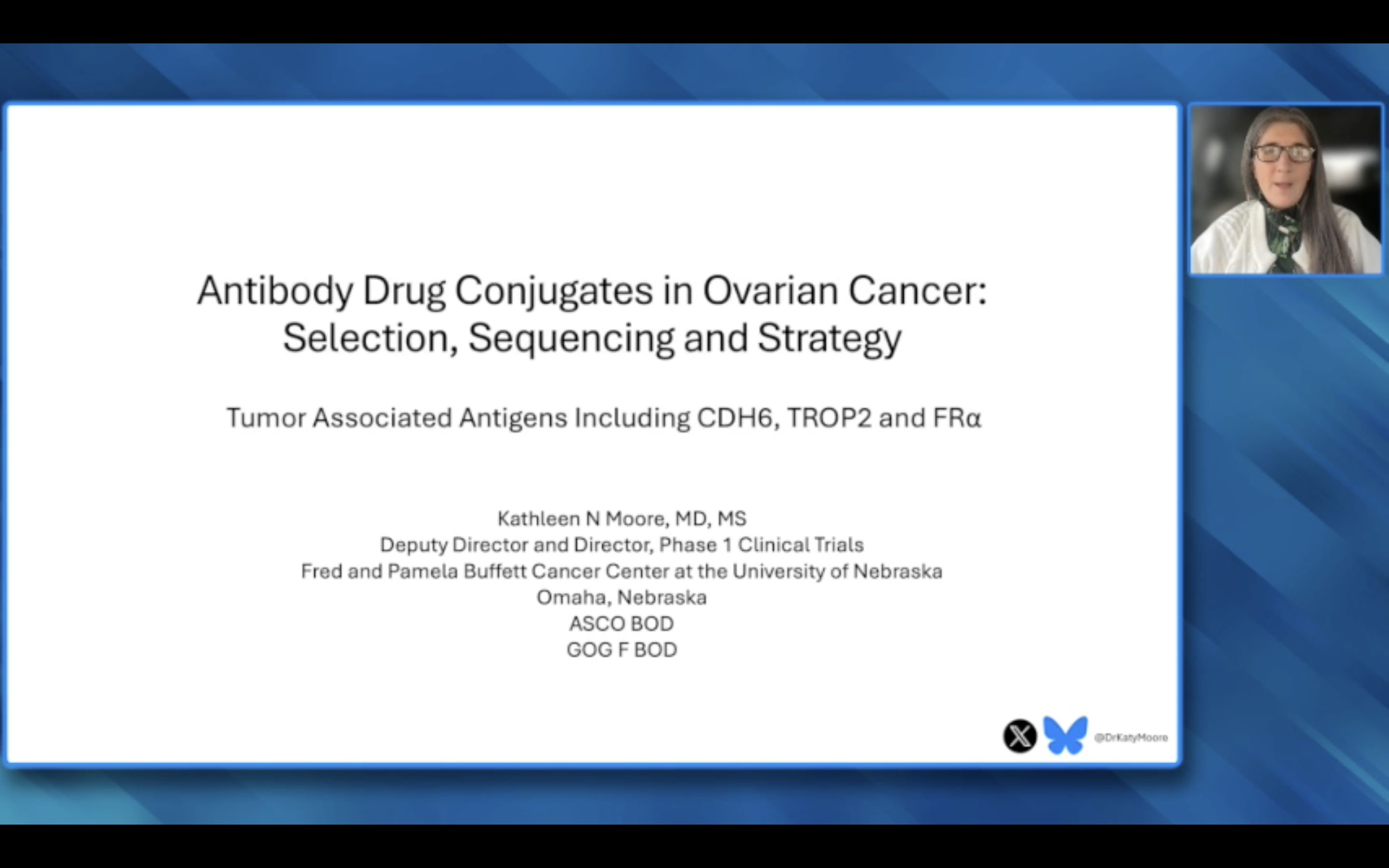
A new wave of antibody-drug conjugates (ADCs) is transforming ovarian cancer treatment. These 'heat-seeking missiles' deliver potent chemotherapy payloads directly to tumor cells, achieving response rates from 23% to over 60% in biomarker-selected populations. This far surpasses the efficacy of conventional chemotherapy in resistant settings.

A subtle finding in the DESTINY-Breast11 trial, where TDXD alone underperformed TDXD followed by THP, suggests that taxane-based chemotherapy might remain effective even after a patient's HER2-positive cancer becomes resistant to the antibody-drug conjugate TDXD.

The success of the KEYNOTE-B96 trial highlights weekly paclitaxel as a uniquely effective partner for immunotherapy in platinum-resistant ovarian cancer. Its metronomic dosing modulates the tumor microenvironment, enhances immunogenicity, and reduces immunosuppression, making it superior to other chemotherapies in this combination.
Corcept Therapeutics' drug relacorilant exemplifies drug development's volatility. Within the same reporting period, the drug showed positive Phase 3 overall survival data in ovarian cancer but received an FDA rejection for Cushing's syndrome. This stark contrast highlights how a single drug's clinical and regulatory success is entirely indication-specific.
Historically, therapies for platinum-resistant ovarian cancer were so ineffective that the order of administration was irrelevant. With the advent of multiple active ADCs, the concept of treatment sequencing and potential cross-resistance based on payloads or targets has become a critical, and entirely new, clinical consideration for this disease.