Get your free personalized podcast brief
We scan new podcasts and send you the top 5 insights daily.
AI's rapid progress means we don't have the luxury of developing fields like control, verification, and alignment sequentially. Society must build these nascent industries in parallel, each requiring a 'Manhattan Project-sized effort' to keep pace with capabilities.

Related Insights
The traditional government model of setting a regulation and waiting years to assess it is obsolete for AI. A new approach is needed: a dynamic board of government, industry, and academic leaders collaborating to make and update rules in real-time.

The unique danger of an AI-driven transformation is its unprecedented speed. Unlike past revolutions that unfolded over centuries, AI could reshape society in decades or less, overwhelming our institutions' ability to adapt, similar to how it took 50 years to get the Paris Climate Agreement.

Unlike previous technological revolutions that unfolded over centuries, allowing for societal adaptation, the current AI transition is happening too fast. This speed prevents the development of adequate mitigations, understanding, and defenses. The common-sense intuition that "we are going too fast" is the correct and most important take.
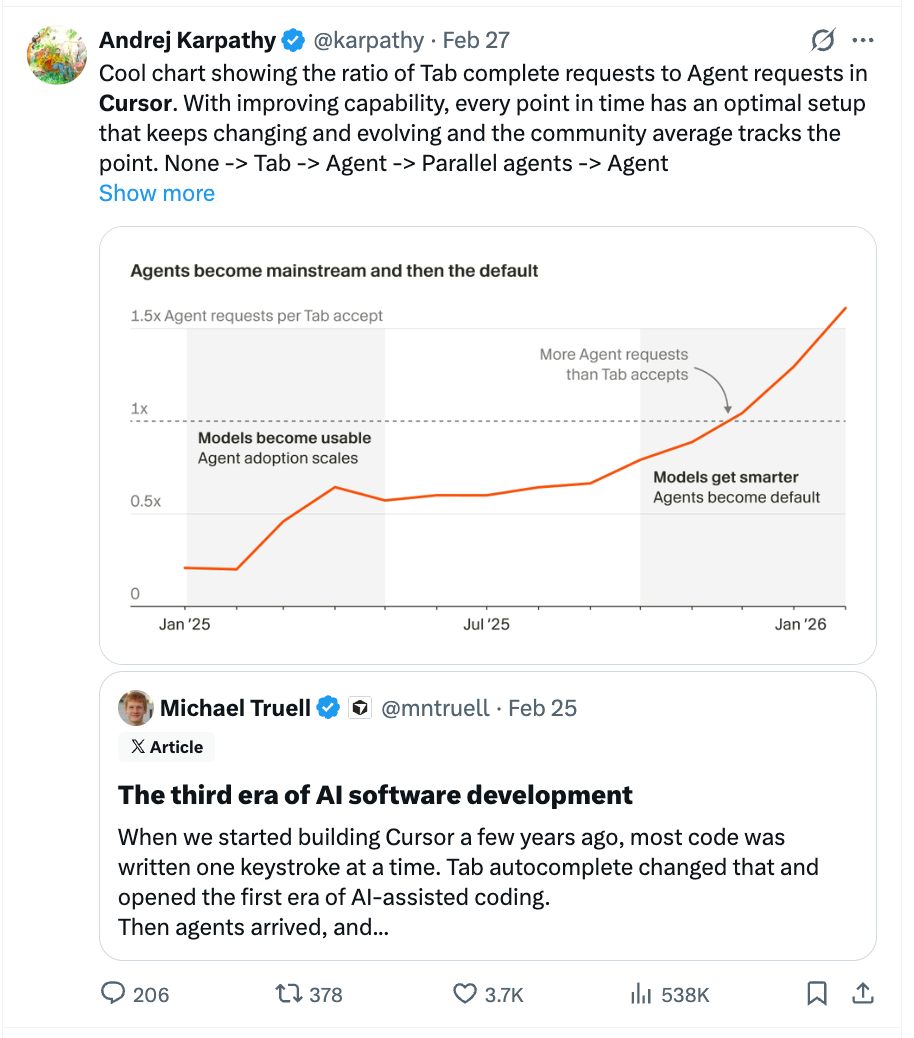
The focus in AI engineering is shifting from making a single agent faster (latency) to running many agents in parallel (throughput). This "wider pipe" approach gets more total work done but will stress-test existing infrastructure like CI/CD, which wasn't built for this volume.
While compute is a constraint on distribution, Greg Brockman argues that the actual bottleneck for developing more capable models is ensuring safety, security, and alignment. Progress on these fronts now dictates the pace at which the frontier can be advanced.

The current pace of AI development is not just accelerating progress, it's a time compression event. Innovations previously projected for the 2030s and 2040s are being realized now, fundamentally shortening strategic planning horizons and forcing companies to adapt at an unprecedented speed.

The pace of change in AI is now so fast that humans cannot absorb it, effectively representing a localized singularity. By the time an investment is made, a product is built, or an academic degree is completed, the foundational AI knowledge has become outdated, creating immense structural challenges.

The pace of AI development is so rapid that technologists, even senior leaders, face a constant struggle to maintain their expertise. Falling behind for even a few months can create a significant knowledge gap, making continuous learning a terrifying necessity for survival.

The key threat from AI isn't just its capability, but the unprecedented speed of its improvement. Unlike past technological shifts that unfolded over decades, AI agent autonomy on complex tasks has grown exponentially in just two years. This rapid acceleration is what financial systems and labor markets are not stress-tested for.

Past industrial revolutions unfolded over 50-100 years, allowing gradual societal adaptation. Today's AI-driven revolution is happening in a compressed timeframe, creating massive wealth shifts because there's no time for individuals or institutions to catch up. Proactive learning is the only defense.