Get your free personalized podcast brief
We scan new podcasts and send you the top 5 insights daily.
Before launching its economy, Roblox debated whether developers should earn money. The leadership team concluded that enabling creators to make a living would directly result in higher-quality, more engaging content on the platform, a bet that has clearly paid off.
Related Insights
Roblox's leadership intentionally directs a larger portion of revenue back to its creator community rather than maximizing corporate profits. This strategy fosters a more engaged and innovative developer base, which in turn drives the platform's overall success and long-term defensibility.

While AI tools reduce the cost of creating game assets, Roblox's CEO argues this won't change the competitive dynamics. He believes consumer expectations for quality and polish increase at the same pace as the technology's capability, keeping the bar for success perpetually high.

AI tools like Google's Genie can generate game worlds, but they don't threaten established platforms like Roblox and Fortnite. The real moat for these incumbents isn't content creation but their massive, engaged user networks, in-game economies, and robust multiplayer infrastructure, which are difficult to build from scratch.

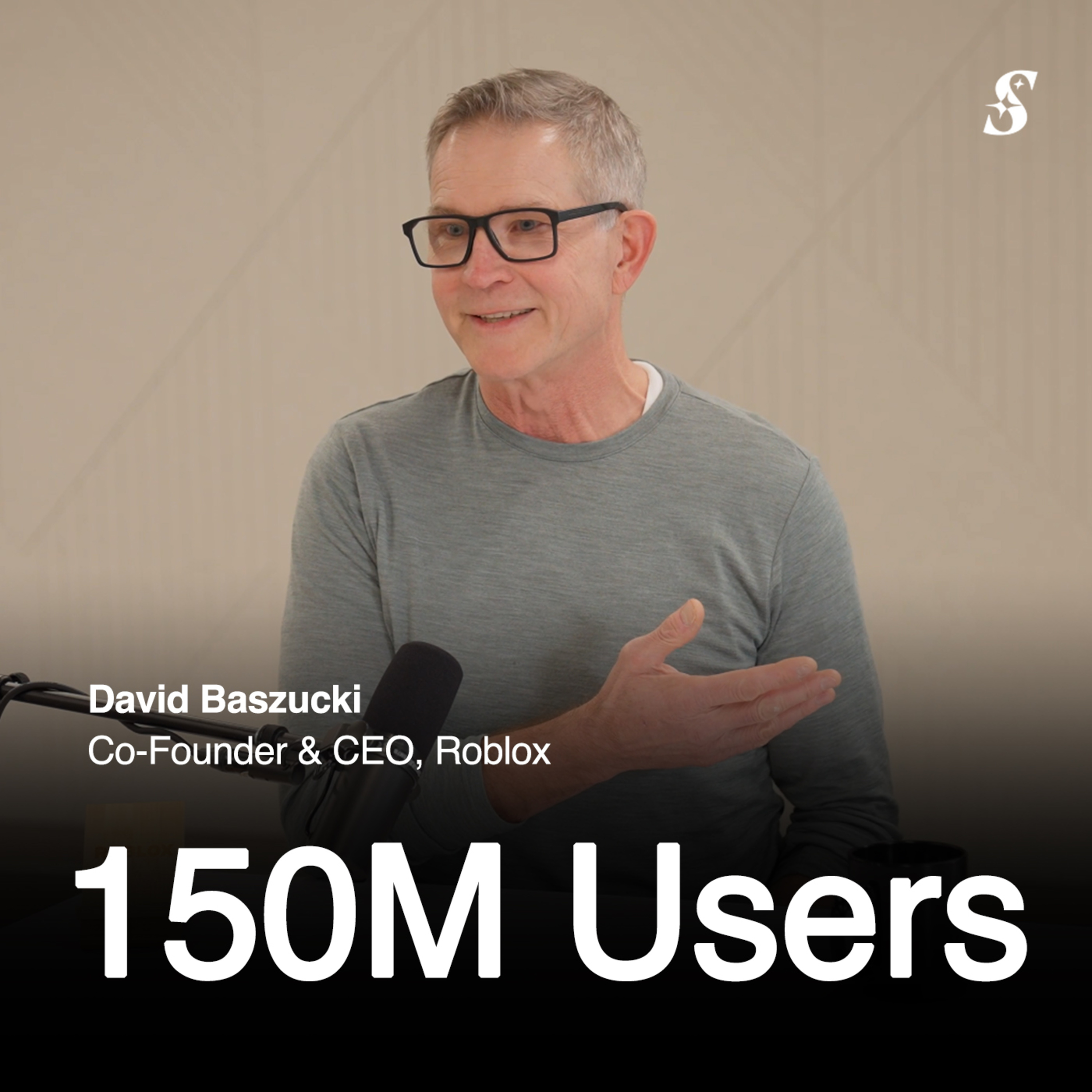
Roblox CEO Dave Bazooki articulated the company's grand ambition: to expand from its current 3% share to capture 10% of the entire global gaming market. This strategy positions Roblox not as a single game but as a foundational platform for creators, similar to an operating system for interactive experiences.

In a growing global video game market, nearly all the growth outside of China was attributed to Roblox, while other segments remained flat or declined. This staggering statistic indicates a massive market shift where consumer time and money are consolidating into user-generated content (UGC) ecosystems over traditionally produced, high-fidelity games from major studios.

When revenue stalled, Roblox wasted months on small fixes. The real solution was a difficult strategic shift: creating the Robux virtual currency. This aligned creator incentives with platform growth and solved the root problem instead of tinkering with symptoms.
Roblox is a significant talent pipeline, particularly for individuals without traditional computer science backgrounds. In 2024, 44% of its creators had never created digital content outside the platform, and a third of paid creators had no formal programming or game design education. This makes Roblox a powerful, accessible on-ramp into the creator and developer economy.

Roblox is making its discovery algorithm more transparent to creators. The CEO explains this creates positive pressure on the company itself. By exposing the logic, they are forced to build a more robust and sophisticated algorithm that is harder to manipulate, benefiting the entire ecosystem.
Roblox operates a sophisticated internal economy, not just a simple virtual currency. The company employs a team of PhD economists, dubbed the "economy group," to manage monetary policy and control inflation. This approach is influenced by founder David Baszucki's interest in monetarist theories from economists like Milton Friedman, treating the Robux ecosystem like a real-world central bank.
Roblox's leadership frames their total addressable market beyond the $200 billion gaming industry. They are building for the "human co-experience market," viewing their platform as a new communication medium akin to a sci-fi holodeck where people share experiences.