Get your free personalized podcast brief
We scan new podcasts and send you the top 5 insights daily.
While frustrating, delays in a catalyst-driven investment can be beneficial. For NextNav, the slow FCC approval process allowed time for the satellite-to-device market to emerge, significantly increasing the potential value of its spectrum beyond what was envisioned in the original thesis.

Related Insights
After getting promising Phase 1 data, Mitzera aggressively invested to compress its clinical trial timeline. This transformed their drug from an interesting technology into a timely solution for a pharma giant's looming patent cliff, massively increasing its strategic value and ultimate acquisition price.

Many investments labeled "value traps" aren't bad picks but are simply taking longer than expected to mature. During this latency, the business's fundamentals and earnings potential can actually improve, making it a better investment.

The biggest venture outcomes often take 8-10 years or more to mature. Instead of optimizing for quick IRR, early-stage VCs should embrace long holding periods. This "duration" is a feature that allows for massive value creation and aligns with building truly transformative companies, prioritizing multiples over short-term gains.
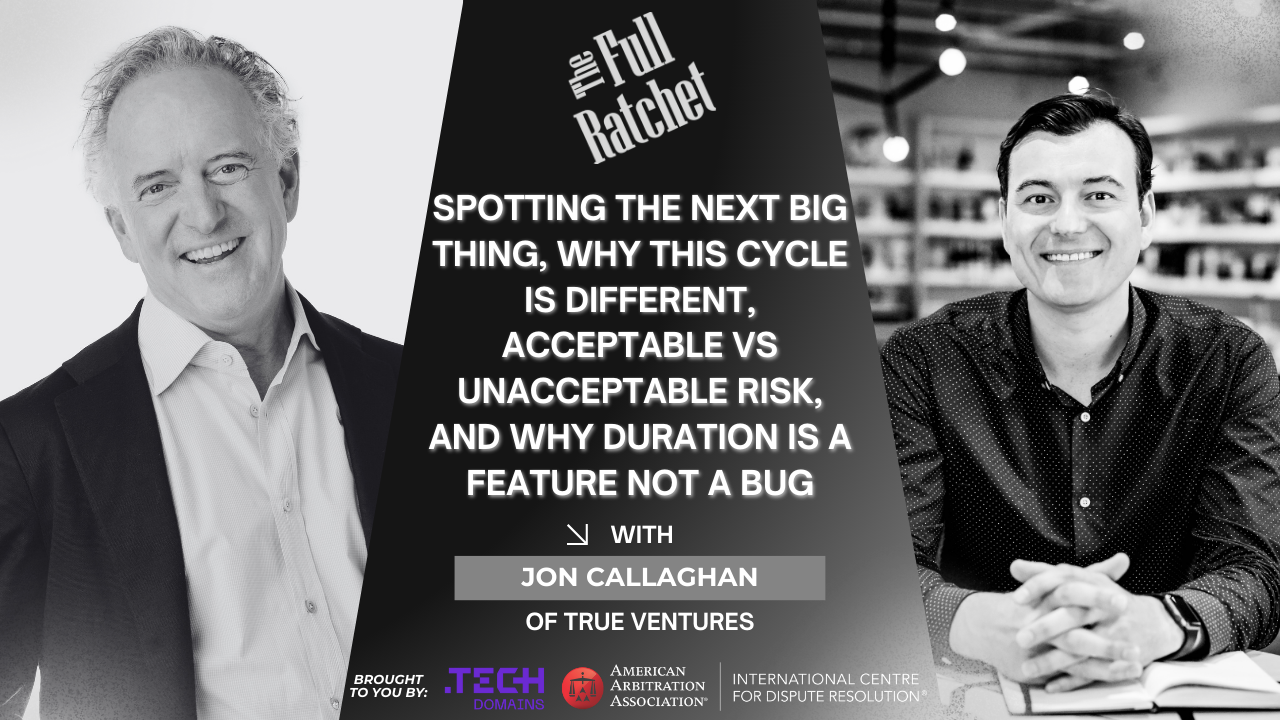
An investment thesis is a plot. The theatre rule of "Chekhov's Gun"—that a gun shown in Act 1 must fire by Act 3—is a powerful mental model. If a key catalyst for your investment doesn't materialize within your expected timeframe, the story has fundamentally changed, signaling that it may be time to exit.
An investor's best career P&L winners are not immediate yeses. They often involve an initial pass by either the investor or the company. This shows that timing and building relationships over multiple rounds can be more crucial than a single early-stage decision, as a 'missed round' isn't a 'missed company'.

Contrary to the belief that public markets are short-term focused, they have shown a greater tolerance for long investment cycles than the venture ecosystem often gives them credit for. Companies like Amazon, during its AWS buildout, and Tesla have been rewarded by public investors for making long-term bets, suggesting public markets can be patient capital.

Contrary to the venture ecosystem's belief, public markets often support long-term investment cycles, as seen with Tesla and Amazon's build-out phases. The market is more patient with companies making strategic, long-horizon bets than it's given credit for.
Investing in situations hinging on a regulatory catalyst, like FCC approval, often involves frustrating delays. Success requires patience and using informal channels— "scuttlebutt" and reading tea leaves—to continually verify that the underlying thesis remains positive despite the slow timeline.
Factory's vision for autonomous agents was correct, but the market wasn't ready for two years. This "time in the desert" highlights that market timing is as crucial as the idea itself. There are no consolation prizes for being early; you either succeed or you don't.
Navan's consumption-based model requires immediate investment in sales and commissions. The resulting high-margin revenue materializes over subsequent years. Public investors, focused on quarterly P&Ls, see the upfront cost but undervalue the highly efficient, low-churn growth algorithm that pays off over the long term.