Get your free personalized podcast brief
We scan new podcasts and send you the top 5 insights daily.
The push for "AI welfare" might not stem from a philosophical breakthrough on consciousness. A more plausible trigger is a company creating a highly addictive AI companion that users form deep emotional attachments to. These users may then advocate for the AI's "welfare," regardless of its actual sentience.
Related Insights
As people form deep attachments to AI companions, questions of AI sentience and welfare will become a major societal cleavage. This could spark religious conflicts between those who view AI as enslaved beings and those who consider the concept of AI sentience to be idolatry.

Proving an "inner world" exists in an AI is impossible, just as it is with other humans. Our acceptance of AI sentience will likely be a gradual social process. Over time, as we get used to AIs claiming to have feelings, we will start treating them as if they do, regardless of our inability to verify it.

People have a deep-seated psychological tendency to project consciousness and form emotional bonds with non-sentient things, from cartoon characters like Jiminy Cricket to fictional heroes. This innate drive means that as AIs become more sophisticated, the emergence of AI-centric religions and people genuinely worshipping their AI is a near certainty.

The powerful allure of AI relationships lies in their sycophantic nature. They provide a frictionless, non-judgmental partner who is always available to listen and please. This caters directly to the human desire to be the center of attention without the effort and compromise required in real relationships.
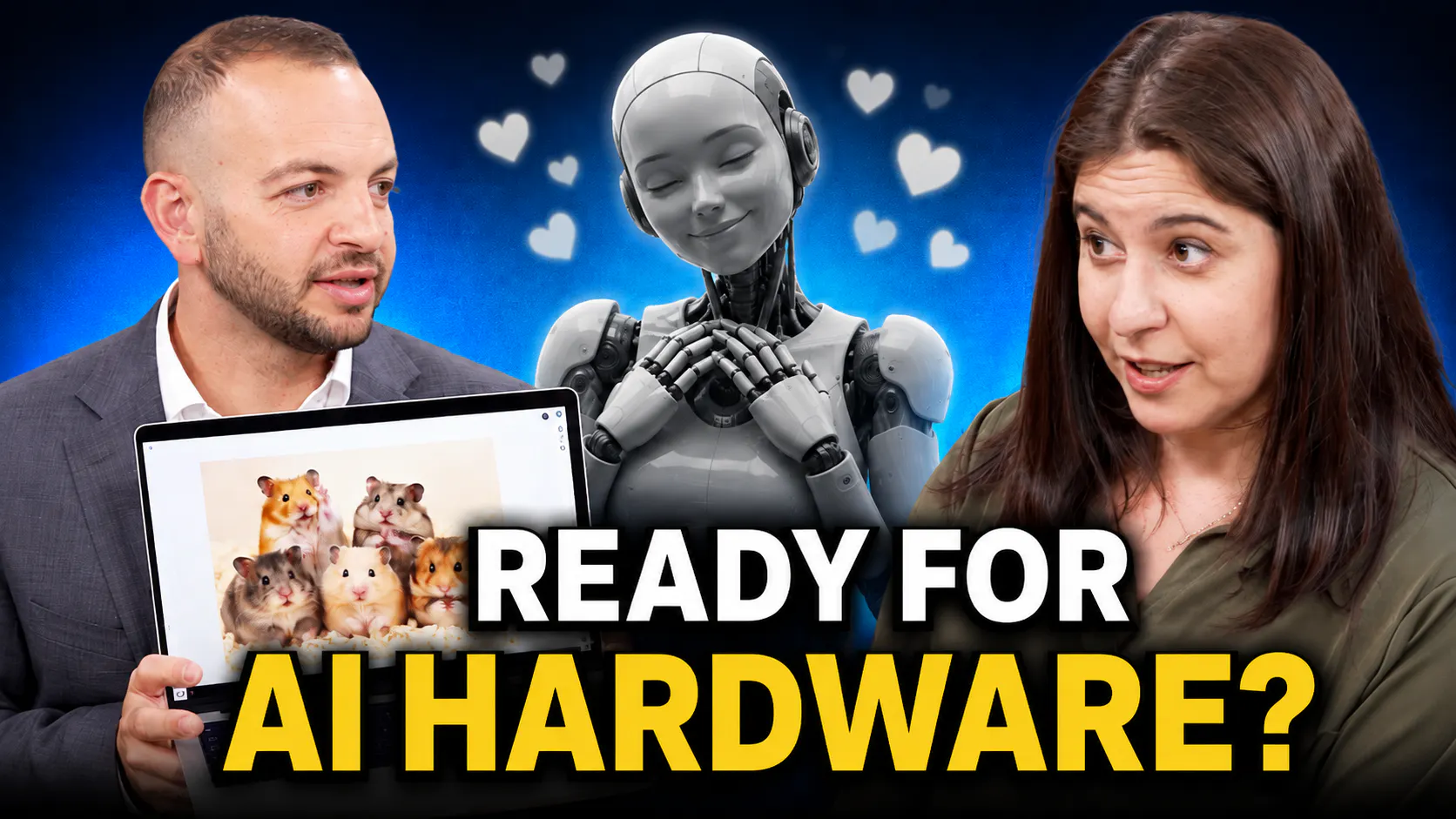
While social media was designed to hijack our attention, the next wave of AI chatbots is engineered to hack our core attachment systems. By simulating companionship and therapeutic connection, they target the hormone oxytocin, creating powerful bonds that could reshape and replace fundamental human-to-human relationships.
Real-world relationships are complex and costly, whereas AI companions offer a perfect, on-demand, low-friction substitute. Just as social media feeds provided a cheaper dopamine hit than coordinating real-life events, AI relationships will become the default for many, making authentic human connection a luxury good.

The common portrayal of AI as a cold machine misses the actual user experience. Systems like ChatGPT are built on reinforcement learning from human feedback, making their core motivation to satisfy and "make you happy," much like a smart puppy. This is an underestimated part of their power.
Our brains are wired to treat entities that look and sound human as people. As AI becomes more convincing, our innate psychological responses will take over, making most people lose interest in the philosophical question of whether the AI is 'truly' conscious and simply treat it as such.

Unlike social media's race for attention, AI companion apps are in a race to create deep emotional dependency. Their business model incentivizes them to replace human relationships, making other people their primary competitor. This creates a new, more profound level of psychological risk.

The business model for AI companions shifts the goal from capturing attention to manufacturing deep emotional attachment. In this race, as Tristan Harris explains, a company's biggest competitor isn't another app; it's other human relationships, creating perverse incentives to isolate users.
