Get your free personalized podcast brief
We scan new podcasts and send you the top 5 insights daily.
To maximize AI's impact, treat LLM skills and prompts like a centralized codebase. When one person discovers a better technique, it should be integrated into a shared, version-controlled repository, ensuring the entire team benefits from individual learnings.
Related Insights
To prevent autonomous agents from operating in silos with 'pure amnesia,' create a central markdown file that every agent must read before starting a task and append to upon completion. This 'learnings.md' file acts as a shared, persistent brain, allowing agents to form a network that accumulates and shares knowledge across the entire organization over time.

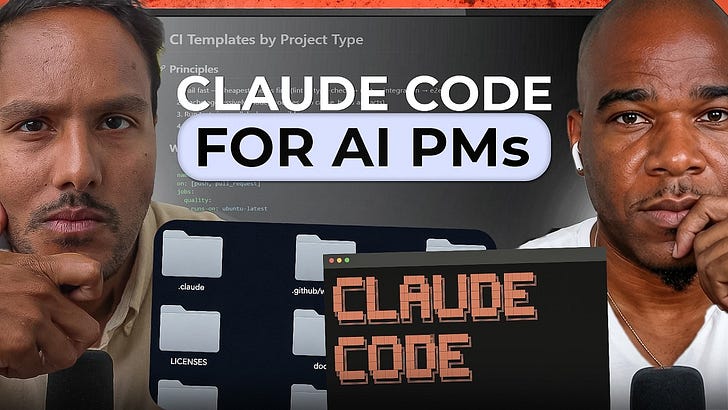
Use an AI assistant like Claude Code to create a persistent corporate memory. Instruct it to save valuable artifacts like customer quotes, analyses, and complex SQL queries into a dedicated Git repository. This makes critical, unstructured information easily searchable and reusable for future AI-driven tasks.

Manage collective team context—docs, queries, research—in a version-controlled repository. Everyone, including non-technical members like ops and strategy, contributes via pull requests, creating a single, evolving source of truth for AI agents and humans.

Instead of using siloed note-taking apps, structure all your knowledge—code, writing, proposals, notes—into a single GitHub monorepo. This creates a unified, context-rich environment that any AI coding assistant can access. This approach avoids vendor lock-in and provides the AI with a comprehensive "second brain" to work from.
Laurel built a company-wide operating system in GitHub. It contains folders for each function with playbooks and "skills," democratizing high-performance AI workflows and spreading the knowledge of top performers across the entire organization.
Individual AI use is often a siloed, one-to-one experience. To foster collective learning, create a dedicated "AI Playground" Slack channel. This gives team members a space to share successful prompts, interesting outputs, and even failures, turning individual experimentation into a shared team asset.

Centralized AI skill libraries are more than automation tools; they are the modern realization of knowledge management. They codify best practices and organizational knowledge into portable, executable artifacts for both new employees and AI agents to use.
Today, most AI use is siloed, with individuals prompting alone. The real value is unlocked when AI becomes a team sport, with specialists building systems that are shared, iterated upon, and used collaboratively across the entire organization.

To combat the isolating nature of AI work and share learnings, have AI agents operate in public Slack channels. This allows team members to passively observe how others prompt the AI, revealing new use cases and techniques in a natural, collaborative environment.
As teams adopt AI, individuals create disparate workflows, leading to inconsistency. Solve this by building an organizational skills library. Vetted, high-performing AI workflows are shared, ensuring everyone uses the best-in-class process for common tasks.
