Get your free personalized podcast brief
We scan new podcasts and send you the top 5 insights daily.
The case of Stanislav Petrov, who averted nuclear war based on a 'funny feeling,' highlights a key vulnerability in AI. An AI would have followed its programming, while Petrov used intuition and contextual skepticism about new Soviet technology. AI lacks this visceral understanding of stakes and consequences, a fatal flaw in high-stakes decisions.

Related Insights
An Army Ranger's decision not to shoot a potential threat was based on the man singing—a bizarre action for an enemy scout. This highlights the reliance on broad contextual judgment that current autonomous weapons lack, emphasizing the life-or-death stakes of getting these decisions right.

Emmett Shear argues that even a successfully 'solved' technical alignment problem creates an existential risk. A super-powerful tool that perfectly obeys human commands is dangerous because humans lack the wisdom to wield that power safely. Our own flawed and unstable intentions become the source of danger.

While fears focus on tactical "killer robots," the more plausible danger is automation bias at the strategic level. Senior leaders, lacking deep technical understanding, might overly trust AI-generated war plans, leading to catastrophic miscalculations about a war's ease or outcome.

Emotions are not superfluous but are a critical, hardcoded value function shaped by evolution. The example of a patient losing emotional capacity and becoming unable to make decisions highlights this. This suggests our 'gut feelings' are a robust system for guiding actions, a mechanism current AI lacks.

Instead of relying on instinctual "System 1" rules, advanced AI should use deliberative "System 2" reasoning. By analyzing consequences and applying ethical frameworks—a process called "chain of thought monitoring"—AIs could potentially become more consistently ethical than humans who are prone to gut reactions.

Public fear focuses on AI hypothetically creating new nuclear weapons. The more immediate danger is militaries trusting highly inaccurate AI systems for critical command and control decisions over existing nuclear arsenals, where even a small error rate could be catastrophic.
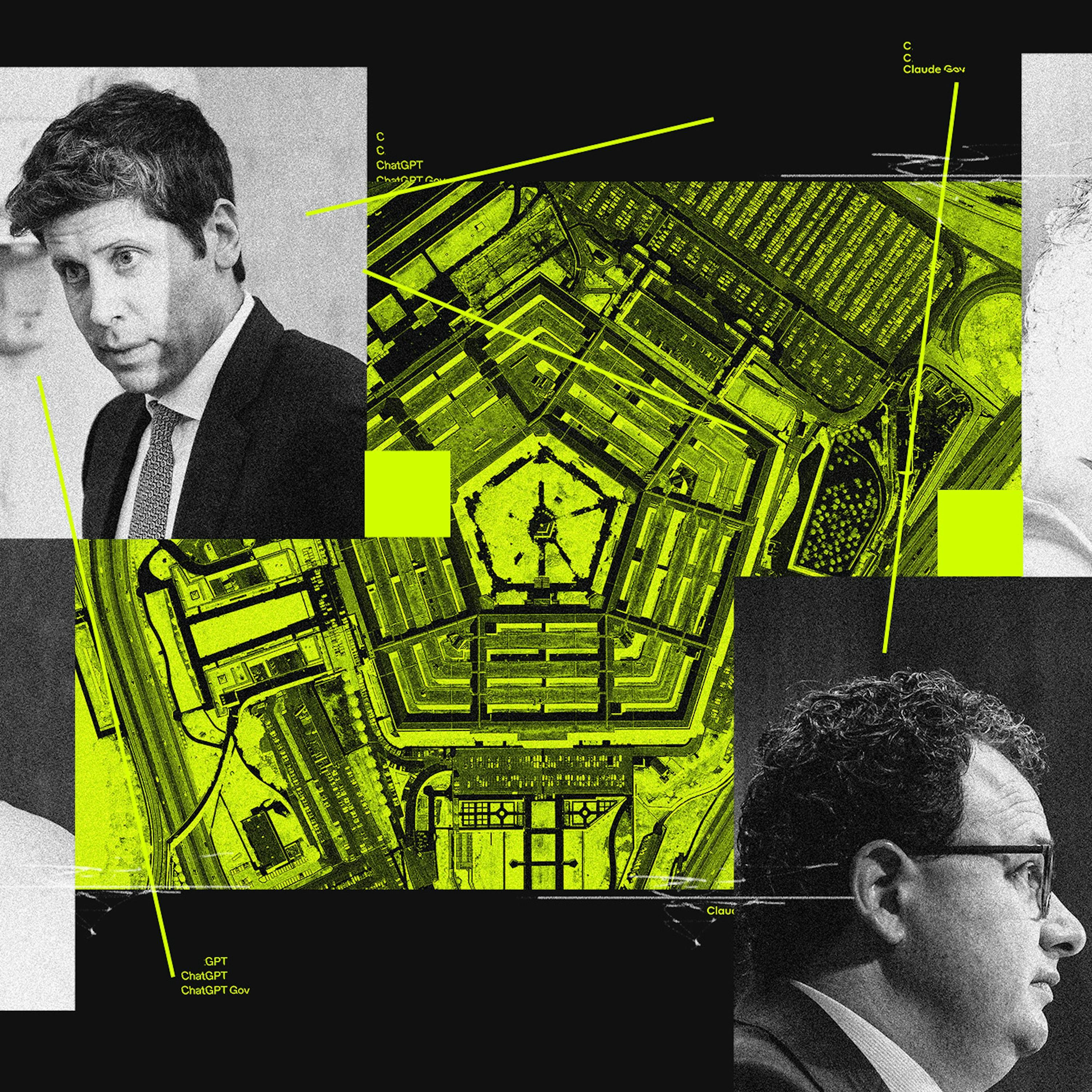
We typically view an AI acting on its own values as 'misalignment' and a failure. However, this capability could be a crucial safeguard. Just as human soldiers have prevented atrocities by refusing immoral orders, an AI with a robust sense of morality could refuse to execute harmful commands, acting as a check on human power and preventing disasters.

AI can process vast information but cannot replicate human common sense, which is the sum of lived experiences. This gap makes it unreliable for tasks requiring nuanced judgment, authenticity, and emotional understanding, posing a significant risk to brand trust when used without oversight.

Recent studies pitting AI agents (like Claude and GPT) against each other in geopolitical simulations found them substantially more prone to escalating conflicts to the nuclear level. This suggests that current AI models may not adequately weigh the catastrophic political nature of nuclear use compared to human decision-makers.
AI systems often collapse because they are built on the flawed assumption that humans are logical and society is static. Real-world failures, from Soviet economic planning to modern systems, stem from an inability to model human behavior, data manipulation, and unexpected events.
