Get your free personalized podcast brief
We scan new podcasts and send you the top 5 insights daily.
Eli Lilly's recent deal-making reveals an aggressive, multi-modal strategy. It secured an AI partnership for obesity (Nimbus), invested in an AI platform for oncology (InduPro), and spent $1.2B acquiring Ventix Biosciences for its oral inflammation pipeline, demonstrating a broad approach to securing leadership in its focus areas.
Related Insights
The nature of biopharma M&A changed dramatically in a year. After a period with no deals over $5 billion, there are now seven or eight such transactions, reflecting a pivot by large pharma to acquire de-risked assets with large market potential to offset looming patent expirations.

The long-held belief that solving obesity would create immense wealth is now validated by Eli Lilly's $1T market cap, driven by its GLP-1 weight-loss drugs. This marks a significant shift, as the trillion-dollar club was previously dominated by tech and oil companies.

Despite claims of AI driving massive cost savings, industry experts like Eric Topol predict big pharma will not acquire major AI drug discovery companies in 2026. The dominant strategy is to build capabilities internally and form partnerships, signaling a cautious 'build and partner' approach over outright acquisition.

The relationship between AI startups and pharma is evolving rapidly. Previously, pharma engaged AI firms on a project-by-project, consulting-style basis. Now, as AI models for drug discovery become more robust, pharma giants are seeking to license them as enterprise-wide software suites for internal deployment, signaling a major inflection point in AI integration.

Big pharma is heavily investing in AI-driven drug discovery platforms. Deals like Sanofi with Irindale Labs, Eli Lilly with Nimbus, and AstraZeneca's acquisition of Modelo AI highlight a strategic shift towards acquiring foundational AI capabilities for long-term pipeline generation, rather than just licensing individual preclinical assets.
With patent cliffs looming and mature assets acquired, large pharmaceutical companies are increasingly paying billion-dollar prices for early-stage and even preclinical companies. This marks a significant strategic shift in M&A towards accepting higher risk for earlier innovation.

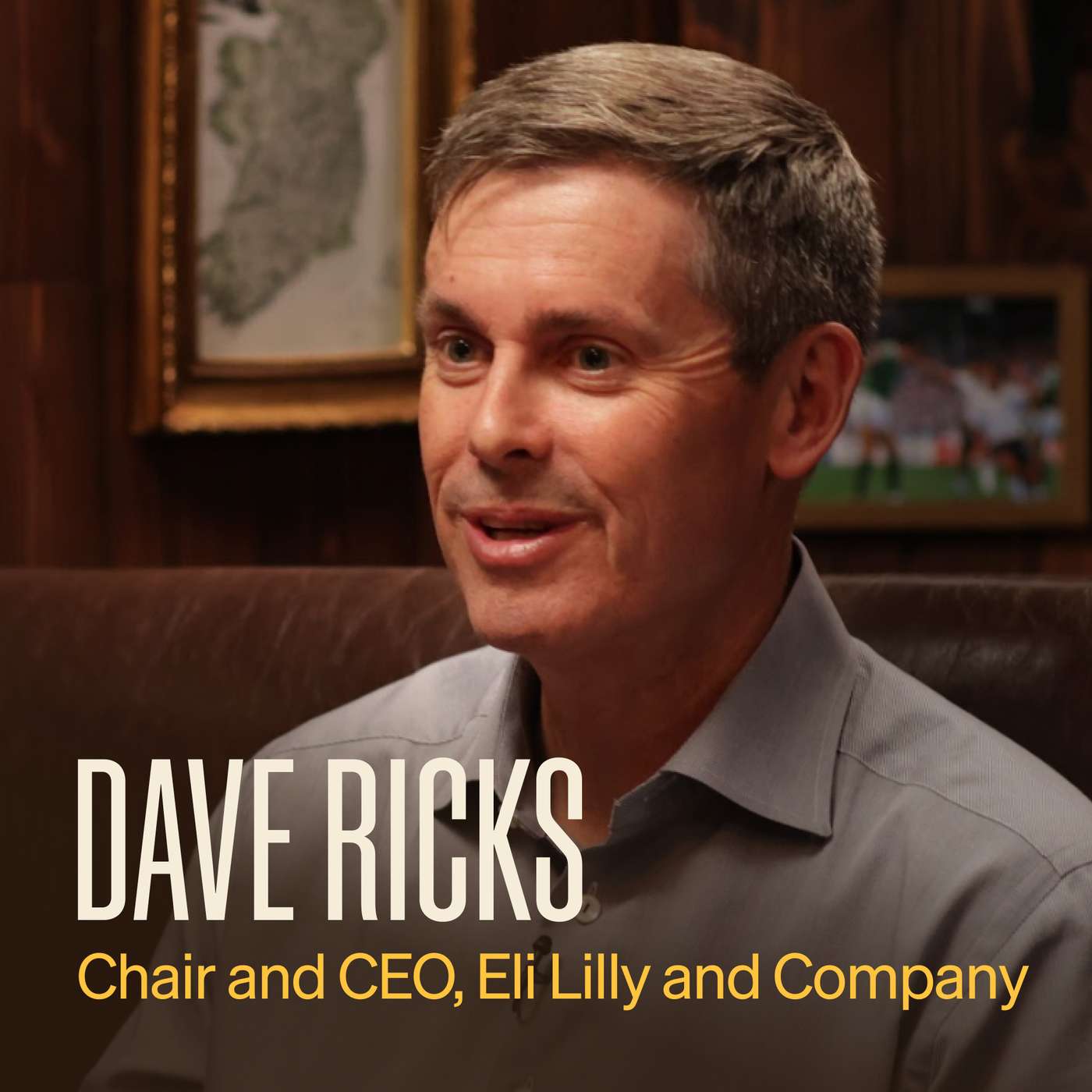
To avoid the pitfalls of scale in R&D, Eli Lilly operates small, focused labs of 300-400 people. These 'internal biotechs' have mission focus and autonomy, while leveraging the parent company's scale for clinical trials and distribution.
Current AI-health partnerships are just the prelude. The next grand strategic move for Big Tech will be to acquire major pharmaceutical companies, which represent a far larger and more impactful market than media.

The current biotech M&A boom is less about frantically plugging near-term patent cliff gaps (e.g., 2026-2027) and more about building long-term, strategic franchises. This forward-looking approach allows big pharma to acquire earlier-stage platforms and assets, signaling a healthier, more sustainable M&A environment.
A key part of Eli Lilly's R&D strategy is tackling large-scale health problems that currently have no treatments and therefore represent a 'zero-dollar market.' This blue-ocean strategy contrasts with competitors who focus on areas with established payment pathways.