Get your free personalized podcast brief
We scan new podcasts and send you the top 5 insights daily.
The idea that government is too slow to regulate fast-moving technology is a disempowering narrative, not a fact. When facing perceived emergencies, like Russia's invasion of Ukraine or the COVID-19 pandemic, governments have proven they can enact major legislation and take decisive action in mere weeks.

Related Insights
The traditional government model of setting a regulation and waiting years to assess it is obsolete for AI. A new approach is needed: a dynamic board of government, industry, and academic leaders collaborating to make and update rules in real-time.

The appointment of an AI czar follows a historical US pattern of creating such roles during crises like WWI or the oil crisis. It's a mechanism to bypass slow government bureaucracies for fast-moving industries, signaling that the government views AI with the same urgency as a national emergency requiring swift, coordinated action.

Facing growing moral panic, the AI industry's plan appears to be moving so fast that regulation becomes impossible. By building data centers and deploying models at breakneck speed, companies aim to make their technology ubiquitous before any effective policy can form.
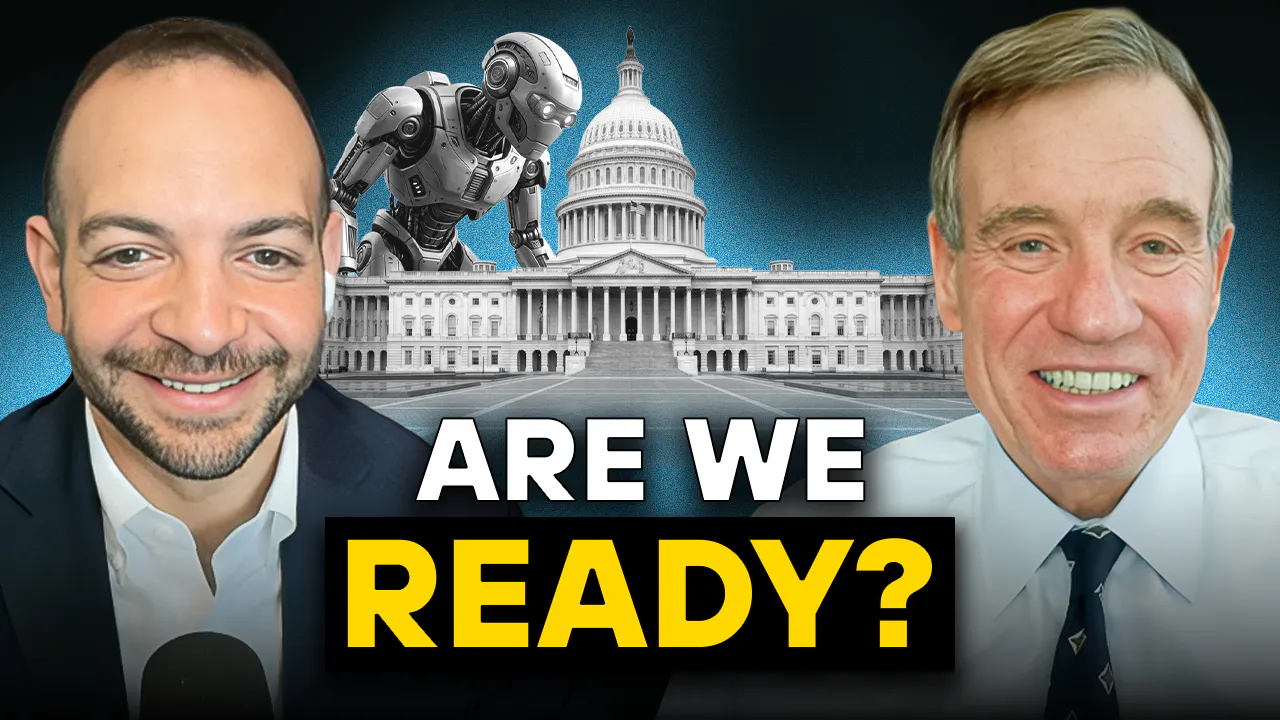
Senator Mark Warner expresses alarm that the US government operates on a linear or even backward-looking timescale, while AI technology is progressing exponentially. This fundamental mismatch leaves society unprepared for the rapid economic and social disruptions AI will cause in the next two to three years.
Even if AI technology advances overnight, a state's ability to act on it is slowed by institutional factors. The need for testing, updating military doctrine, and securing political approval for a high-stakes action means that institutional adaptation will always lag technological progress.

Policymakers confront an 'evidence dilemma': act early on potential AI harms with incomplete data, risking ineffective policy, or wait for conclusive evidence, leaving society vulnerable. This tension highlights the difficulty of governing rapidly advancing technology where impacts lag behind capabilities.

Despite perceptions that China was far ahead in integrating AI into its government, the US is catching up with surprising speed. This acceleration is fueled by both a new wave of patriotic entrepreneurs and an increased willingness within government agencies to change rules and adopt cutting-edge technology.

Contrary to the belief that technology moves faster than policy, the AI policy landscape is currently accelerating rapidly. This is because DC is underratedly 'AGI-pilled,' run by highly online young staffers who are deeply engaged with the discourse, making it a more forward-looking environment than even Wall Street.

Our legal framework, which relies on precedent and slow, deliberate change, cannot keep up with the exponential advancement of AI. This fundamental mismatch creates a regulatory crisis where laws are instantly obsolete, suggesting the need for a new paradigm like 'lightning round legislation' to govern emerging tech.

Pessimistic AI forecasts often underestimate society's capacity to react. Just as with COVID-19, once the dangers of advanced AI become tangible and obvious in the present—not just a future extrapolation—humanity's collective self-preservation instinct will likely drive swift and decisive regulatory action.