Get your free personalized podcast brief
We scan new podcasts and send you the top 5 insights daily.
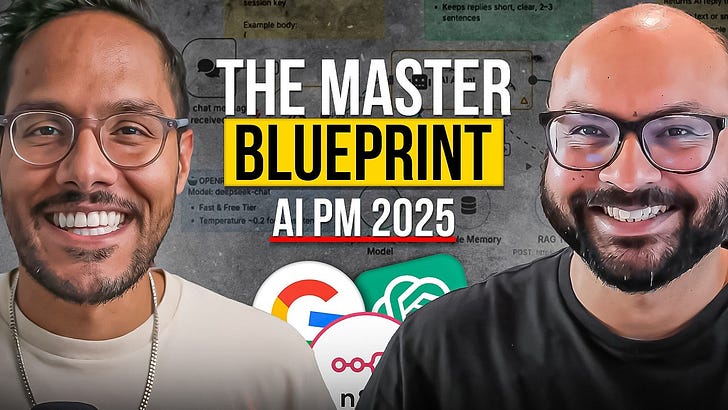
In the current wave of AI-driven layoffs, it's non-technical PMs being let go. Technical proficiency is no longer about coding but understanding the AI ecosystem, its tools, and its terminology. This allows PMs to effectively manage AI-powered workflows and teams, making them indispensable.

Related Insights
As AI tools automate coding and prototyping, the product manager's core function is no longer detailed specification writing. Instead, their value multiplies in judging, facilitating, and making the right strategic decisions quickly. The emphasis moves from the 'how' of building to the 'what' and 'why,' making decision-making the critical skill.

Many non-technical PMs are stuck managing backlogs in tools like Jira, dependent on engineers. AI coding assistants like Claude Code empower them to contribute directly to the codebase, transforming their role from manager to builder.

As AI accelerates engineering, the technical gap between product and engineering shrinks. The most defensible skill for PMs becomes their superior understanding of the business model, market context, and sales motions, making them the indispensable source of strategic direction that AI cannot replicate.

AI won't replace product managers but will elevate their role. PMs will shift from executing tasks like financial forecasting to managing a team of specialized AI agents, forcing them to focus on high-level strategy and assumption-checking.

With AI making code generation cheap, product taste is the key differentiator. In top AI teams, PMs are increasingly technical, using tools like Claude Code to build and iterate, making their role nearly identical to an engineer's.
The traditional PM role, focused on coordinating and moving information, is being replaced by a demand for "builders" who exercise strong judgment. This fundamental shift, driven by AI, puts a significant portion of current PMs whose primary skill is communication and coordination at career risk.

The traditional PM role of coordinating human teams is shifting. With AI, PMs now manage an "army of agents" working simultaneously on different tasks and projects. The core human skill becomes orchestrating this fleet, ensuring quality, and providing the strategic direction and "taste" that AI lacks.
The rise of AI tools isn't replacing the PM role, but transforming it. PMs who embrace an "AI-enhanced" workflow for research, docs, and prototyping will gain a massive productivity advantage, ultimately displacing those who stick to traditional methods.
AI will transform operational tasks like coding and data analysis, but the core skills of a product leader remain uniquely human: articulating a vision, setting a strategy, and synthesizing data with intuition. The key new skill is learning how to effectively interoperate with AI systems.

The key technical skill for an AI PM is not deep knowledge of model architecture but a higher-level understanding of how to orchestrate AI components. Knowing what AI can do and how systems connect is more valuable than knowing the specifics of fine-tuning or RAG implementation.