Get your free personalized podcast brief
We scan new podcasts and send you the top 5 insights daily.
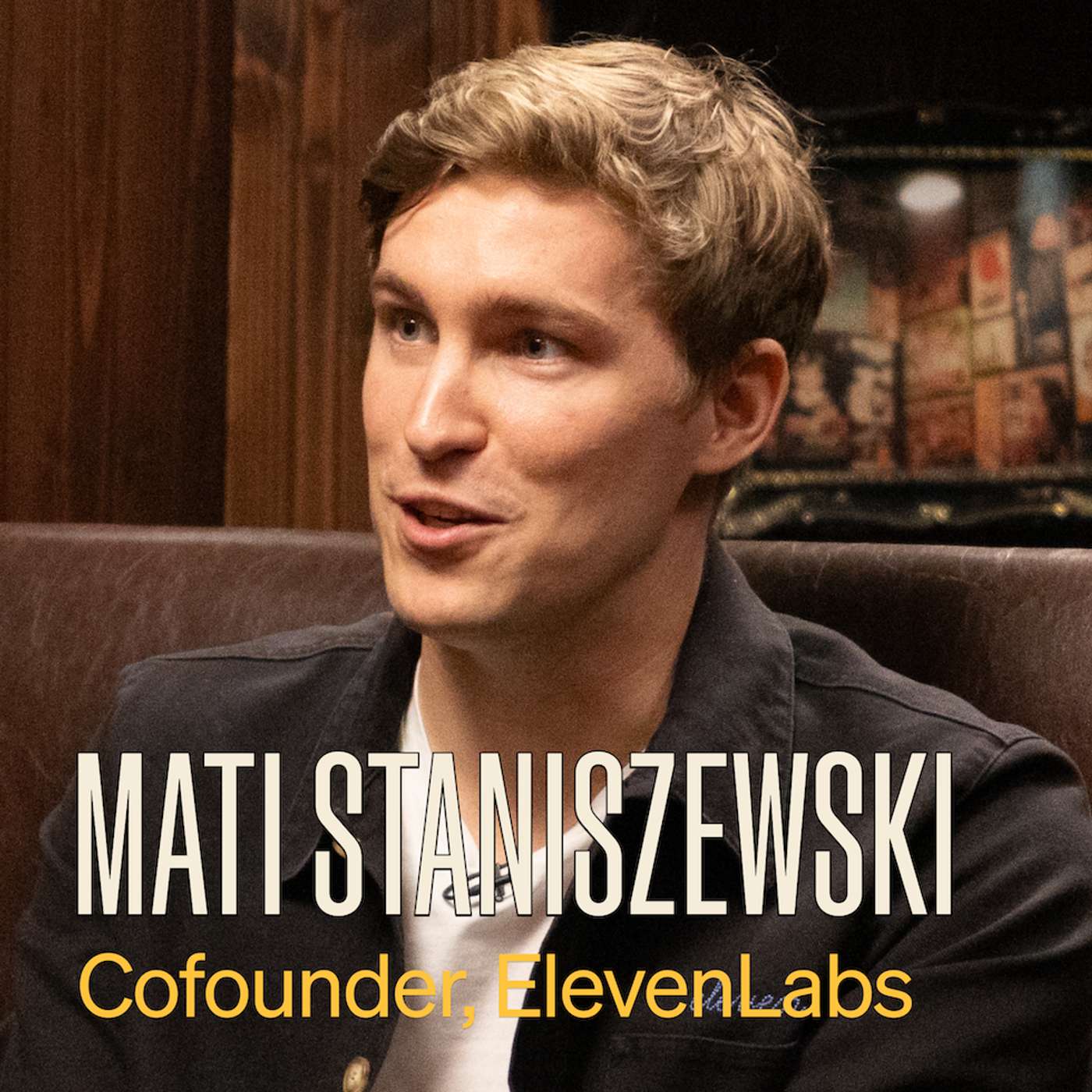
In a world where AI handles routine tasks, the most valuable human contribution is the initiative to solve problems independently. ElevenLabs prioritizes hiring for "agency," seeing it as the ultimate amplifier for an individual's impact, regardless of their seniority. High-agency people are the winners of the AI era.
Related Insights
In an age where AI can execute tasks, the most valuable human trait will be agency—the will to dream up new ideas and act upon them. Instilling this sense of agency is crucial for the next generation to leverage AI as a tool rather than be displaced by it.

As AI handles more routine tasks, uniquely human skills like creativity, strategic thinking, clear communication, and collaboration are becoming table stakes. These former "soft skills" are now mandatory for career growth and resilience.

With AI trivializing the mechanical act of writing code, the most valuable traits for emerging engineers are no longer just technical proficiency. Instead, employers will seek demonstrated agency (the drive to build), taste (knowing what to build), and a commitment to quality.
As AI handles technical tasks, the value of hard skills diminishes. The most crucial employee traits become "human" qualities: buying into the company vision, emotional intelligence, and self-awareness. These are the new competitive advantages in talent acquisition.
The individuals driving AI transformation share a specific mindset. They have 'high agency' to proactively build and experiment, combined with 'low tolerance' for inefficient processes. This contrasts with the pre-AI norm of passively accepting mediocre workflows.

Lovable prioritizes hiring individuals with extreme passion, high agency, and autonomy—people for whom the work is a core part of their identity. This focus on intrinsic motivation, verified through paid work trials, allows them to build a team that can thrive in chaos and drive initiatives from start to finish without supervision.

As AI automates tasks and transforms industries, fixed skills have a shorter shelf life. The defining characteristic for success will be curiosity—the intrinsic motivation to explore, ask questions, and learn continuously. It's the engine that enables adaptation and discovery.

As AI assistants lower the technical barrier for research, the bottleneck for progress is shifting from coding ("iterators") to management and scaling ("amplifiers"). People skills, management ability, and networking are becoming the most critical and in-demand traits for AI safety organizations.

In rapidly evolving fields like AI, pre-existing experience can be a liability. The highest performers often possess high agency, energy, and learning speed, allowing them to adapt without needing to unlearn outdated habits.

With AI handling execution, the differentiating skills for knowledge workers are no longer technical. Instead, value comes from having a distinct vision (taste), the initiative to pursue it (agency), and the ability to organize complex projects (structure).
