Get your free personalized podcast brief
We scan new podcasts and send you the top 5 insights daily.
To find the next breakthrough, identify scientists who are actively blocked by the established leaders of a field, but whom those same leaders are unwilling to bet against. This combination of institutional resistance and personal fear indicates the heterodox researcher may be dangerously close to being correct.

Related Insights
To fund breakthrough ideas, don't seek consensus. Instead, identify proposals that are highly polarizing among experts—where half think it's brilliant and the other half thinks it's terrible. This indicates a departure from the norm and holds the potential for true innovation.

The fund backs underfunded, high-risk ideas that others pass on. The goal isn't just to find a unicorn; it's to contribute to science by definitively disproving a hypothesis. A failure is viewed as "crossing out a wrong answer" for the entire field.
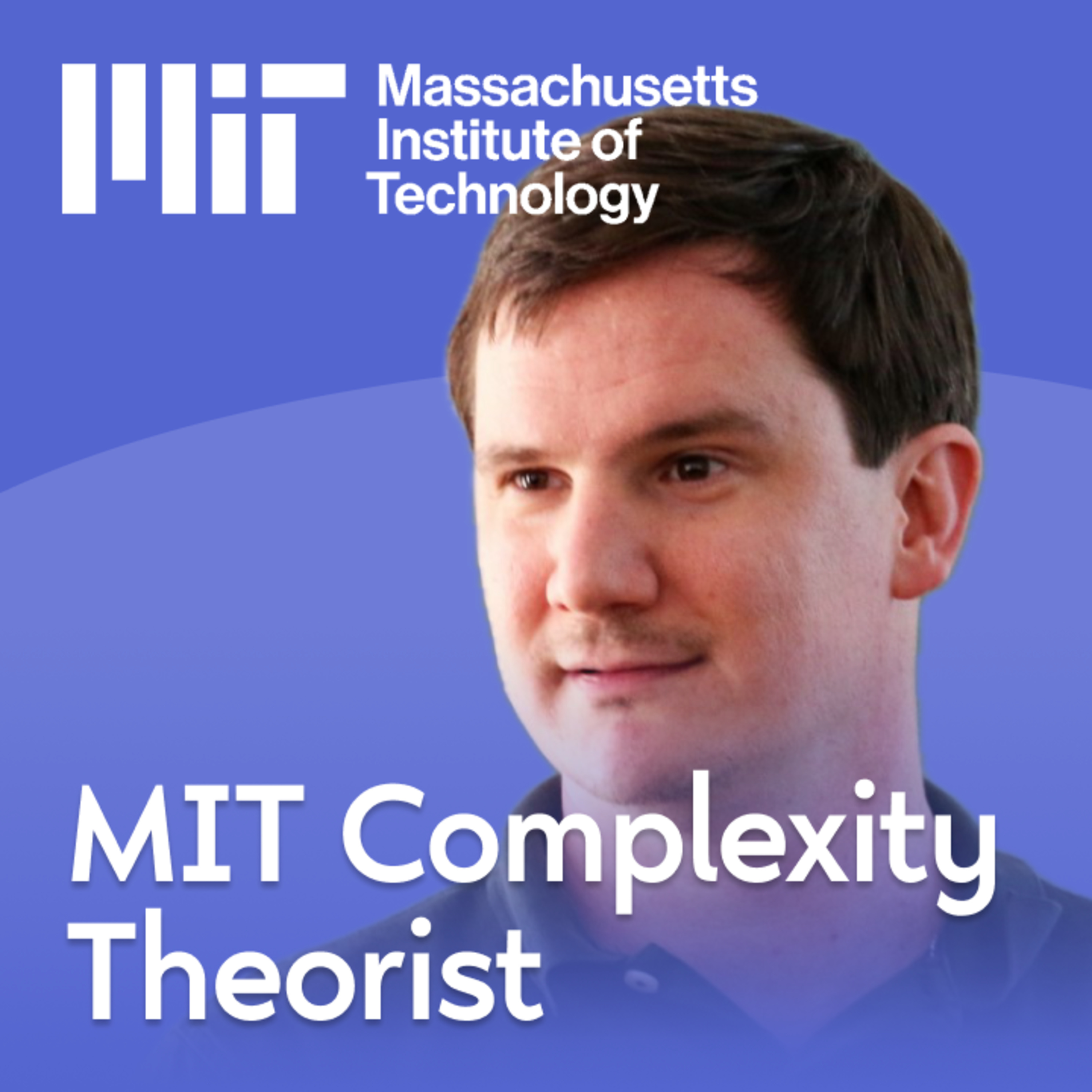
MIT Professor Ryan Williams operates as if the Strong Exponential Time Hypothesis (SETH) is false. This belief forces him to discard standard approaches and explore novel algorithmic ideas. His failed attempts to refute SETH have led to unexpected solutions for other important problems.
Stelios Papadopoulos argues that major drug breakthroughs are stochastic events driven by individual intuition, luck, and counterintuitive thinking, not predictable R&D systems. He states that if discovery could be systematized by AI or process, no company would have an edge.

To combat scientific stagnation, the government is launching 'meta-science' units to experiment with funding. One trial, 'golden tickets,' allows individual peer reviewers to unilaterally fund bold, high-risk ideas, mirroring how VCs back outlier founders.

The most valuable and defensible investment opportunities often lie in areas that are critical for human progress but are culturally taboo, like primate testing for biotech. These markets are starved of capital due to fear of public perception, creating a vacuum for investors willing to withstand criticism.

Dr. Venter argues that major scientific breakthroughs are often painful processes, met with initial attacks and ridicule from a conservative scientific community. He notes that while the burden of proof should be on innovators, the current science funding system creates impossibly high hurdles, squashing thousands of new ideas that threaten the establishment.

Current AIs are trained on the established, consensus-driven scientific literature. The real breakthrough will occur when AI is trained on the 'trash can corpus'—all the ideas and papers that were rejected, laughed at, and dismissed by the orthodoxy. This is where undiscovered alpha lies.
Legendary investors often succeed by making contrarian bets on ideas considered fringe. Peter Thiel became the first backer of DeepMind when AI was dismissed as 'sci-fi' by both the scientific and entrepreneurial communities, demonstrating a pattern of betting on unpopular but transformative technologies.

Unlike weak-link problems (e.g., food safety) where you fix the worst part, science is a strong-link problem where progress depends entirely on the best outcomes. The optimal strategy is therefore to increase variance by funding more weird, high-risk ideas.
