Get your free personalized podcast brief
We scan new podcasts and send you the top 5 insights daily.
Unlike older, dangerous UVC lights that required expert installation, Far-UVC's innate safety means any qualified electrician can install it. This drastically reduces deployment friction, cost, and complexity, making widespread adoption logistically feasible for the first time.

Related Insights
The primary obstacle to widespread Far-UVC adoption isn't missing research, regulation, or high costs. It's a marketing and social normalization problem—shifting its perception from a niche gadget for early adopters to a standard public health utility like hand sanitizer or building ventilation.
The per-classroom cost of FAR-UVC technology (around $2,000 including installation) is low enough that a single motivated and affluent parent could fund a deployment. This provides a path to adoption that bypasses slow-moving institutional budgets and committees in schools.
The first undeniable proof of Far-UVC's effectiveness won't come from complex, society-wide studies. Instead, it will come from isolated, high-risk environments like tuberculosis wards or long-term care facilities, where a 90% reduction in transmission is a clear, dramatic signal that can drive adoption.
The most effective path to widespread societal deployment is not individual sales but incorporating clean air standards into building codes. If regulations mandate a certain level of infection prevention, FAR-UVC becomes the cheapest and easiest way to comply, making it a default feature in new construction and renovations.
The primary reason FAR-UVC isn't widely deployed is a lack of public and institutional awareness. The technology is proven, commercially available, and increasingly affordable. The challenge is social diffusion and making it a normalized part of the built environment, like hand sanitizer or smoke alarms.
A practical rule of thumb for deploying FAR-UVC lighting is that professional installation costs roughly the same as the lamps themselves. This is a crucial budgeting consideration for any institution, as it effectively doubles the total project expense for permanent, wired-in solutions.
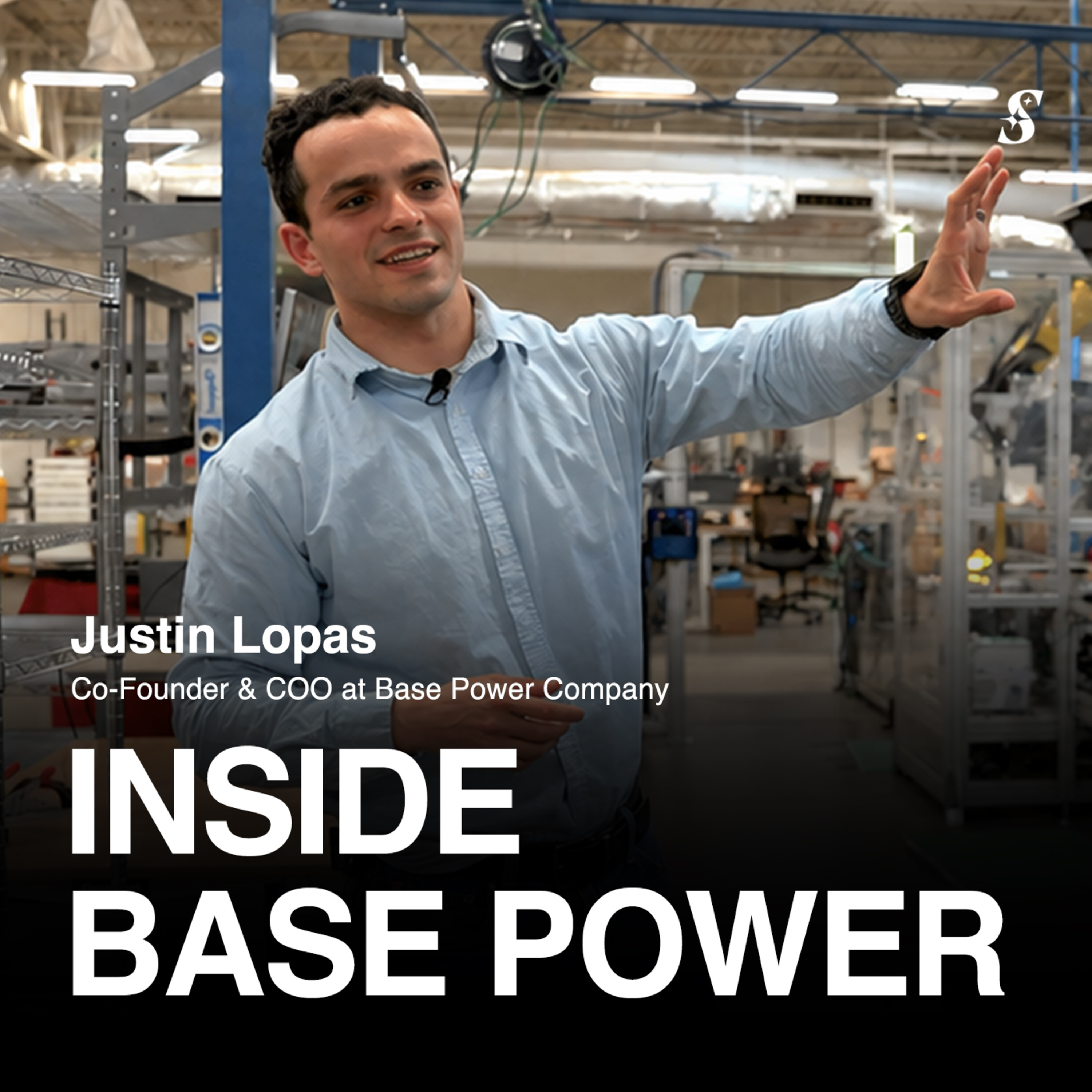
The company bifurcates the installation process. A skilled electrician handles the complex wiring in 1-2 hours. Later, delivery drivers complete the physical, plug-and-play installation of the battery unit in under an hour, optimizing for skill level and cost.
Far-UVC light is safe for humans not due to a complex biological interaction, but because our outer layer of dead skin cells physically absorbs the light before it can reach living tissue. This simple mechanical barrier, rather than a chemical one, is the core of its safety profile.
Unlike other UV light, FAR-UVC is safe for human skin not due to a complex biological tolerance, but because it's mechanically blocked by the 20-micron-thick outer layer of dead skin cells, which are full of proteins that absorb the light.
High-end LiDAR systems suffer from more than just cost; they are often large, heavy, and require specialized training. Q3D's strategy to democratize access focuses on a trifecta of value propositions: a lower price point, a portable form factor that fits in difficult spaces (e.g., manholes), and a simple 'plug and play' user experience, removing the operational barriers that limit adoption to only specialized teams.
