Get your free personalized podcast brief
We scan new podcasts and send you the top 5 insights daily.
For non-advanced systemic mastocytosis, new drugs are differentiated by their side effect profiles, not just efficacy. Avapritinib can cause cognitive effects as it crosses the blood-brain barrier, while bezuclastinib may cause transient liver enzyme elevation. This allows for personalized treatment choices based on patient tolerability and lifestyle.

Related Insights
The high efficacy of new drugs for systemic mastocytosis is prompting consideration of "drug holidays." This would allow patients, who have a near-normal life expectancy, to temporarily stop treatment for major life events like planning a family. This signals a paradigm shift from continuous therapy to intermittent disease management for chronic conditions.
Despite both Zongertinib and Sevabirtinib showing high efficacy in HER2-mutant NSCLC, Zongertinib's selective nature results in a much better safety profile. Sevabirtinib's dual EGFR/HER2 inhibition leads to significant GI and skin toxicities, making tolerability, not just efficacy, the key factor for clinical preference.

While new systemic treatments for desmoid tumors can effectively control the disease and improve quality of life by managing symptoms, they introduce their own set of side effects. This creates a clinical challenge where the positive impact on the tumor must be carefully weighed against the negative impact of the treatment itself on the patient's daily life.
While the new CML drug Asciminib demonstrates better efficacy, its most significant advantage is superior tolerability. Clinical trial data shows it causes significantly fewer treatment discontinuations due to adverse events compared to both Imatinib and second-generation TKIs, improving patient adherence and quality of life.
Recent drug approvals for non-advanced systemic mastocytosis were based on patient-reported outcomes (PROs) measuring symptom improvement. While biomarkers like serum tryptase often correlate, the primary measure of success is the patient's subjective experience. This presents a challenge for monitoring effectiveness in routine clinical practice outside of formal trials.
Avapritinib is dosed at 200mg for advanced systemic mastocytosis (SM) but only 25mg for indolent SM. This tenfold difference is not based on tolerance but on the goal of therapy: extending survival in advanced SM versus improving quality of life without significant toxicity in indolent SM, where survival is near-normal.
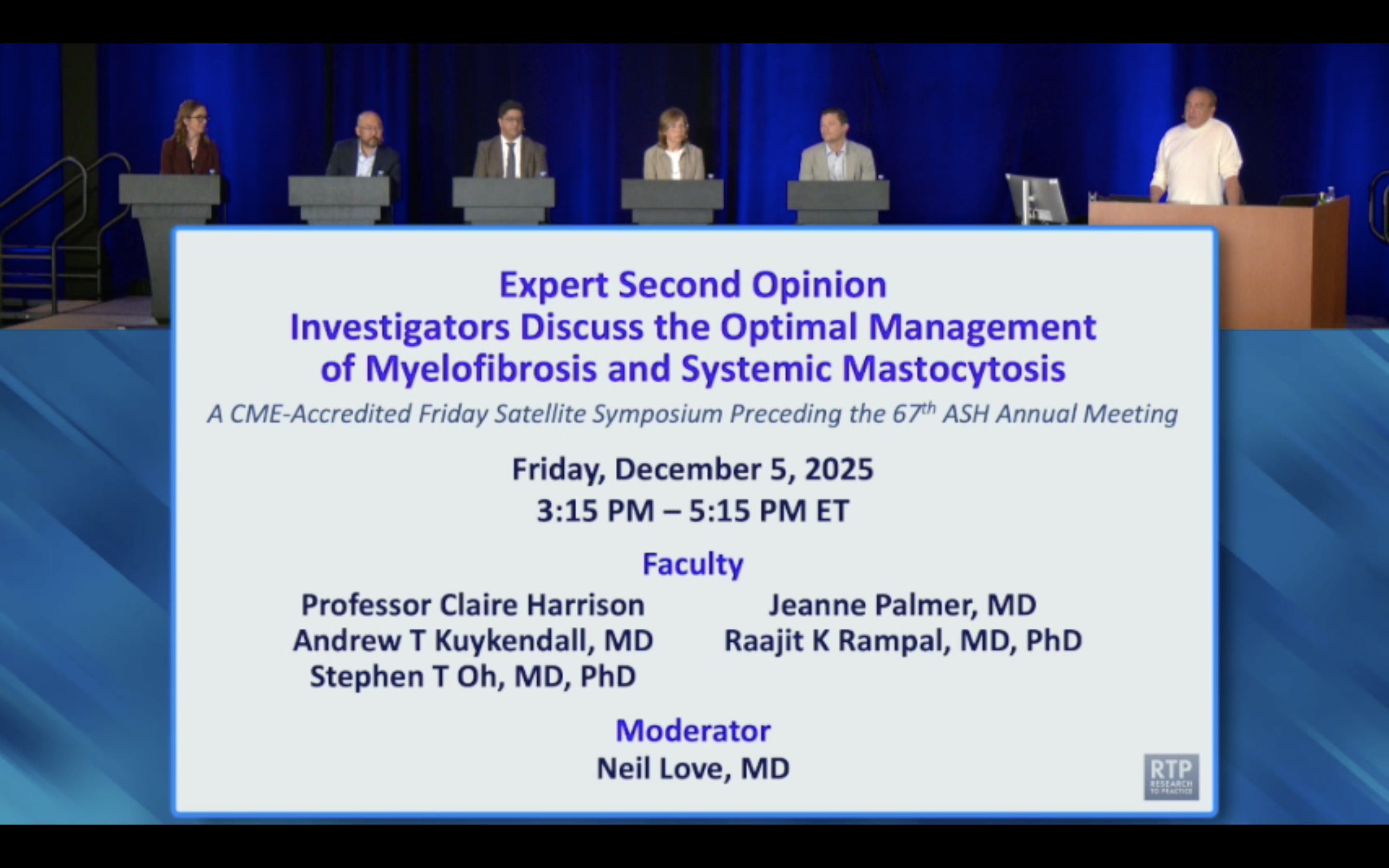
The development of new KIT inhibitors like bezuclastinib is largely fueled by the need for alternatives to high-dose avapritinib in advanced SM. Concerns about cognitive effects and rare intracranial hemorrhage with avapritinib create an opportunity for agents with less blood-brain barrier penetration.
While new therapies effectively control daily symptoms in non-advanced systemic mastocytosis, significant unmet needs remain. The next generation of treatments must demonstrate an ability to reduce the risk of severe complications like life-threatening anaphylaxis and debilitating fragility fractures, which current pivotal trials were not powered to properly assess.
Contrary to the assumption that combinations are more toxic, Lenvatinib/Belzutifan showed a different side effect profile, not a worse one, compared to single-agent Cabozantinib. The combo caused more anemia while Cabozantinib caused more diarrhea and skin toxicity, but treatment discontinuation rates were identical at 11% for both arms.

Newer TKI formulations ensure consistent drug absorption, correcting for under-dosing caused by food or other medications. While improving efficacy, this means more patients may experience the drug's known side effects. What seems like new toxicity could be the drug’s true profile, no longer masked by poor absorption.