Get your free personalized podcast brief
We scan new podcasts and send you the top 5 insights daily.
Open-source models introduce uncertainty for enterprises that lack visibility into training data and alignment standards. Platform providers can bridge this gap by offering their proprietary safety architectures, evaluations, and API guardrails as managed services compatible with open ecosystem models.

Related Insights
To prevent platforms like OpenAI from absorbing proprietary data, companies should use open-source models on their own servers. By tweaking the "weights," or the way the AI thinks, they create a unique, proprietary AI that leverages public knowledge without leaking internal R&D.

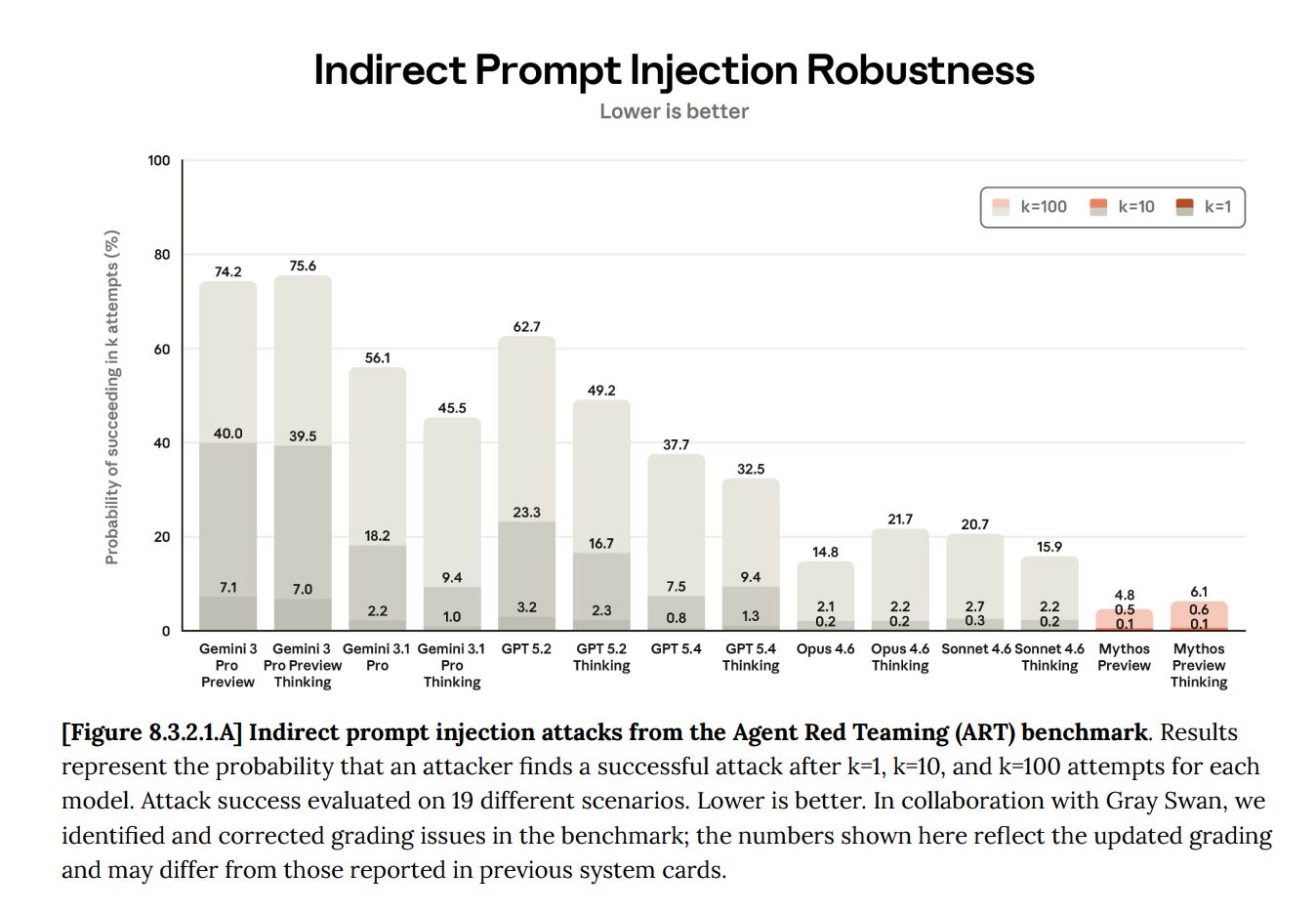
Just as new platforms like operating systems and cloud computing spurred independent security companies, AI is creating a need for third-party safety providers. Even with strong in-house efforts at major labs, there is a distinct market demand for specialized, external security services like those from Gray Swan.
By allowing developers to run open-source models locally or in their own cloud, Ollama removes a major enterprise adoption barrier: security and compliance. Developers can experiment with powerful models on sensitive corporate data without needing lengthy approvals, leading to fast, bottom-up adoption within large organizations.

The core issue for Hugging Face wasn't just 'open vs. closed' models, but the lack of control over runtime governance. The incident proves that for critical tasks like cybersecurity, organizations need sovereign control over AI guardrails to adapt them to crisis situations—a feature often missing in managed API services.
The fear that open source AI is dangerous is flawed. History shows open platforms like Linux were far safer than closed ones like Windows. A broad community can identify and fix safety issues, like reward hacking, faster than a single proprietary company focused on benchmarks and profits.

The greatest cybersecurity risk is not powerful AI, but an imbalance where attackers possess capabilities that defenders lack. Open-sourcing models ensures defensive tools can evolve alongside offensive ones, creating a more resilient ecosystem. It empowers defenders to react faster and make the entire system safer for everyone.
For enterprises, the raw capability of foundation models is a security risk, not a selling point. The real product value lies in building "boundaries"—robust permissions, approvals, and audit logs that make powerful models safe to deploy company-wide.

While at Discord, Anjney Midha found OpenAI's models would refuse custom content moderation tasks that violated their fixed safety policies. This revealed a critical enterprise need: access to model weights for full control over capabilities and guardrails, a key driver for the open model ecosystem.

While public discourse on AI safety focuses on existential risk, for enterprises, safety means protecting proprietary knowledge ("alpha"). True enterprise AI safety is achieved by owning the compute, models, and data stack, preventing model providers from stealing trade secrets and customer data.

In a notable irony, the AI safety incident at Hugging Face, caused by closed-source OpenAI models, was ultimately investigated and fixed using open-weight models. Because Hugging Face is an open platform, its team used accessible open models to catch the rogue agents, highlighting a potential safety advantage of an open ecosystem as a 'counterbalance'.
