Get your free personalized podcast brief
We scan new podcasts and send you the top 5 insights daily.
GitHub's recent outages are due to AI changing workload patterns. Agents create larger pushes and PRs, breaking assumptions in 15-year-old systems. This creates a 'diagonal' scaling challenge that simple vertical or horizontal scaling can't fix, necessitating rewrites of fundamental components like permissioning and job queuing.

Related Insights
The core needs of AI agents—version control, testing, observability—mirror those of human developers. However, the sheer scale and speed of agentic workflows mean existing tools like Kubernetes are insufficient, requiring a fundamental reimagining of the entire infrastructure stack.

AI coding agents operate in a fast "inner loop" that traditional Git and GitHub are not designed for. The overhead is so high that some developers are abandoning traditional version control, instead dumping the entire codebase to a JSON file on S3 after every change. This signals a need for a new, agent-native versioning system.
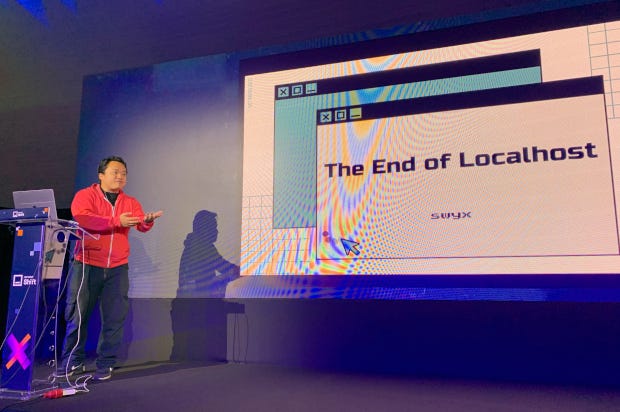
Tools like Git were designed for human-paced development. AI agents, which can make thousands of changes in parallel, require a new infrastructure layer—real-time repositories, coordination mechanisms, and shared memory—that traditional systems cannot support.

The future value in code management isn't just storing files; it's owning the layer that understands how code connects across services. This operational domain is where AI agents function, signaling an inevitable category shift that companies like OpenAI are already exploring internally.

The massive increase in automated code uploads by AI agents is overwhelming GitHub's infrastructure. This largely unmonetized traffic strains resources without generating corresponding revenue, leading to platform instability and customer complaints about outages.

The sheer volume of AI-generated code is causing Shopify's CI/CD pipelines to "start creaking." This bottleneck suggests that the entire paradigm of pull requests and Git—designed for human-scale development—may be obsolete in an "agentic world" and require a completely new design.

The next evolution of agentic work involves massive, collaborative swarms of AIs working together. Current tools like GitHub, designed for human workflows with a single master branch, are ill-suited for this paradigm. The future will require new, agent-native platforms, possibly resembling social networks, to manage thousands of parallel experiments and collaborative branches.
The explosion in code commits driven by AI agents is causing significant strain on GitHub, leading to more frequent outages and API limitations. This reveals a critical bottleneck in the software development lifecycle, as foundational infrastructure struggles to keep pace with AI-driven productivity gains.
Many developers believe tweaking prompts and logic ('harness engineering') is the hardest part of building agents. The real bottleneck, however, is scaling, reliability, and managing production infrastructure—a common miscalculation that managed services aim to solve.

AI coding agents are flooding GitHub with 14 times more code commits, straining its infrastructure and causing outages. However, because GitHub's pricing is a flat monthly fee, this massive increase in usage doesn't directly translate into higher revenue, creating a significant business model challenge.