Get your free personalized podcast brief
We scan new podcasts and send you the top 5 insights daily.
A skeptical mathematician designed a problem based on 20 years of his research, intended to be impossible for AI. When GPT-5.4 Pro solved it with a creative, 'almost human' solution, he declared his 'personal singularity' had arrived, embracing AI as a top-tier collaborator.

Related Insights
Experts across fields are experiencing AI solutions that are not just correct but elegant and human-like, solving problems they've worked on for decades. This 'Move 37' moment, named after the surprising Go move by AlphaGo, indicates AI is becoming a creative partner rather than just a productivity tool.

The new AI model is not just an incremental improvement. For top experts like mathematician Bartosz, it's solving problems they've worked on for decades. This marks a shift from AI as a productivity tool to a partner capable of unprecedented scientific breakthroughs, leading to what they call a "personal singularity."

The model's key innovation is not reasoning but its ability to operate computer interfaces better than a human. This makes building agents viable, but the primary challenge for adoption now becomes user trust in autonomous systems, shifting the focus from 'can it do it?' to 'should you let it?'.

Hassabis argues AGI isn't just about solving existing problems. True AGI must demonstrate the capacity for breakthrough creativity, like Einstein developing a new theory of physics or Picasso creating a new art genre. This sets a much higher bar than current systems.

A remarkable feature of the current LLM era is that AI researchers can contribute to solving grand challenges in highly specialized domains, such as winning an IMO Gold medal, without possessing deep personal knowledge of that field. The model acts as a universal tool that transcends the operator's expertise.

At a private meeting at Princeton's Institute for Advanced Study, top physicists concluded AI has achieved "complete supremacy" over humans in software development and is on par with their own analytical reasoning skills. This signifies a profound shift beyond creative or routine tasks.

Benchmarks like GDPVal show models like GPT-4 consistently outperform human experts on professional tasks, meeting the practical definition of AGI for knowledge work. The public discourse, however, has prematurely shifted the goalposts to sci-fi concepts of Artificial Superintelligence (ASI), obscuring the revolution already underway.

Many technical leaders initially dismissed generative AI for its failures on simple logical tasks. However, its rapid, tangible improvement over a short period forces a re-evaluation and a crucial mindset shift towards adoption to avoid being left behind.

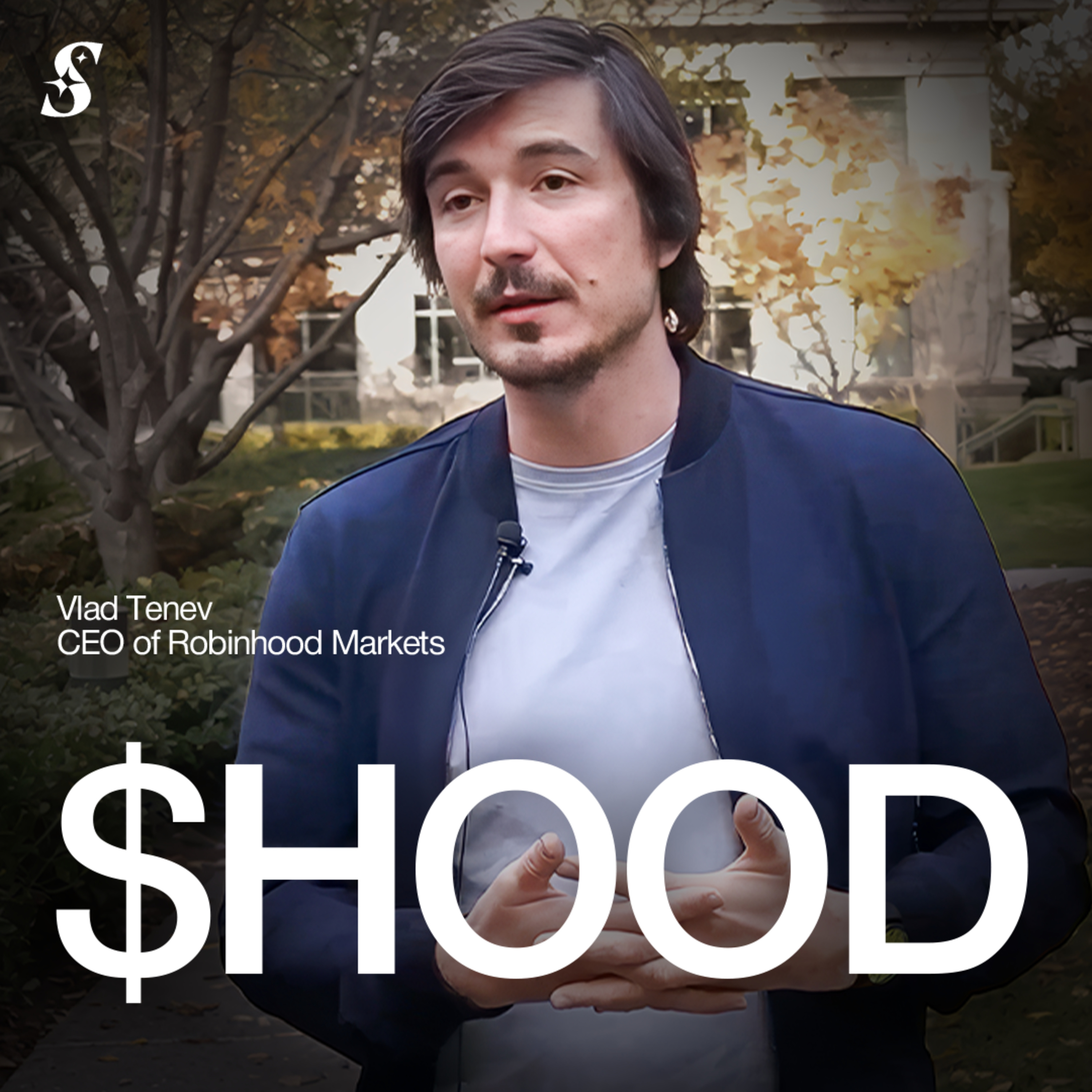
Harmonic, co-founded by Vlad Tenev to build mathematical superintelligence, has seen its model 'Aristotle' advance faster than anticipated. Initially targeting competition-level math, Aristotle is already assisting with or solving previously unsolved 'Erdős problems,' accelerating the timeline towards tackling foundational scientific challenges.
We perceive complex math as a pinnacle of intelligence, but for AI, it may be an easier problem than tasks we find trivial. Like chess, which computers mastered decades ago, solving major math problems might not signify human-level reasoning but rather that the domain is surprisingly susceptible to computational approaches.
