Get your free personalized podcast brief
We scan new podcasts and send you the top 5 insights daily.
Billion-dollar funds cannot pursue smaller firms, creating a vast market for solo founders. These founders have an edge as many retiring owners prefer selling to a person who will be hands-on, rather than a faceless corporation, ensuring a smoother transition and preserving their legacy.

Related Insights
The optimal strategy for solo VCs is to resist the urge to scale fund size. Instead, they should raise smaller funds (sub-$50M) and deploy them on faster cycles (e.g., every 18 months). This approach aligns with LP constraints, avoids competition with larger firms, and enables the high portfolio velocity (80+ companies) needed for the solo GP model to work.

A massive wave of retiring Baby Boomers who own profitable small businesses often lack successors. This creates a significant opportunity for aspiring entrepreneurs to acquire established companies, frequently with seller financing, providing a lower-risk path to business ownership compared to starting from scratch.

In an environment of large, multi-stage funds, smaller firms differentiate by providing stable, long-term partner relationships and highly specialized networks. This appeals to founders who value dedicated support over just a large check and high valuation from a firm with high employee turnover.

The path to an exit is a market in itself. It's often easier to sell a $20M company you fully own than a $500M venture-backed one. The pool of buyers is larger and the process less scrutinized, making a smaller, bootstrapped exit potentially more profitable for the founder.

While AI lowers the technical barrier to starting a business, experienced solo founders caution against over-indexing on technology's ease. As founder Claire Vo states, her prior network, credibility, and industry experience were the crucial elements that turned her AI-assisted app into a seven-figure business.

While scaling with a corporate brand seems safer, it's less effective for smaller businesses. In the current digital landscape, humans connect with humans. A founder's personal brand is a unique differentiator that will attract clients and build community faster than a generic company logo.

When raising capital, entrepreneurs should prioritize funding from wealthy individuals over traditional VC firms. A single high-net-worth investor who believes in the founder offers more flexibility and control than a VC partner focused on financial models and board seats, preserving the founder's vision.
A notable trend sees young entrepreneurs bypassing the startup phase by purchasing established businesses from retiring baby boomers. This strategy, once considered "boring," is gaining traction as it offers a faster path to ownership, an existing customer base, and often includes valuable mentorship from the previous owner.

Instead of splitting duties between co-founders, a solo founder can succeed by being equally obsessed with every layer of the business, from go-to-market strategy to kernel-level engineering. This holistic obsession creates a cohesive vision that drives the company forward.
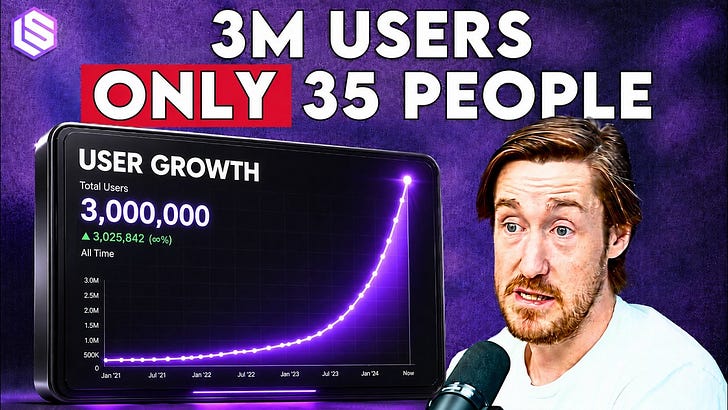
A market that maxes out at a few million in ARR is a failure for a VC-backed company needing a massive return. For a bootstrapper, it can generate life-changing personal income. This mismatch allows bootstrappers to thrive in valuable markets that are, by definition, too small for VCs to target effectively.
