Get your free personalized podcast brief
We scan new podcasts and send you the top 5 insights daily.
Alex Rives argues current virtual cell models fail because biology's measuring tools cannot observe the fine-grained causal structure models need. He says better architectures help, but Biohub is investing heavily in new measurement modalities and data generation because observation limits are the deeper bottleneck first.

Related Insights
The bottleneck for AI in drug discovery is not the algorithm but the lack of high-quality, large-scale biological data. New platforms are needed to generate this necessary "substrate" for AI models to learn from, challenging the narrative that better models alone are the solution.

Alex Rives says continuous molecular monitoring would be immensely valuable and likely converge with cell models eventually. Measuring more molecular parameters continuously could directly link bottom-up personal health data with top-down biological understanding of disease, though Biohub itself stays at the enabling technology layer.
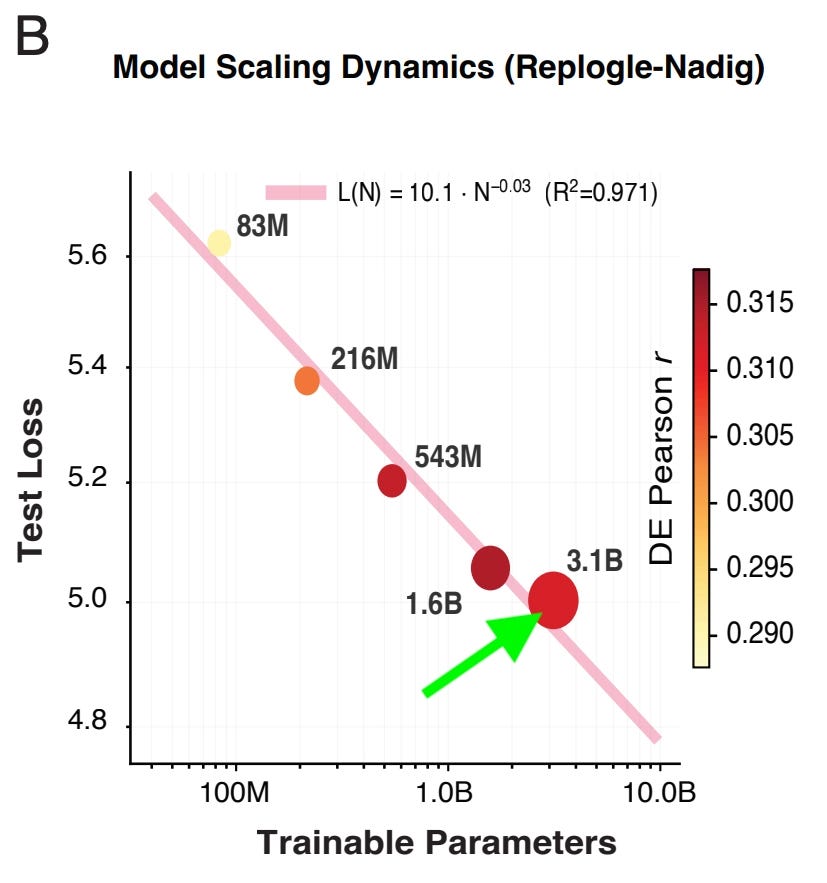
While AI excels at protein modeling thanks to direct data, "virtual cell" models are underperforming simple baselines. The core issue is their reliance on single-cell RNA-seq data, which acts as a poor, compressed representation of the cell's true, complex state, unlike the direct data available for proteins.
The primary bottleneck for creating powerful foundation models in biology is the lack of clean, large-scale experimental data—orders of magnitude less than what's available for LLMs. This creates a major opportunity for "data foundries" that use robotic labs to generate high-quality biological data at scale.

To create a predictive "virtual cell," data collection must shift from passive observation to active intervention. The strategy is to massively scale perturbation experiments (like Perturb-seq) across countless contexts and measure multi-modal responses, teaching the model cause and effect.

To build truly dynamic "virtual cells," two key technological hurdles must be overcome. First, developing high-throughput methods for measuring proteins, the cell's functional units. Second, inventing a sequencing technology that can measure the state of the *same cell* at multiple time points without destroying it.
The primary obstacle to creating sophisticated AI models of cells isn't the AI itself, but the data. Existing datasets often perturb only one cellular variable at a time, failing to capture the complex interactions that arise from simultaneous changes. New platforms are needed to generate this multi-dimensional data.
Alex Rives says a complete cell model must include cells in tissue and living systems, not just isolated cultures. Biohub builds real imaging across atomic, cell-culture, and whole-organism scales, including zebrafish microscopes that track every cell and immune-cell trafficking as an embryo develops over time.
Current virtual cell models saturate at only 2% of input data, not because of a lack of data, but because the data quality is poor. Cells grown in a petri dish are in an unnatural state, solely focused on proliferation, which masks the true effects of genetic perturbations and makes most of the data uninformative.
While petabytes of observational DNA sequence data exist, it's insufficient for the next wave of AI. The key to creating powerful, functional models is generating causal data—from experiments that systematically test function—which is a current data bottleneck.