Get your free personalized podcast brief
We scan new podcasts and send you the top 5 insights daily.
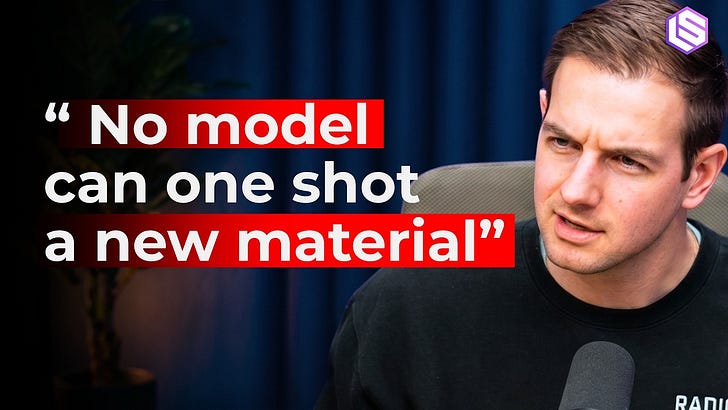
The biggest impact for ML engineers in science comes from applying their unique computational perspective, not from trying to become domain experts. Cross-disciplinary teams thrive when members lean into their specialized expertise and bring fresh thinking.
Related Insights
Instead of eliminating roles, AI's primary organizational impact is amplifying small, elite, cross-functional teams. A single 10x engineer, 10x designer, and top PM working together can now achieve what previously required a much larger 'swarm,' making these once 'anemic' teams incredibly robust.

Contrary to sci-fi visions, the immediate future of AI in science is not the fully autonomous 'dark lab.' Prof. Welling's vision is to empower human domain experts with powerful tools. The scientist remains crucial for defining problems, interpreting results, and making final judgments, with AI as a powerful collaborator.

The most effective use of AI is not in areas where you lack knowledge, but in your core areas of expertise. Your deep domain knowledge allows you to direct the AI with precision, discern quality output from mediocre results, and use it as a true apprentice.

AI's true power in science isn't autonomous discovery, but process compression. It acts as an expert guide, allowing motivated individuals to navigate complex fields like drug discovery and assemble workflows that once required multiple specialized teams, blurring the line between professional research and individual effort.

Maxima's founder, a former accountant, believes AI tools fail when built by the practitioners themselves. He argues the domain expert's role is to define problems and architect the solution, while top AI engineers handle construction, like a Formula One driver designing a car they don't build.

AI coding agents are not a replacement for experience but an amplifier. Senior engineers can leverage their deep knowledge and sophisticated vocabulary to direct agents with high precision, making them more effective than ever. This requires 'every inch' of their accumulated experience to manage complex parallel tasks.

Rather than just benefiting specialists, AI provides the greatest leverage to generalists. It allows individuals to translate their knowledge work across different domains and artifacts—from writing a document to building an application—dramatically increasing their scope and impact without deep specialization in each area.
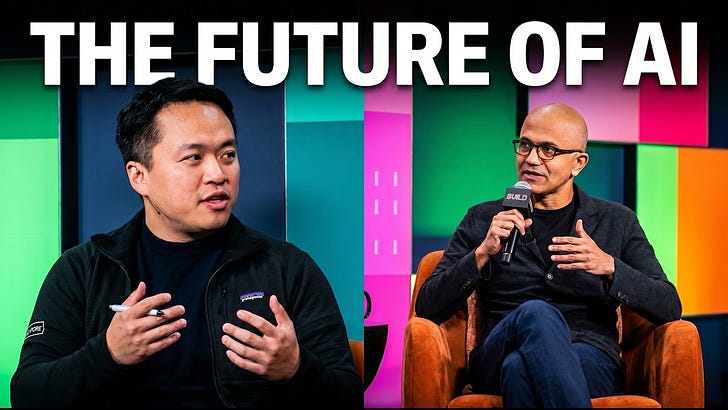
With AI's ability to generate working code quickly, an engineer's role is evolving. Value is shifting from speed in finding a solution—which a robot can do faster—to a more strategic role of understanding the full suite of tools and recognizing how human expertise fits into a broader, more complex system.

The strategic advantage with AI isn't in becoming a world-class AI developer. It's in achieving moderate proficiency (50th percentile) and applying it to your existing, deep domain knowledge. This combination creates a powerful multiplier effect on your current skills.

Top engineers are no longer just coding specialists. They are hybrids who cross disciplines—combining product sense, infrastructure knowledge, design skills, and user empathy. AI handles the specialized coding, elevating the value of broad, system-level thinking.