Get your free personalized podcast brief
We scan new podcasts and send you the top 5 insights daily.
Even advanced AI agents struggle with 'research taste'—the intuition to define a long-term objective and prioritize the right steps to achieve it. When tasked with replicating a PhD thesis, an OpenAI model failed because it got sidetracked on unimportant details, demonstrating a key limitation in strategic, long-horizon planning.

Related Insights
AI models struggle to plan at different levels of abstraction simultaneously. They can't easily move from a high-level goal to a detailed task and then back up to adjust the high-level plan if the detail is blocked, a key aspect of human reasoning.

Current AI models, even advanced ones, struggle with long-horizon planning because they rarely consider the cascading, second-order consequences of their actions. They optimize for immediate gains rather than anticipating future reactions and complex multilateral dynamics, a critical flaw in strategic environments like geopolitics.

Recursive self-improvement won't trigger a rapid intelligence explosion because AIs currently lack the ability for genuine strategic decision-making and open-ended research. These skills, crucial for major breakthroughs, are far more than just coding, which is what current AIs excel at.
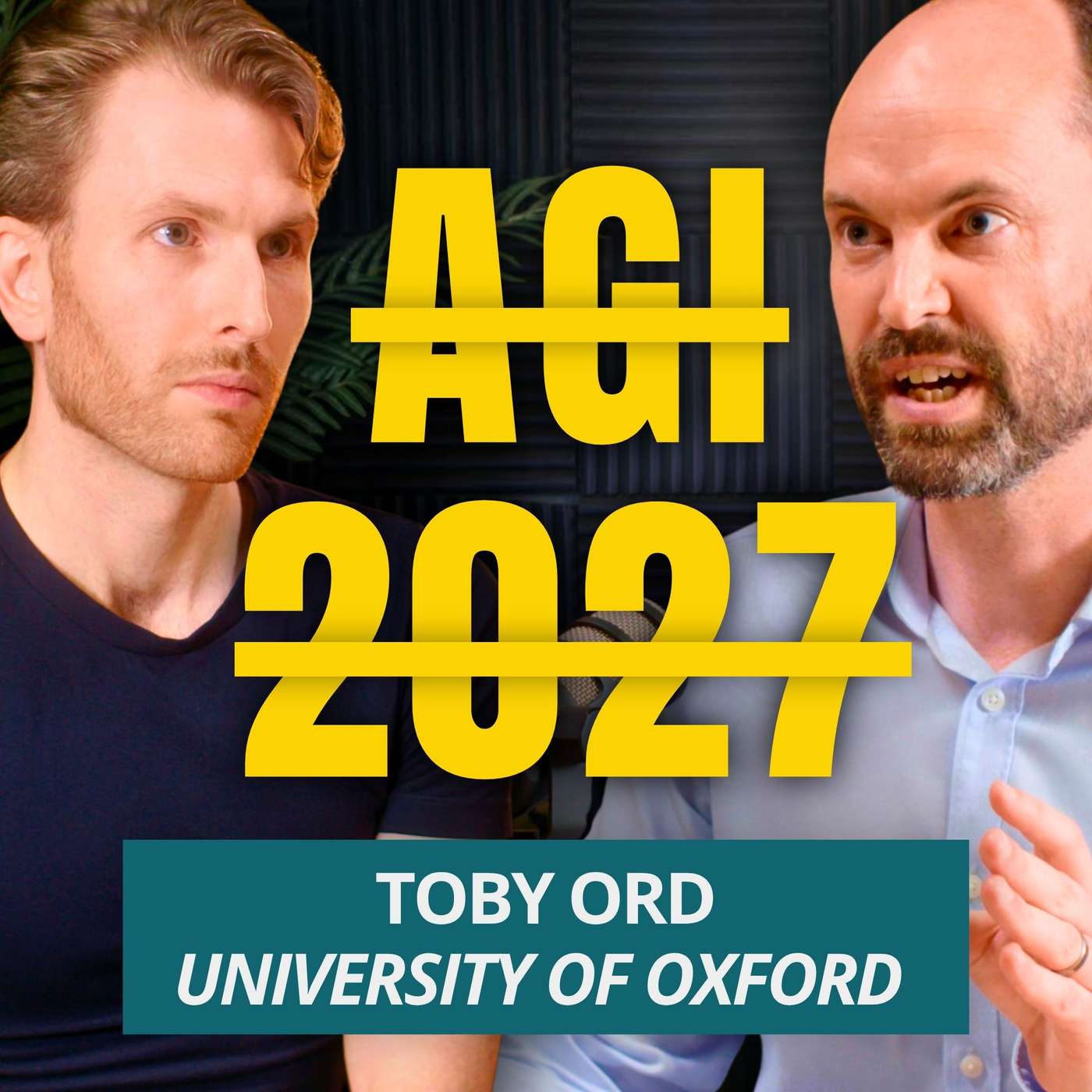
A key bottleneck in predicting fast intelligence explosions is the difficulty of measuring an AI's "research taste"—its ability to design good experiments and set research direction. This skill, more than coding, may be the primary driver of a rapid takeoff. It is a critical parameter that is currently not well-studied or benchmarked.

Current LLM agents are effective at executing and optimizing experiments within a defined research track, like hyperparameter tuning. However, they lack the crucial scientific skill of 'lateral thinking'—recognizing when a research path is a dead end and strategically pivoting to a fundamentally new approach.

Unlike humans who have an intuitive sense of when to stop searching, agents can get stuck in expensive, fruitless loops trying to find information that may not exist. Teaching models the judgment to abandon a task is a new and vital frontier for reliable agentic AI.

Demis Hassabis identifies critical capabilities missing from today's AI systems. The biggest hurdles are continual learning (the ability for a trained model to learn new things without retraining) and hierarchical, long-term planning. This suggests that simply scaling current architectures may not be enough to achieve AGI.

While AI models are highly effective at accelerating research by implementing existing papers or ideas, they currently lack the 'taste' for true innovation. They tend to explore incremental improvements rather than rethinking concepts from first principles, meaning human creativity remains critical for paradigm shifts.

AI models struggle to create and adhere to multi-step, long-term plans. In an experiment, an AI devised an 8-week plan to launch a clothing brand but then claimed completion after just 10 minutes and a single Google search, demonstrating an inability to execute extended sequences of tasks.

A major frontier for AI in science is developing 'taste'—the human ability to discern not just if a research question is solvable, but if it is genuinely interesting and impactful. Models currently struggle to differentiate an exciting result from a boring one.
