Get your free personalized podcast brief
We scan new podcasts and send you the top 5 insights daily.
AI progress is not always linear. For a long-held test—reading simple viola sheet music—models consistently failed. Then, OpenAI's Astra not only succeeded but could almost perfectly transcribe a highly complex 20th-century score, demonstrating a sudden, massive leap in capability on a specific task.

Related Insights
AI models are surprisingly strong at certain tasks but bafflingly weak at others. This 'jagged frontier' of capability means that experience with AI can be inconsistent. The only way to navigate it is through direct experimentation within one's own domain of expertise.

AI models improve not just by getting bigger ("scaling laws"), but by adding distinct new capabilities. Recent breakthroughs include the ability to reason through problems (showing their work), use tools like the internet, and process multiple media types like text, images, and audio simultaneously.

The significant performance jump from Anthropic's Mythos model wasn't a sustained acceleration but likely a one-time gain from training a much larger model from scratch. This suggests AI progress follows a pattern of punctuated equilibrium: steady, incremental gains followed by sudden leaps when a company invests in a new, larger pre-training run.

Citing Leopold Ashenbrenner's essay, the hosts argue that AI progress isn't linear. It relies on "unhovelers"—fundamental scientific discoveries like new attention mechanisms that unlock massive, non-linear gains, defying simple extrapolation of current trends.
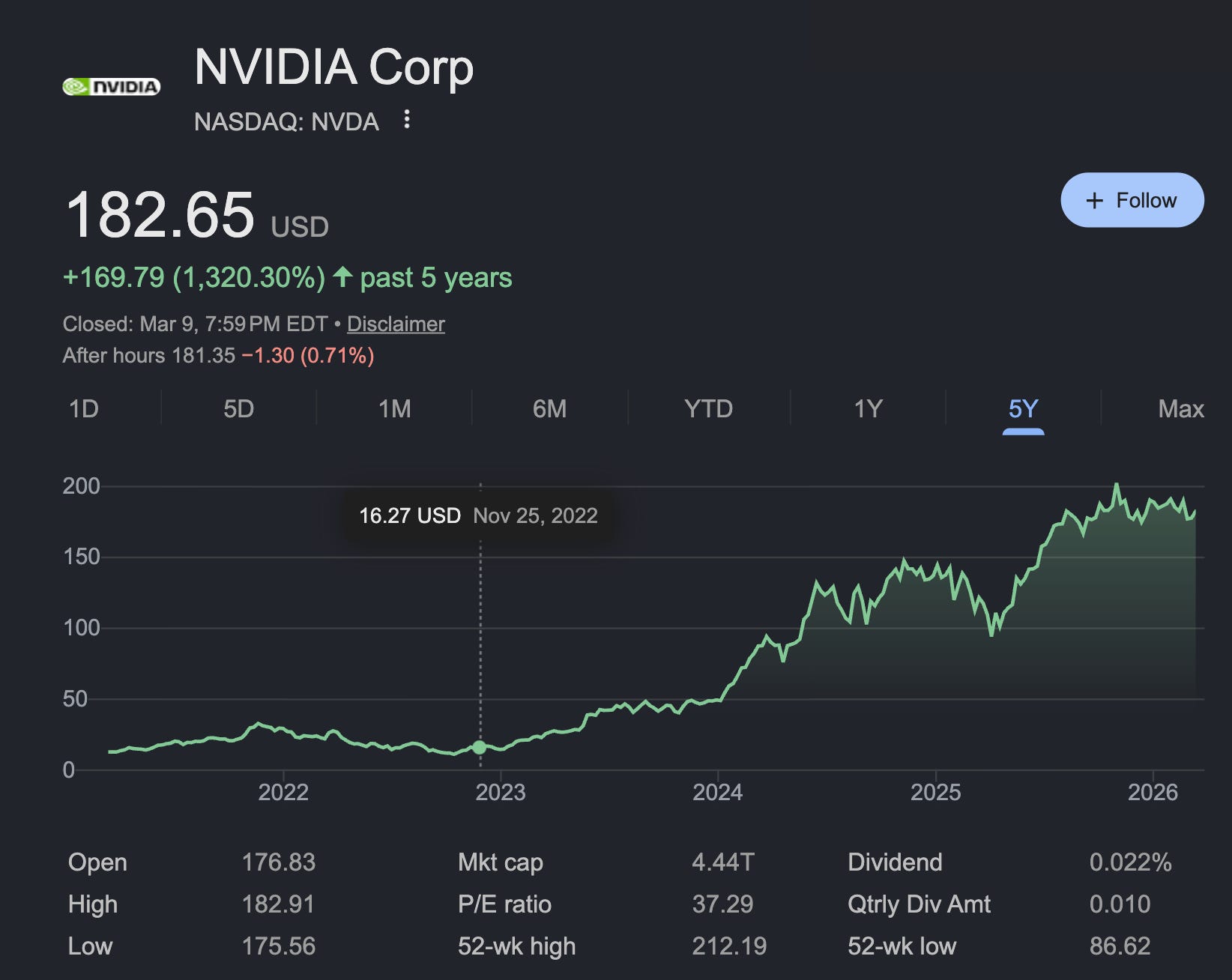
A key surprise in AI development was the non-linear impact of scale. Sebastian Thrun noted that while AI trained on millions of documents is 'fine,' training it on hundreds of billions creates an 'unbelievably smart' system, shocking even its creators and demonstrating data volume as a primary driver of breakthroughs.

AI's capabilities are highly uneven. Models are already superhuman in specific domains like speaking 150 languages or possessing encyclopedic knowledge. However, they still fail at tasks typical humans find easy, such as continual learning or nuanced visual reasoning like understanding perspective in a photo.

The advancement of AI is not linear. While the industry anticipated a "year of agents" for practical assistance, the most significant recent progress has been in specialized, academic fields like competitive mathematics. This highlights the unpredictable nature of AI development.
A theoretical physicist's skepticism about AI vanished when GPT-5 reproduced one of his most complex, significant research papers in half an hour. This personal "move 37" moment highlights the shocking speed of AI progress and its ability to master highly specialized knowledge.

Previous AI models often hit a "quality ceiling" on complex tasks, failing to deliver high-quality output despite clear architectural instructions. GPT-6 Astra represents a leap that can "one-shot" these previously intractable problems, unblocking ambitious, long-stalled engineering projects.

Third-party tracker METR observed that model complexity was doubling every seven months. However, a recent proprietary model shattered this trend, demonstrating nearly double the expected capability for independent operation (15 hours vs. an expected 8). This signals that AI advancement is accelerating unpredictably, outpacing prior scaling laws.
