Get your free personalized podcast brief
We scan new podcasts and send you the top 5 insights daily.
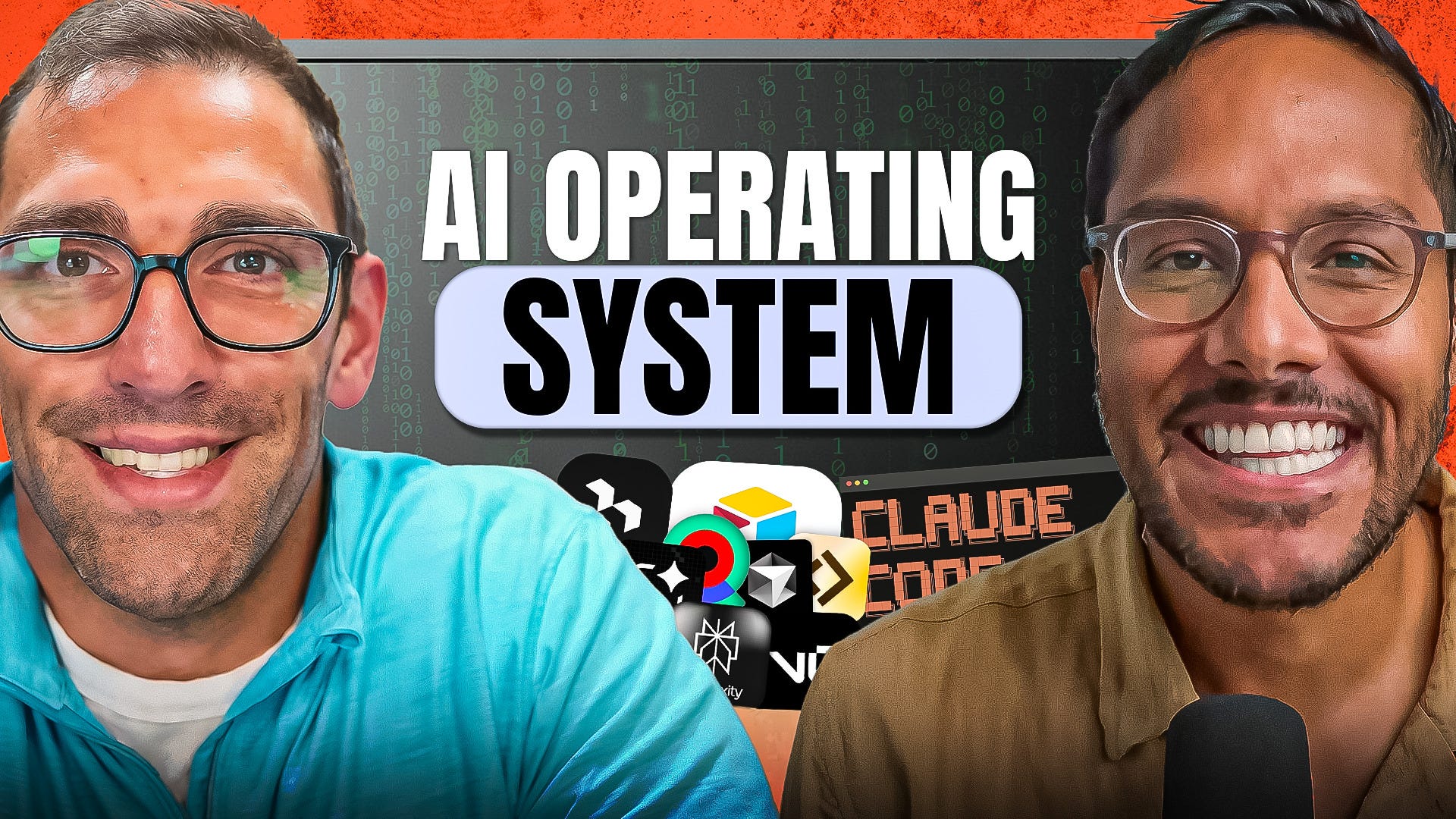
Building a powerful AI operating system is surprisingly affordable. The essential starter pack includes a $20/month Claude plan, a $20/month Manus plan for research, and the $20/month Gemini package for prototyping. This makes it an accessible, high-ROI investment for any PM looking to upgrade their workflow.
Related Insights
The cost to run an autonomous AI coding agent is surprisingly low, reframing the value of developer time. A single coding iteration can cost as little as $3, meaning a complete feature built over 10 iterations could be completed for around $30, making complex software development radically more accessible.

To properly evaluate the cost of advanced AI tools, shift your mental framework. Don't compare a $200/month plan to a $20/month entertainment subscription. Compare it to the cost of a human employee, which could be thousands per month. The AI is a productive asset, making its price a high-leverage investment.
Instead of relying on one-off prompts, professionals can now rapidly build a collection of interconnected internal AI applications. This "personal software stack" can manage everything from investments and content creation to data analysis, creating a bespoke productivity system.

Rather than relying on one expensive AI coding subscription and hitting rate limits, subscribe to two more affordable services. This tactic provides a fallback if you hit a usage cap on one, and also diversifies your toolkit with access to different LLMs optimized for specific tasks.
Tools like Claude Code are democratizing software development. Product managers without a coding background can use these AI assistants to work in the terminal, manage databases, and deploy apps. This accelerates prototyping and deepens technical understanding, improving collaboration with engineers.

An app like Coherence can now be built for the cost of a ChatGPT and Canva subscription (~$20/month). This is a stark contrast to the 400-employee overhead of older apps like Calm, demonstrating a new, ultra-lean startup model.

To optimize AI agent costs and avoid usage limits, adopt a “brain vs. muscles” strategy. Use a high-capability model like Claude Opus for strategic thinking and planning. Then, instruct it to delegate execution-heavy tasks, like writing code, to more specialized and cost-effective models like Codex.
Don't pay for Claude's most expensive tier just for coding. A hybrid approach uses the cheaper Claude Pro plan for its superior file-handling and writing. For heavy coding, switch to the terminal inside Cursor, which provides access to top models like Opus for only $20/month, creating a powerful stack for under $40.

Big tech companies are offering their most advanced AI models via a "tokens by the drink" pricing model. This is incredible for startups, as it provides access to the world's most magical technology on a usage basis, allowing them to get started and scale without massive upfront capital investment.

While a query on an advanced AI agent like Manus might cost $5-20, which is high for AI, it provides insights that would traditionally cost thousands in market research fees. This dramatically changes the ROI calculation for marketing intelligence, making it broadly accessible.