Get your free personalized podcast brief
We scan new podcasts and send you the top 5 insights daily.
Separating inference into "prefill" (memory-bound) and "decode" (bandwidth-bound) tasks is a game-changer for hardware longevity. It allows older GPUs to be used for prefill tasks indefinitely, extending their useful economic life from 3-4 years to 10-15 years, a boon for data centers and their financiers.
![Gavin Baker - Watts and Wafers - [Invest Like the Best, EP.473] thumbnail](https://megaphone.imgix.net/podcasts/3bc7d580-53ec-11f1-99c0-3bd245449e4f/image/31563a7dd10ea92493c934f0c1e723fe.jpg?ixlib=rails-4.3.1&max-w=3000&max-h=3000&fit=crop&auto=format,compress)
Related Insights
The AI inference process involves two distinct phases: "prefill" (reading the prompt, which is compute-bound) and "decode" (writing the response, which is memory-bound). NVIDIA GPUs excel at prefill, while companies like Grok optimize for decode. The Grok-NVIDIA deal signals a future of specialized, complementary hardware rather than one-size-fits-all chips.

The next wave of AI silicon may pivot from today's compute-heavy architectures to memory-centric ones optimized for inference. This fundamental shift would allow high-performance chips to be produced on older, more accessible 7-14nm manufacturing nodes, disrupting the current dependency on cutting-edge fabs.

According to CoreWeave's CEO, a GPU becomes obsolete not when a new chip is released, but when the power and space it consumes could be used for a higher-margin, newer chip. The decision is purely economic, based on the opportunity cost of electricity, not the hardware's technical viability.

Top inference frameworks separate the prefill stage (ingesting the prompt, often compute-bound) from the decode stage (generating tokens, often memory-bound). This disaggregation allows for specialized hardware pools and scheduling for each phase, boosting overall efficiency and throughput.
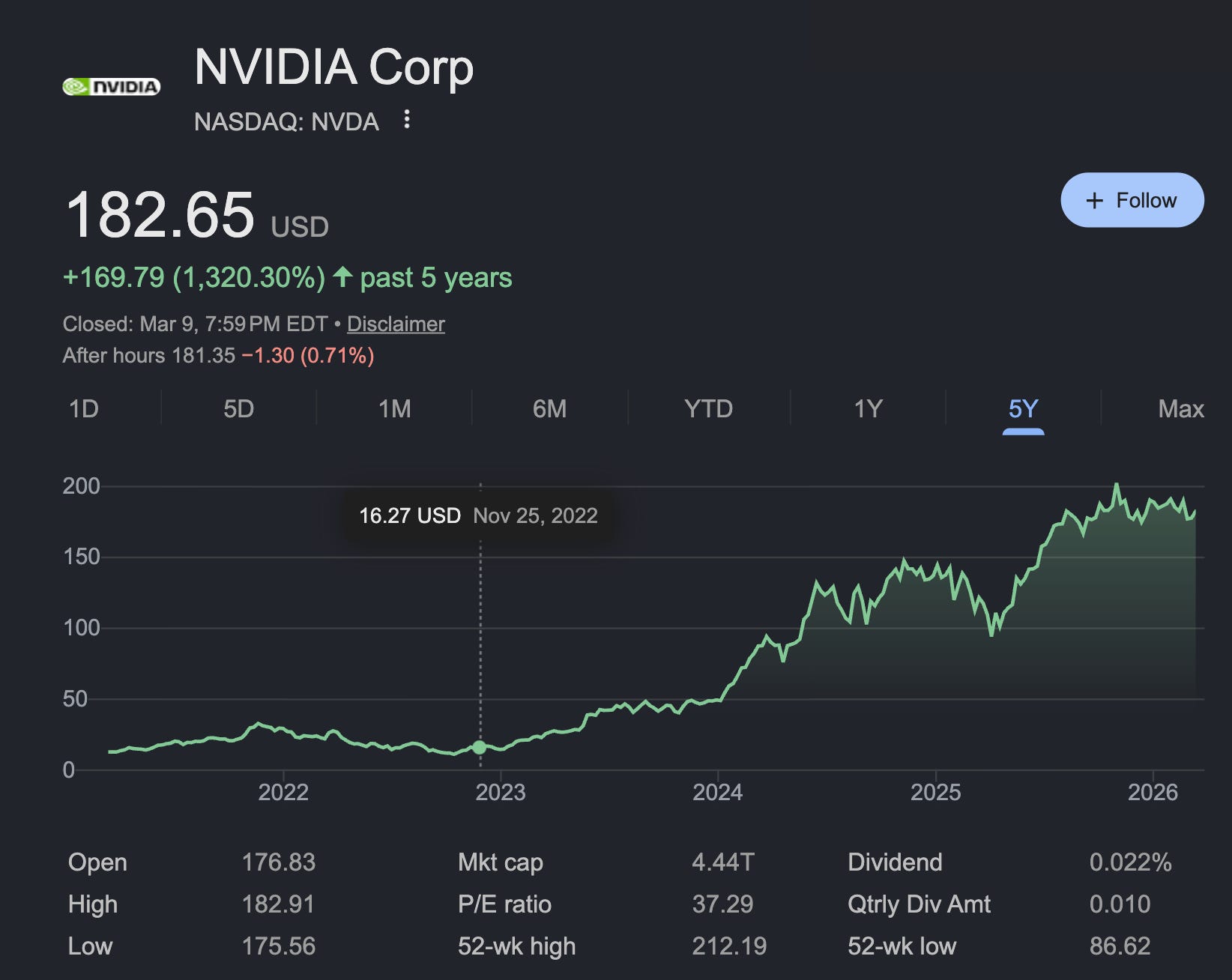
The massive investment in data centers isn't just a bet on today's models. As AI becomes more efficient, smaller yet powerful models will be deployed on older hardware. This extends the serviceable life and economic return of current infrastructure, ensuring today's data centers will still generate value years from now.

While many focus on compute metrics like FLOPS, the primary bottleneck for large AI models is memory bandwidth—the speed of loading weights into the GPU. This single metric is a better indicator of real-world performance from one GPU generation to the next than raw compute power.

The intense power demands of AI inference will push data centers to adopt the "heterogeneous compute" model from mobile phones. Instead of a single GPU architecture, data centers will use disaggregated, specialized chips for different tasks to maximize power efficiency, creating a post-GPU era.

Countering the narrative of rapid burnout, CoreWeave cites historical data showing a nearly 10-year service life for older NVIDIA GPUs (K80) in major clouds. Older chips remain valuable for less intensive tasks, creating a tiered system where new chips handle frontier models and older ones serve established workloads.

The AI inference process is being broken apart, with different stages of the transformer architecture running on different specialized chips. For example, the compute-heavy "prefill" step and the memory-heavy "decode" step can be handled by separate hardware. This explains NVIDIA's strategic interest in Grok, which excels at the decode portion.

The era of dual-purpose AI chips is ending. The overwhelming demand for real-time processing from AI agents is forcing companies like Google and NVIDIA to create dedicated, inference-optimized hardware. This marks a fundamental and permanent split in the AI infrastructure market, separating training from inference.
