Get your free personalized podcast brief
We scan new podcasts and send you the top 5 insights daily.
The traditional six-month timeframe for defining platinum sensitivity is being challenged. A growing theory suggests that tumors progressing while on a PARP inhibitor have a distinct biology that responds poorly to subsequent platinum, indicating a potential need to move directly to therapies like ADCs.

Related Insights
The introduction of ADCs into frontline ovarian cancer treatment creates a new challenge: conflicting biomarkers. A patient's tumor might be positive for both HER2 (an ADC target) and a BRCA mutation (a PARP inhibitor target), forcing clinicians to choose between two effective targeted therapies without clear guidance.
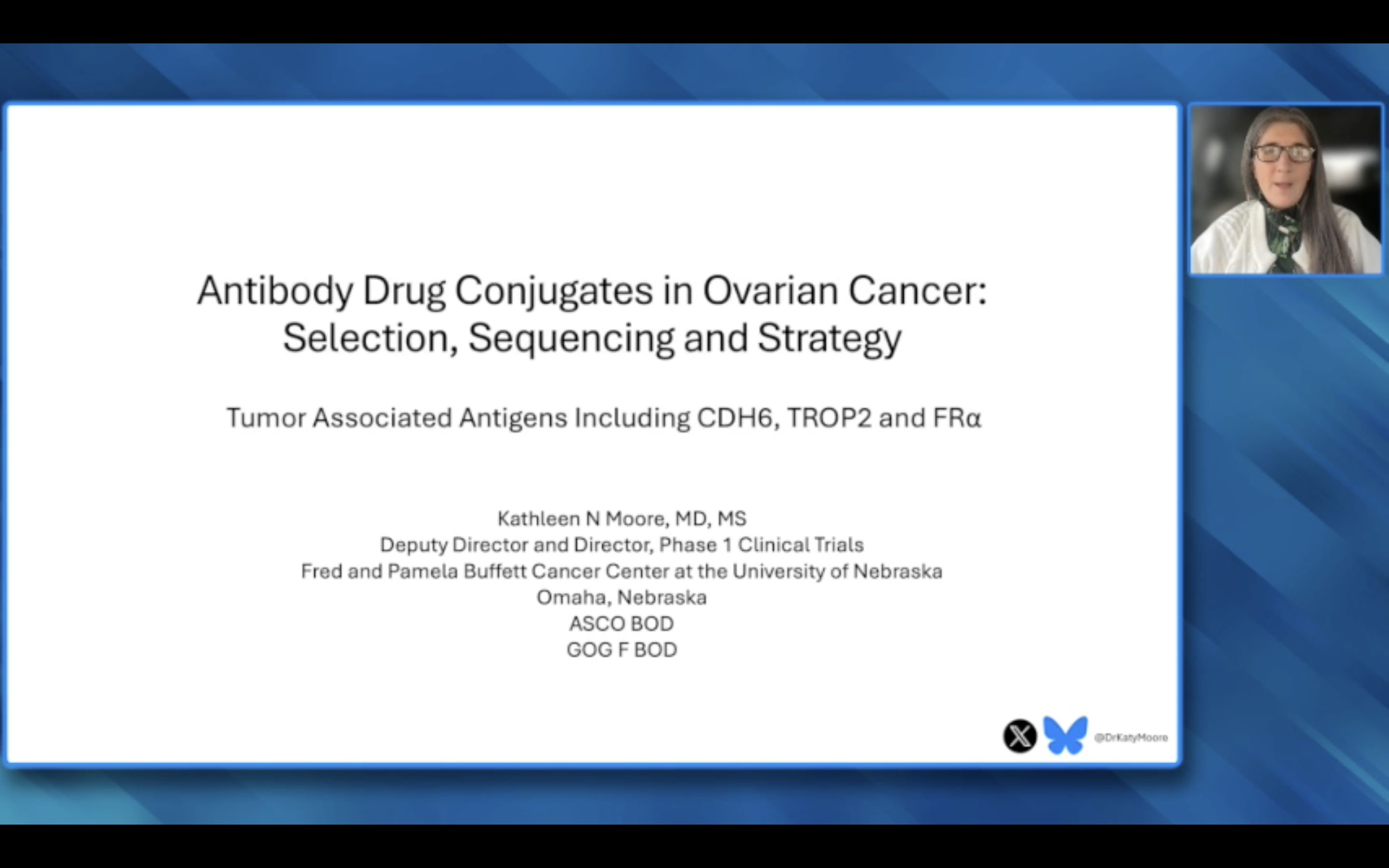
While platinum chemotherapy is considered the standard treatment after a patient progresses on a first-line ADC-IO combination, experts admit this is a standard "based on nothing." There is no clinical trial data to prove its efficacy in this specific setting; it serves only as a placeholder for new clinical trials.

The B96 trial's potential approval for platinum-resistant ovarian cancer introduces a new treatment sequencing challenge. Clinicians must decide between this immunotherapy combination and the ADC mervituximab, which has a clear biomarker (foliate receptor alpha). The lack of a reliable biomarker for the B96 regimen complicates this decision-making process for patients.

An ADC may show better response rates than chemotherapy, but its true benefit is compromised if toxicities lead to treatment discontinuation. As seen with failed PARP/IO combinations, if patients cannot tolerate a drug long enough, the regimen's overall effectiveness can become inferior to standard therapy.
Real-world data shows that in platinum-sensitive ovarian cancer patients who have progressed on PARP inhibitors, subsequent platinum-based chemotherapy has a surprisingly low response rate of only 20%. This quantifies a significant opportunity for highly active ADCs to potentially replace platinum in this growing patient population.
Unlike early ADCs requiring high biomarker expression (e.g., mirvetuximab), next-generation agents show efficacy even in low-expressing tumors. This allows for broader, "all-comer" clinical trial inclusion criteria instead of biomarker-gated entry, potentially expanding patient access to these novel therapies.
The ADC mirvetuximab is the first drug to demonstrate an overall survival benefit for platinum-resistant ovarian cancer. This groundbreaking result establishes a higher efficacy standard that subsequent therapies will likely need to meet for regulatory approval and clinical adoption, raising the bar for future drug development.
Patients whose ovarian cancer progresses on the folate-targeted ADC mirvetuximab may still respond to a subsequent folate-targeted ADC with a different cytotoxic payload. This suggests that the folate receptor alpha target remains viable and that resistance may be payload-specific, opening new sequencing strategies.
Rather than moving through distinct lines of therapy, a future strategy could involve an "ADC switch." When a patient progresses on an ADC-IO combination, the IO backbone would remain while the ADC is swapped for one with a different, non-cross-resistant mechanism, adapting the treatment in real-time.
Historically, therapies for platinum-resistant ovarian cancer were so ineffective that the order of administration was irrelevant. With the advent of multiple active ADCs, the concept of treatment sequencing and potential cross-resistance based on payloads or targets has become a critical, and entirely new, clinical consideration for this disease.