Get your free personalized podcast brief
We scan new podcasts and send you the top 5 insights daily.
The initial deployment of a new AI cluster sees a high failure rate, with 10-15% of new-generation GPUs like Blackwell needing to be returned or reseated. This "infant mortality" is a standard operational challenge for data centers, underscoring the physical difficulties of scaling AI infrastructure with bleeding-edge chips.

Related Insights
The Rubin family of chips is sold as a complete "system as a rack," meaning customers can't just swap out old GPUs. This technical requirement creates a forced, expensive upgrade cycle for cloud providers, compelling them to invest heavily in entirely new rack systems to stay competitive.

While launch costs are decreasing and heat dissipation is solvable, the high failure rate of new chips (e.g., 10-15% for new NVIDIA GPUs) and the inability to easily service them in space present the biggest challenge for orbital data centers.
NVIDIA's complex Blackwell chip transition requires rapid, large-scale deployment to work out bugs. XAI, known for building data centers faster than anyone, serves this role for NVIDIA. This symbiotic relationship helps NVIDIA stabilize its new platform while giving XAI first access to next-generation models.
![Gavin Baker - Nvidia v. Google, Scaling Laws, and the Economics of AI - [Invest Like the Best, EP.451] thumbnail](https://megaphone.imgix.net/podcasts/d97fee14-d4d7-11f0-8951-8324b640c1c1/image/d3a8b5ecbf3957de5b91f278a191c9ff.jpg?ixlib=rails-4.3.1&max-w=3000&max-h=3000&fit=crop&auto=format,compress)
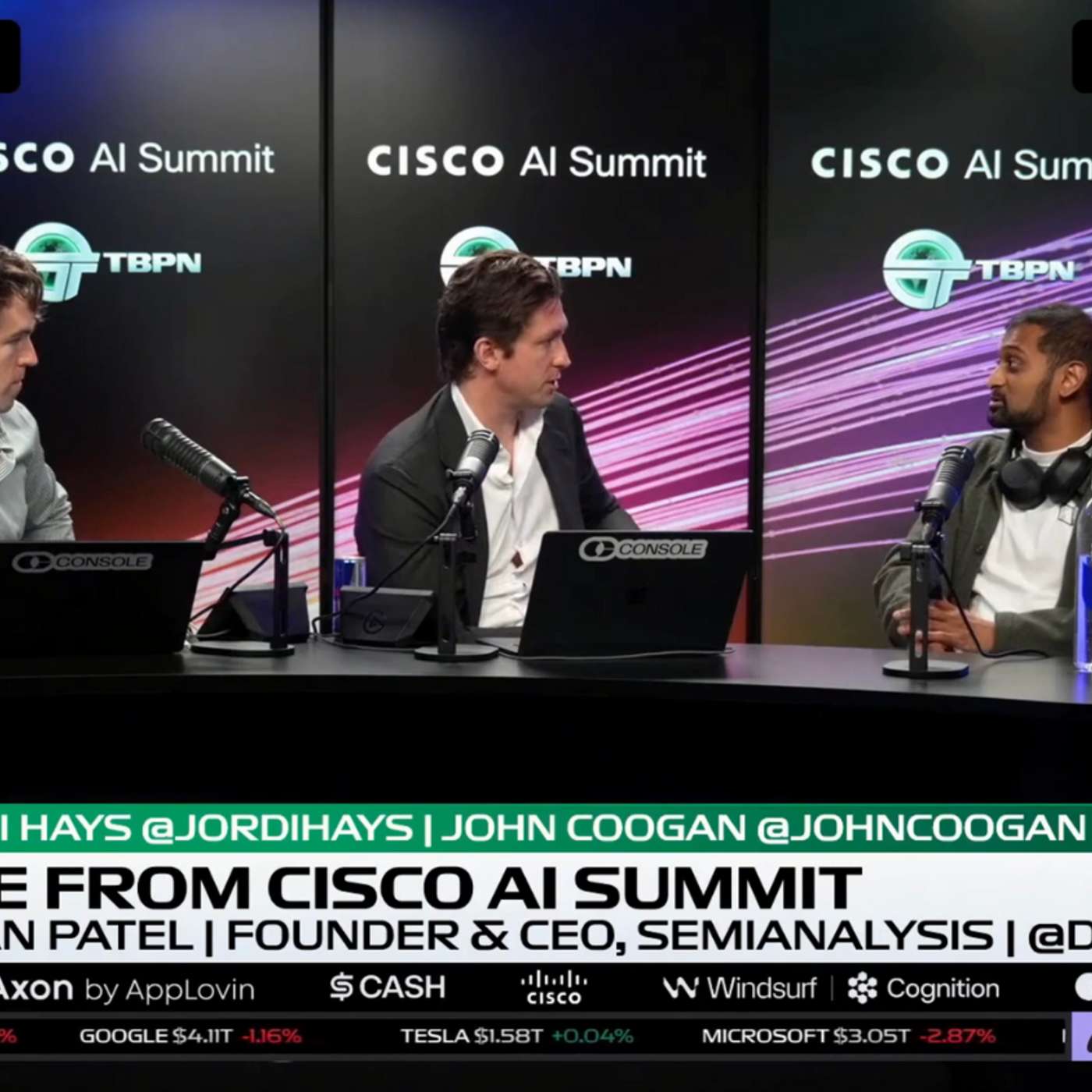
While the industry standard is a six-year depreciation for data center hardware, analyst Dylan Patel warns this is risky for GPUs. Rapid annual performance gains from new models could render older chips economically useless long before they physically fail.

Hyperscalers face a strategic challenge: building massive data centers with current chips (e.g., H100) risks rapid depreciation as far more efficient chips (e.g., GB200) are imminent. This creates a 'pause' as they balance fulfilling current demand against future-proofing their costly infrastructure.

Countering the narrative of rapid burnout, CoreWeave cites historical data showing a nearly 10-year service life for older NVIDIA GPUs (K80) in major clouds. Older chips remain valuable for less intensive tasks, creating a tiered system where new chips handle frontier models and older ones serve established workloads.

Crusoe Cloud's CEO warns of an impending power density crisis. Today's racks are ~130kW, but NVIDIA's future "Vera Rubin Ultra" chips will demand 600kW per rack—the power of a small town. This massive leap will necessitate fundamental changes in cooling and electrical engineering for all AI infrastructure.

Responding to the AI bubble concern, IBM's CEO notes high GPU failure rates are a design choice for performance. Unlike sunken costs from past bubbles, these "stranded" hardware assets can be detuned to run at lower power, increasing their resilience and extending their useful life for other tasks.

The fundamental unit of AI compute has evolved from a silicon chip to a complete, rack-sized system. According to Nvidia's CTO, a single 'GPU' is now an integrated machine that requires a forklift to move, a crucial mindset shift for understanding modern AI infrastructure scale.

When building systems with hundreds of thousands of GPUs and millions of components, it's a statistical certainty that something is always broken. Therefore, hardware and software must be architected from the ground up to handle constant, inevitable failures while maintaining performance and service availability.