Get your free personalized podcast brief
We scan new podcasts and send you the top 5 insights daily.
To sell AI automation into regulated sectors like healthcare and property management, flashy demos are ineffective. Trust is built by delivering real value. Potential customers are less convinced by what an AI *can* do and more by case studies and references proving what it *has done* safely and effectively for others.

Related Insights
To overcome customer inertia with AI, don't pitch a broad platform. Instead, identify a specific, high-impact use case for their industry (e.g., 'where's my order' for retail). Deliver a pilot that shows tangible, quick value, and use that success as a beachhead to expand to other use cases.

To gain trust from medical and regulatory teams, AI companies must move beyond being 'tech demos.' The key is to build solutions as medical products with transparent validation, reproducible results, and deep integration into existing clinical workflows. Trust is earned through reliability over time, not just peak performance on a single dataset.
To win over skeptical teams in regulated fields, start with optimizing existing workflows. A powerful but underutilized strategy is to use an AI assistant to help prioritize tasks, benchmark potential gains, and even draft the one-page strategic brief to make the case to leadership.

Moonshot AI overcomes customer skepticism in its AI recommendations by focusing on quantifiable outcomes. Instead of explaining the technology, they demonstrate value by showing clients the direct increase in revenue from the AI's optimizations. Tangible financial results become the ultimate trust-builder.

For enterprise AI adoption, focus on pragmatism over novelty. Customers' primary concerns are trust and privacy (ensuring no IP leakage) and contextual relevance (the AI must understand their specific business and products), all delivered within their existing workflow.

The current AI hype cycle is shifting from selling a futuristic vision to demonstrating tangible value. This mirrors the early adoption phase of SaaS, where customer proof, community validation, and clear ROI were essential to cut through the noise and drive enterprise adoption.

In regulated sectors like healthcare, AI adoption isn't a product-led growth play. It requires a top-down enterprise motion, similar to how AWS sold cloud to the government. The sale must pitch a clear, long-term ROI and a vision for transformation to secure organizational buy-in.

Marketing powerful AI capabilities with niche or esoteric examples is ineffective. Users don't easily make the cognitive leap to apply that power to their own distinct problems. Instead, adoption is sparked when they see a specific, compelling use case and want to replicate that exact outcome for themselves.

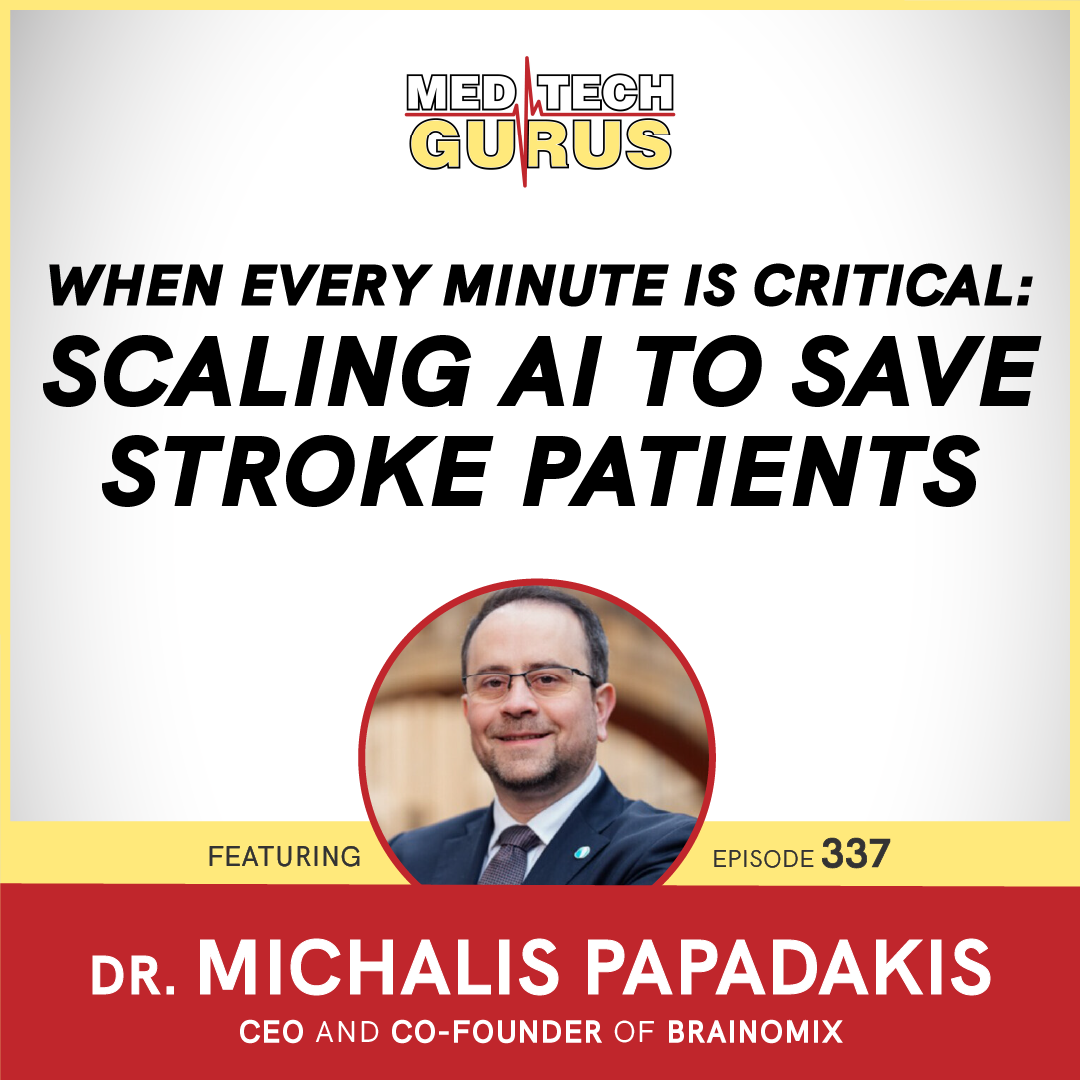
To gain physician trust, AI companies must move beyond proving their algorithm is accurate. The gold standard is large-scale clinical evidence demonstrating tangible improvements in patient outcomes, treatment rates, and decision-making speed.
The standard for success in enterprise software sales is no longer simply implementing the system. Driven by the high stakes of AI, customers now demand proof of tangible business outcomes and value, forcing a fundamental change in sales pitches away from features and timelines to demonstrating concrete ROI.