Get your free personalized podcast brief
We scan new podcasts and send you the top 5 insights daily.
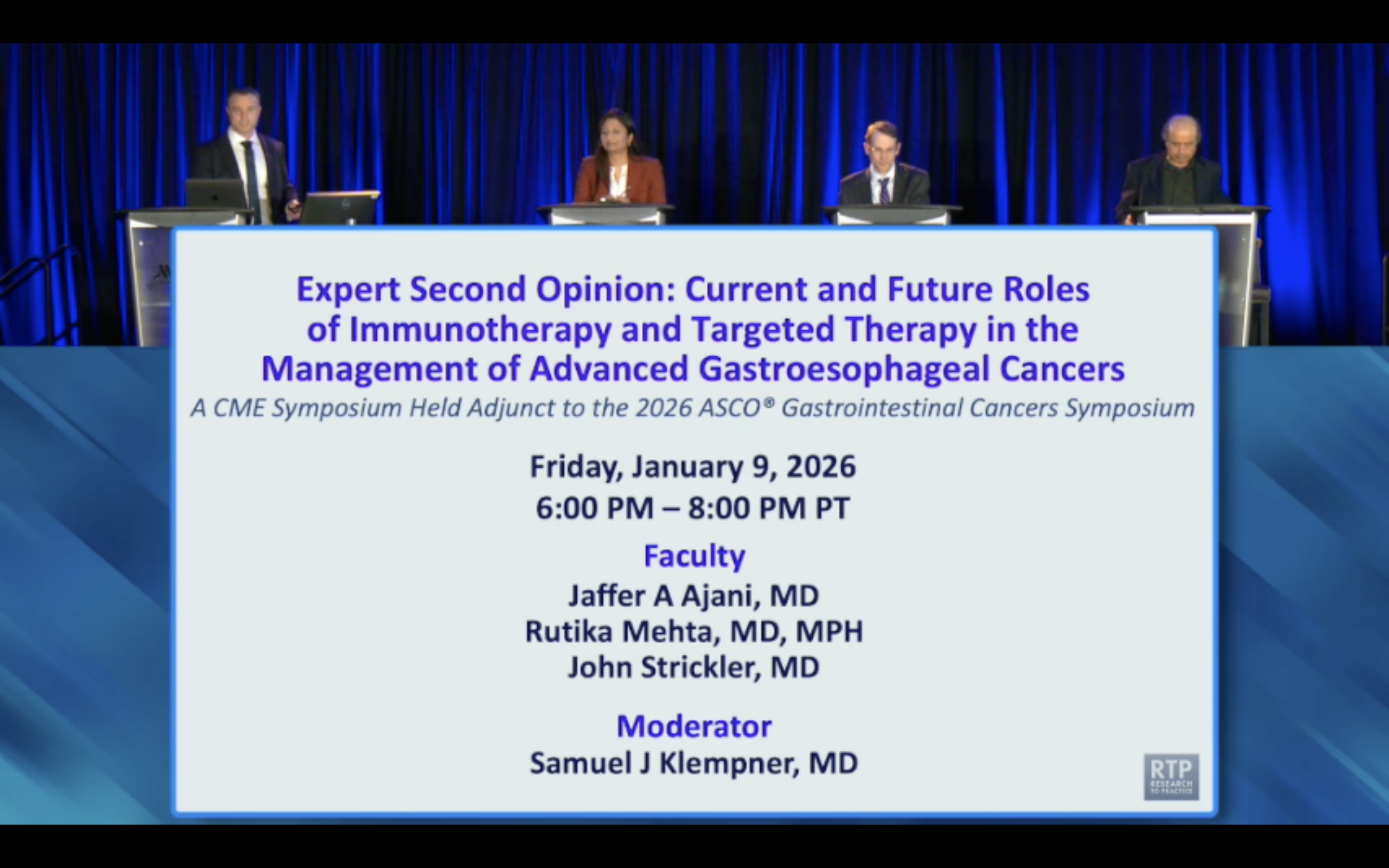
In urgent clinical scenarios with very sick patients, chemotherapy remains the core initial treatment. Targeted or immunotherapies can be added later once results for key biomarkers like MSI, HER2, PD-L1, and CLDN18.2 are available. This prioritizes immediate patient stability over a delayed precision approach.

Related Insights
A modern strategy for localized MSI-high gastroesophageal cancer is to begin with dual immune checkpoint blockade. Clinicians can then perform an early response assessment and pivot to chemoimmunotherapy if the initial response is suboptimal, allowing for a flexible, response-adapted approach.
When a lung cancer patient is too symptomatic to wait for genomic testing results, the expert consensus is to initiate treatment with chemotherapy alone. Adding immunotherapy upfront is ill-advised, as its use in EGFR-mutated patients (a common finding) can be detrimental.

Experts favor a Nivolumab plus Ipilimumab (NIVO+EP) combination for newly diagnosed, MSI-high, stage IV gastroesophageal cancer patients who can tolerate it. This approach avoids chemotherapy and yields high, sustained response rates, including potential for complete pathologic responses in metastatic settings.

To maximize the chances of successful biomarker identification from a liquid biopsy, especially when tissue is scant, the blood sample must be drawn before initiating any chemotherapy. This pre-treatment timing is critical for improving the diagnostic yield of blood-based next-generation sequencing (NGS) testing.
In the increasingly common scenario of gastric cancer with multiple biomarkers (HER2, PD-L1, Claudin), experts recommend a clear hierarchy. Based on data maturity, HER2-targeted therapy is the first choice, followed by PD-L1 immunotherapy, with Claudin-targeted therapy third.

For acutely ill patients with strong clinical suspicion of SCLC, delaying treatment for biopsy confirmation can mean losing the window for effective intervention. Initiating chemotherapy in the hospital based on clinical presentation is a critical, potentially life-saving measure.

For highly symptomatic gastric cancer patients needing rapid cytoreduction, oncologists may initiate treatment with chemotherapy alone. This approach aims to quickly control the disease and avoids confounding potential drug toxicities with rapid progression before adding biomarker-driven agents.
For MSI-high gastric cancer, a sophisticated first-line approach is to start with combination chemo-immunotherapy (e.g., FOLFOX + nivolumab) but with a pre-planned, low threshold to discontinue chemotherapy after a few cycles. This strategy aims to achieve a rapid response while minimizing chemotherapy toxicity.

Recognizing the rapid progression of SCLC, modern clinical trials like PRISM are adopting pragmatic designs. They allow patients to begin initial chemotherapy cycles before official enrollment, ensuring that the need for immediate care does not disqualify them from accessing novel investigational therapies.
In the increasingly common scenario of a patient with multiple positive biomarkers, a clear hierarchy exists for treatment decisions. Based on the robustness and maturity of clinical trial data, HER2-directed therapy is the top priority, followed by PD-L1 immunotherapy, with Claudin-18.2 targeting considered third.