Get your free personalized podcast brief
We scan new podcasts and send you the top 5 insights daily.
General large language models trained on internet data lack life sciences patterns, resulting in low accuracy when forecasting clinical trial success. Post-training models on millions of longitudinal patient records and historical trials enables accurate predictions of medical outcomes and adverse events.

Related Insights
Unlike image recognition or NLP, clinical trial data possesses a unique and complex mathematical geometry. According to Dr. Juraji, this means generic AI models are insufficient. Solving trial failures requires specialized AI built to navigate this specific, difficult data landscape.
The biggest limitation in precision medicine is the systemic failure to capture and learn from longitudinal data on how patients respond to treatments over time. Without this critical feedback loop, even the most sophisticated diagnostic models will fall short of their potential to improve care.

Advanced AI models are ineffective in clinical settings without a robust data layer. Ambience had to solve fundamental problems like pulling messy context from inconsistent EHRs and preserving 'decision traces,' which are often destroyed by existing systems with mutable data structures.

While molecular foundation models optimize drug candidates in silico, they cannot foresee human clinical outcomes. By running protocol criteria against cohorts of simulated real-world patients, study teams can forecast average endpoint effects and adverse event probabilities before enrolling patients.
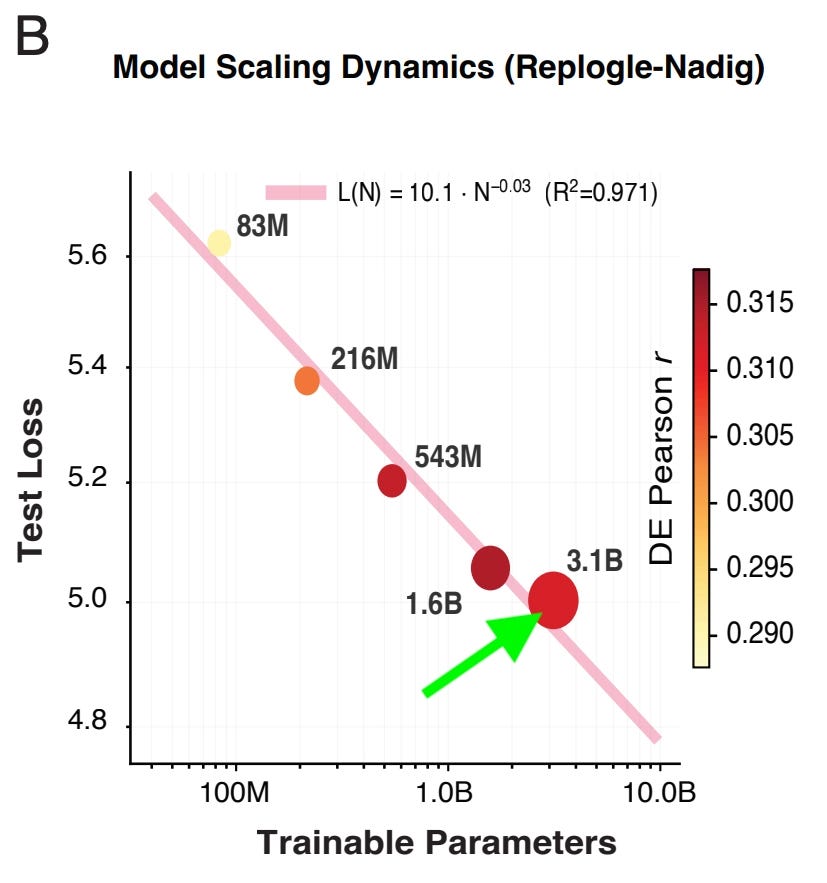
Standard AI models trained on public, observational biological data excel at descriptive tasks but underperform even linear models on causal predictions. To predict cellular responses to drug-like perturbations, models must be trained specifically on causal data generated from targeted experiments.
Just as language models use embeddings to predict the next token, life sciences models map patients, diseases, and endpoints into relational vectors. This internal world model allows algorithms to forecast sequential health events, disease diagnoses, and patient-specific biomarker responses to targeted therapies.
Current medical AI relies on electronic health records, which capture only infrequent snapshots of a person's health. The next breakthrough will come from companies that create new, continuous data rails by engaging with patients longitudinally, generating proprietary "N-of-one" datasets for superior models.

A major misconception is that general-purpose Large Language Models (LLMs) can be readily applied to complex biological problems. Biological data, like RNA sequencing, constitutes a unique language that requires custom-built foundation models, not simply fine-tuning of existing LLMs.
Large biopharma companies have failed when attempting to use generalist large language models (LLMs) for deal scouting. These models lack the specialized focus and curated data required for the industry, leading to inaccurate results, disappointment, and ultimately, abandoned internal AI projects.
Frontier AI models excel in medicine less because of their encyclopedic knowledge and more because of their ability to integrate huge amounts of context. They can synthesize a patient's entire medical history with the latest research—a task difficult for any single human. This highlights that the key to unlocking AI's value is feeding it comprehensive data, as context is the primary driver of superhuman performance.
