Get your free personalized podcast brief
We scan new podcasts and send you the top 5 insights daily.
Specialized AI cloud providers like CoreWeave face a unique business reality where customer demand is robust and assured for the near future. Their primary business challenge and gating factor is not sales or marketing, but their ability to secure the physical supply of high-demand GPUs and other AI chips to service that demand.

Related Insights
Firms like OpenAI and Meta claim a compute shortage while also exploring selling compute capacity. This isn't a contradiction but a strategic evolution. They are buying all available supply to secure their own needs and then arbitraging the excess, effectively becoming smaller-scale cloud providers for AI.

By funding and backstopping CoreWeave, which exclusively uses its GPUs, NVIDIA establishes its hardware as the default for the AI cloud. This gives NVIDIA leverage over major customers like Microsoft and Amazon, who are developing their own chips. It makes switching to proprietary silicon more difficult, creating a competitive moat based on market structure, not just technology.

Instead of bearing the full cost and risk of building new AI data centers, large cloud providers like Microsoft use CoreWeave for 'overflow' compute. This allows them to meet surges in customer demand without committing capital to assets that depreciate quickly and may become competitors' infrastructure in the long run.
NVIDIA promised to buy any of CoreWeave's unused cloud service availability. This unusual arrangement, while helping CoreWeave secure debt financing, makes it difficult for investors to gauge real, organic market demand for its services, potentially hiding early signs of a market slowdown.

Unlike the speculative "dark fiber" buildout of the dot-com bubble, today's AI infrastructure race is driven by real, immediate, and overwhelming demand. The problem isn't a lack of utilization for built capacity; it's a constant struggle to build supply fast enough to meet customer needs.
Hyperscalers face a strategic challenge: building massive data centers with current chips (e.g., H100) risks rapid depreciation as far more efficient chips (e.g., GB200) are imminent. This creates a 'pause' as they balance fulfilling current demand against future-proofing their costly infrastructure.

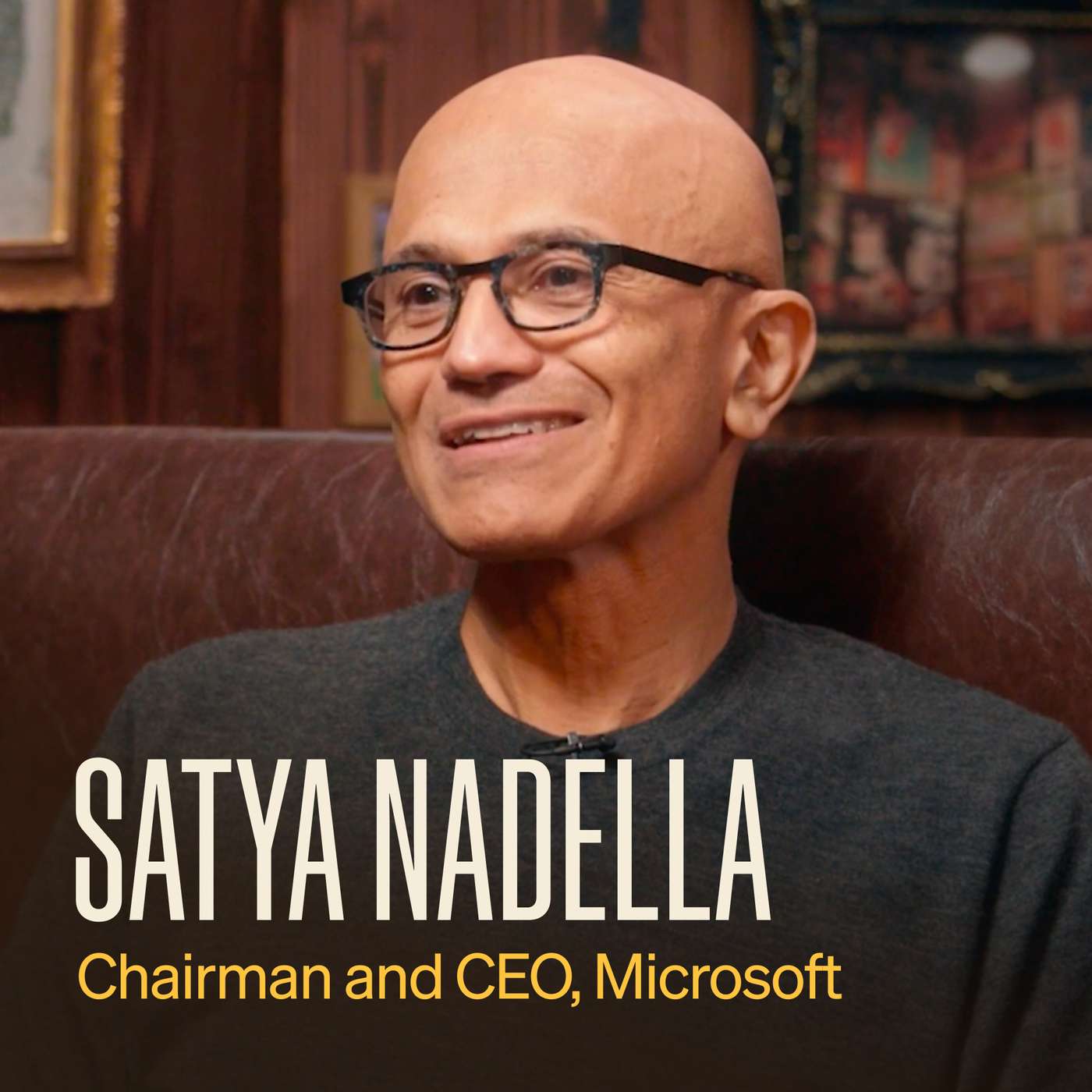
Satya Nadella clarifies that the primary constraint on scaling AI compute is not the availability of GPUs, but the lack of power and physical data center infrastructure ("warm shelves") to install them. This highlights a critical, often overlooked dependency in the AI race: energy and real estate development speed.
NVIDIA is not just a supplier and investor in CoreWeave; it also acts as a financial backstop. By guaranteeing it will purchase any of CoreWeave's excess, unsold GPU compute, NVIDIA de-risks the business for lenders and investors, ensuring bills get paid even if demand from customers like OpenAI falters.
As hyperscalers build massive new data centers for AI, the critical constraint is shifting from semiconductor supply to energy availability. The core challenge becomes sourcing enough power, raising new geopolitical and environmental questions that will define the next phase of the AI race.

Companies like CoreWeave collateralize massive loans with NVIDIA GPUs to fund their build-out. This creates a critical timeline problem: the industry must generate highly profitable AI workloads before the GPUs, which have a limited lifespan and depreciate quickly, wear out. The business model fails if valuable applications don't scale fast enough.