Get your free personalized podcast brief
We scan new podcasts and send you the top 5 insights daily.
For new medical technologies to be adopted in over-burdened systems like the NHS, proof of efficacy in a lab is insufficient. The 'real acid test' is demonstrating that the technology works on the front lines of a busy, complex hospital. This real-world evidence is essential for gaining buy-in from skeptical staff.

Related Insights
The main obstacle to better antimicrobial resistance (AMR) management is not a technological deficit. Advanced diagnostics exist, but healthcare systems struggle to implement them. The key is generating real-world evidence and health economic data to convince policymakers and change clinical practice.
Being patient-centered is necessary but insufficient for adoption. Technology in healthcare must be seamlessly embedded into a physician's existing, time-constrained workflow. Great tech that adds friction will be ignored, regardless of its potential patient benefit.

Many therapies fail to meet real-world expectations because they are designed for the lab, not life. Innovations focus on clinical efficacy, which drives only 20% of health outcomes, while ignoring the 80% driven by crucial psychological, social, and environmental factors.

While SmallTap's higher clinical success rate is key, its adoption is driven by benefits to multiple stakeholders. The messaging highlights reduced physical strain on nurses, lower stress for doctors, and a clear financial ROI for hospitals by avoiding unnecessary admittances.
Even with advanced imaging for diseases like Alzheimer's, adoption stalls if diagnostic results don't change patient management. Physicians won't use a test that answers an academic question but doesn't lead to an effective treatment, rendering the technology clinically irrelevant without answering the 'so what?' question.

MedTech's data-driven culture fosters a false belief that strong clinical data is sufficient to drive adoption. In reality, all humans—including surgeons—make decisions emotionally first. Data's primary role is not to create initial belief but to provide rational validation for a change the market has already been primed to make.

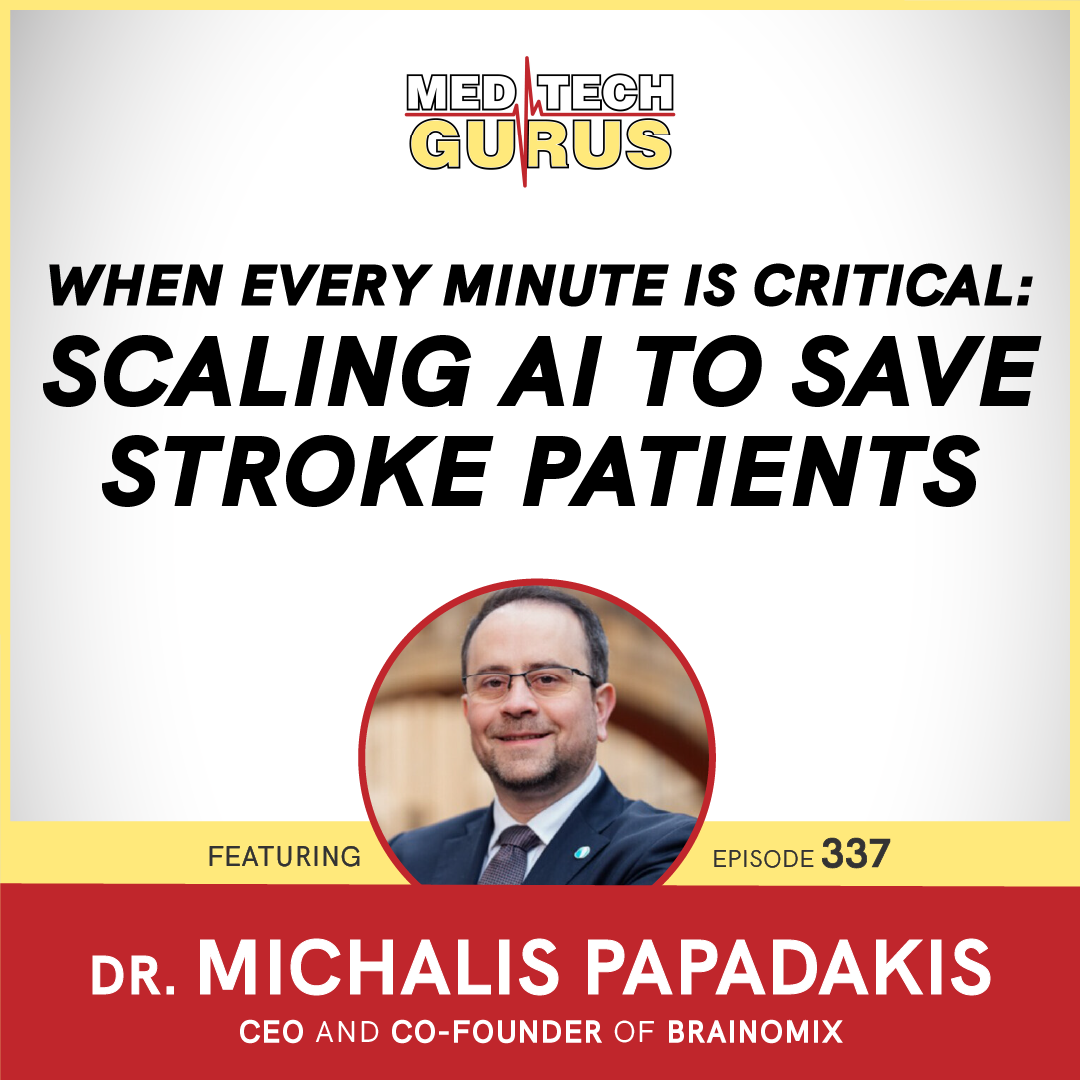
To gain physician trust, AI companies must move beyond proving their algorithm is accurate. The gold standard is large-scale clinical evidence demonstrating tangible improvements in patient outcomes, treatment rates, and decision-making speed.
The next wave of MedTech innovation won't just come from engineers. It will come from creating tools that allow surgeons and clinicians—those who see problems firsthand—to easily prototype and de-risk new device concepts, vastly expanding the market for innovation itself.
Many MedTech companies mistakenly believe a clinically superior product will automatically win market share. This is false. Market adoption is not automatic; it must be designed as intentionally as the product itself to overcome the powerful inertia of the status quo and make the market mentally ready for change.
Implementing technology is just the start. Most healthcare organizations fail by abandoning projects post-launch. True adoption requires a continuous feedback loop with end-users like doctors and nurses to evaluate use cases, identify pain points, and iteratively improve the solution.
