Get your free personalized podcast brief
We scan new podcasts and send you the top 5 insights daily.
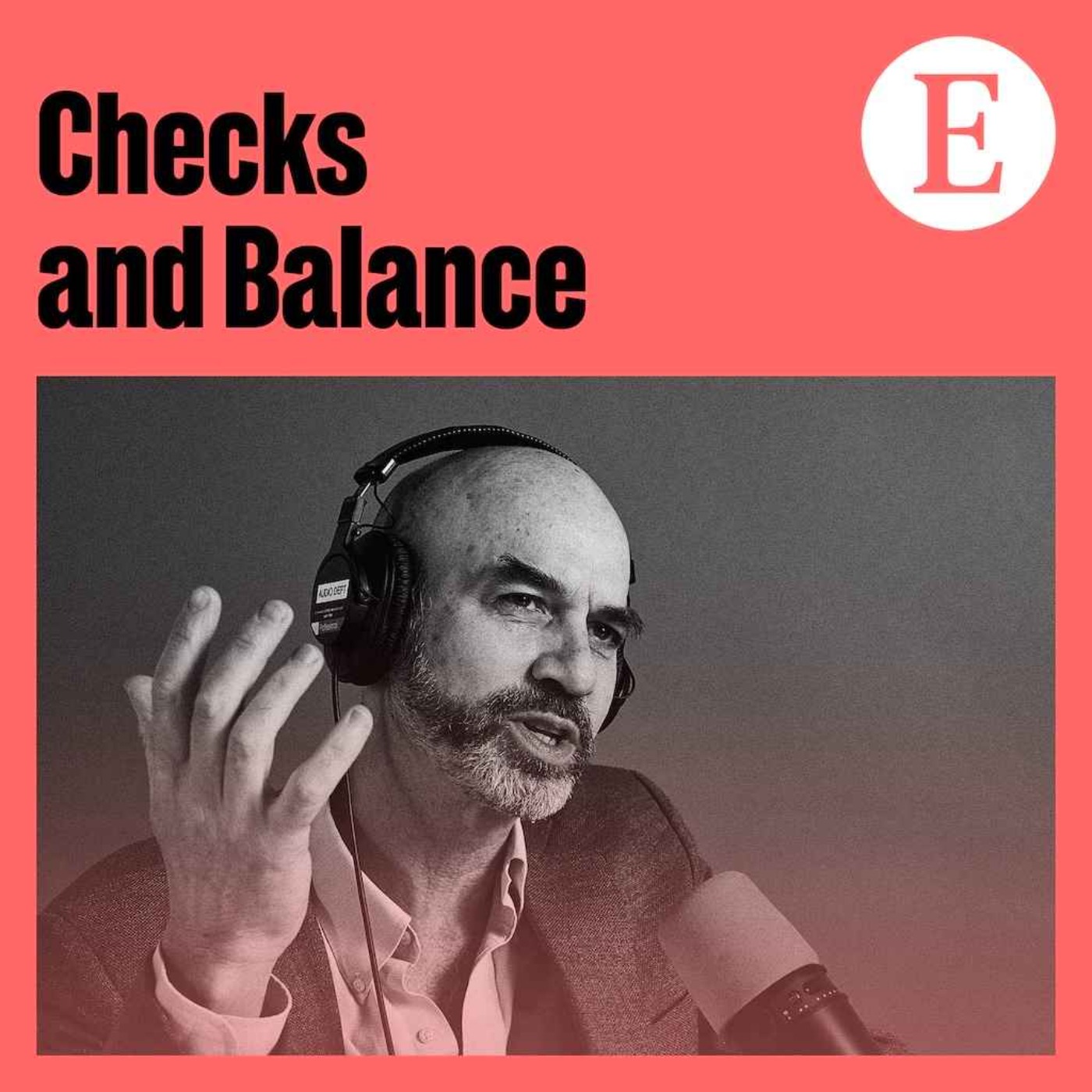
The 'Checks and Balance' podcast differentiates itself by combining data-driven context, a willingness to offer 'unconventional perspectives,' and a critical filter for political rhetoric, which it calls the 'BS o meter.' This creates a unique value proposition for listeners seeking nuanced analysis.
Related Insights
View podcasting as a powerful educational medium, like the printing press for audio. This mindset shifts the focus from pure entertainment to creating timeless, valuable content that educates an audience, fostering a deeper, more loyal connection.

The trailer rapidly cycles through welcoming notable experts by name. This "show, don't tell" audio technique serves as a powerful and concise form of social proof, demonstrating the show's high-level access without needing to explicitly state its credentials.

The show explicitly rejects an adversarial stance against legacy media, instead using their reporting as a foundation for conversational content. This symbiotic approach enriches their program and acknowledges their reliance on established journalism for fact-finding and analysis, creating a more robust content ecosystem.

Instead of promising generic economic analysis, the podcast trailer uses concrete, intriguing story hooks like US land value vs. politics or AI vs. Amazon. This strategy makes complex macro topics feel accessible and urgent, attracting a broader audience.
Scott Galloway posits that the show's non-extremist stance makes it unpalatable to social media and content algorithms designed to promote polarizing material. This positions their content as a deliberate choice for listeners, implying it won't be surfaced automatically and must be actively sought out by those tired of algorithm-driven rage bait, turning a distribution challenge into a feature.

In an era of AI-generated 'slop' and widespread misinformation, trusted media brands can no longer compete on content alone. Host Nilay Patel argues that the key value proposition is the brand's transparent, ethical process—the policies, fact-checking, and standards—which guarantees reliability to the audience.

Swisher defends her sharp commentary by stating it's not opinion but "reported analysis." She gathers facts and data to form a conclusion, like predicting Webvan's failure based on its flawed math. This framework allows creators to have a strong voice while maintaining journalistic credibility rooted in evidence.

The podcast 'Checks and Balance' offers unconventional perspectives, such as the idea that the Supreme Court's issue isn't partisanship but a lack of political engagement. This reframes a common debate by suggesting a need for more political savvy, not less.
Unlike traditional media's short, confrontational interviews, long-form podcasts allow public figures to have extended, nuanced conversations (e.g., three hours on Joe Rogan). This reveals a more human side and can significantly shift public perception.

The podcast trailer signals its storytelling approach by mixing macro topics like AI and party agendas with tangible, on-the-ground reporting snippets, such as riding in a flying taxi. This method makes complex geopolitical issues relatable and accessible through personal, human-scale stories.