Get your free personalized podcast brief
We scan new podcasts and send you the top 5 insights daily.
When asked about the next trillion-dollar healthcare company, venture capitalist Bob Nelsen stated he couldn't name one. He believes Eli Lilly's market dominance is so strong that it is more probable for them to double their valuation than for any other healthcare peer to reach that milestone first.

Related Insights
VC Bob Nelsen argues that even if large pharma companies appropriate ideas or gain leverage over US biotech, their financial success is ultimately beneficial. Profitable pharma companies must deploy massive cash reserves, much of which flows back into the biotech ecosystem through M&A, funding the next generation.
Tirzepatide is a rare "once in a blue moon" drug because it is both more potent and better tolerated than its main competitor. This paradoxical profile—achieving superior efficacy with fewer side effects—has established it as the "king of the hill" in the obesity market and created an extremely high bar for any challenger.

While patents are important, a pharmaceutical giant's most durable competitive advantage is its ability to navigate complex global regulatory systems. This 'regulatory know-how' is a massive barrier to entry that startups cannot easily replicate, forcing them into acquisition by incumbents.
The financial health and confidence of major pharmaceutical companies have a direct 'trickle down' effect on the entire biotech industry. When large pharma firms are cash-rich and actively pursuing acquisitions, it boosts valuations and funding opportunities for publicly traded biotechs, startups seeking venture capital, and the entire value chain.
To fix the R&D funding imbalance, the CEO proposes a 'one fair price' system. A drug would have one US price with no rebates, and a price in other developed nations would be indexed to their GDP per capita.
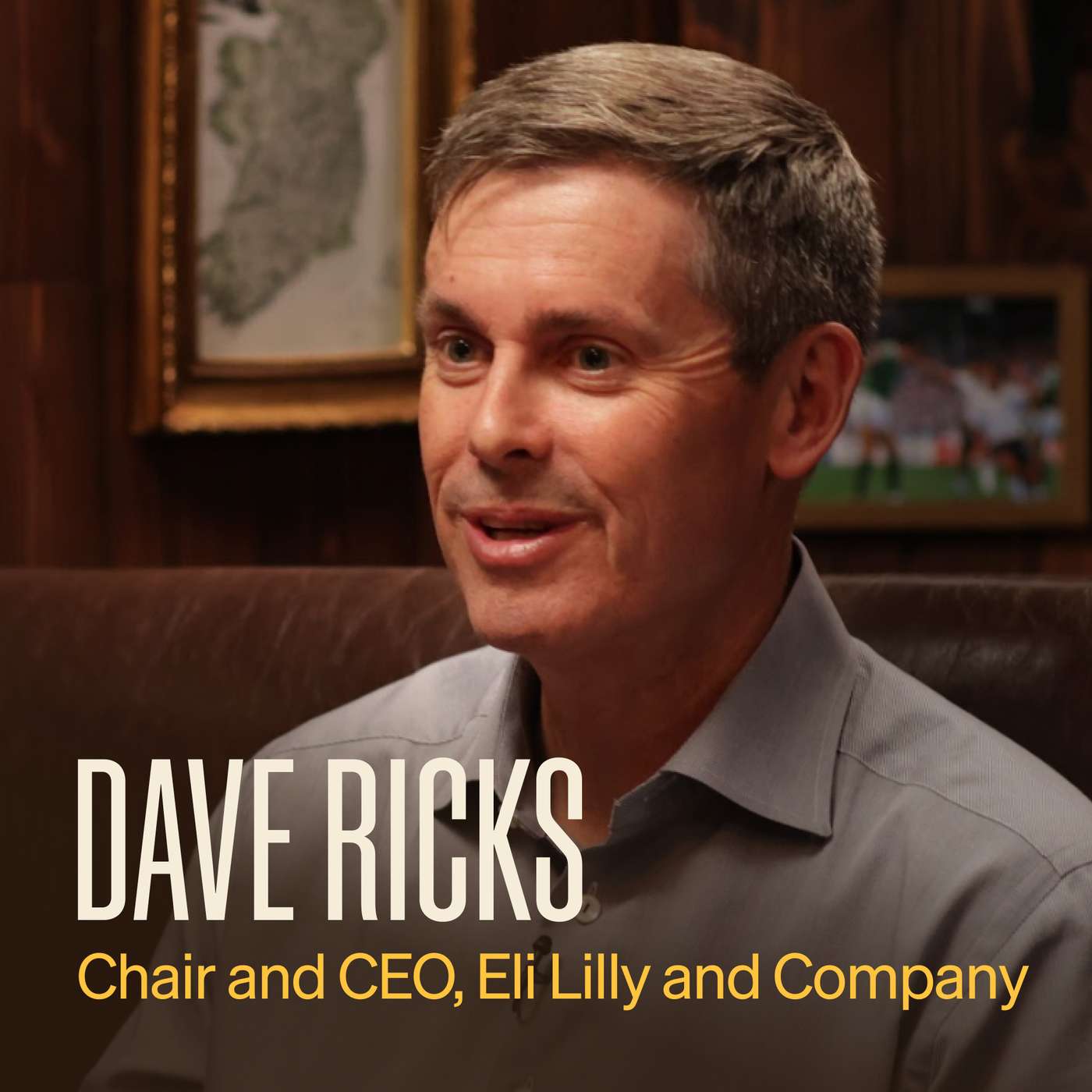
The long-held belief that solving obesity would create immense wealth is now validated by Eli Lilly's $1T market cap, driven by its GLP-1 weight-loss drugs. This marks a significant shift, as the trillion-dollar club was previously dominated by tech and oil companies.

Bob Nelsen believes the industry overestimates AI's short-term impact and underestimates its long-term potential. He predicts that once a critical data threshold is met, AI models won't just accelerate drug discovery but will fundamentally invent new biology, creating a sudden, paradigm-shifting moment.
With trillion-dollar IPOs likely, the old model where early VCs win by having later-stage VCs "mark up" their deals is obsolete. The new math dictates that significant ownership in a category winner is immensely valuable at any stage, fundamentally changing investment strategy for the entire industry.

Pharmaceutical companies are engaging in lengthy negotiations with US biotech startups while simultaneously exploring cheaper, faster assets in China. This creates negotiation leverage and puts downward pressure on valuations and deal terms for US-based innovators.
A key part of Eli Lilly's R&D strategy is tackling large-scale health problems that currently have no treatments and therefore represent a 'zero-dollar market.' This blue-ocean strategy contrasts with competitors who focus on areas with established payment pathways.