Get your free personalized podcast brief
We scan new podcasts and send you the top 5 insights daily.
The adverse reaction to menin inhibitors is not limited to typical differentiation syndrome (DS) pulmonary symptoms. It presents as a broad 'menin syndrome' with diverse manifestations like bone pain, rashes, and swollen lymph nodes, requiring a new diagnostic framework for clinicians.

Related Insights
The differentiation syndrome (DS) from menin inhibitors is often more severe and rapid than seen with other AML drugs. It can escalate into a "crisis" with DIC and heart failure, requiring an immediate drug pause, steroids, and potentially cytoreduction.

When patients on menin inhibitors show worsening symptoms in early weeks, it's hard to distinguish disease progression from differentiation syndrome. The recommended clinical strategy is to default to treating for differentiation syndrome first, as it may be a manageable side effect rather than treatment failure.
Differentiation syndrome with menin inhibitors is more frequent and intense than with IDH inhibitors, meaning clinicians cannot be complacent. It requires an emergency-level response: immediate hospital admission, steroids, holding the drug, and a low threshold to escalate treatment with cytarabine if needed.
Initial studies combining menin inhibitors with venetoclax/azacitidine showed high remission rates but also high mortality. Using each agent at its full, 28-day dose caused severe, fatal myelosuppression, forcing protocol amendments to shorten drug exposure to manage toxicity.
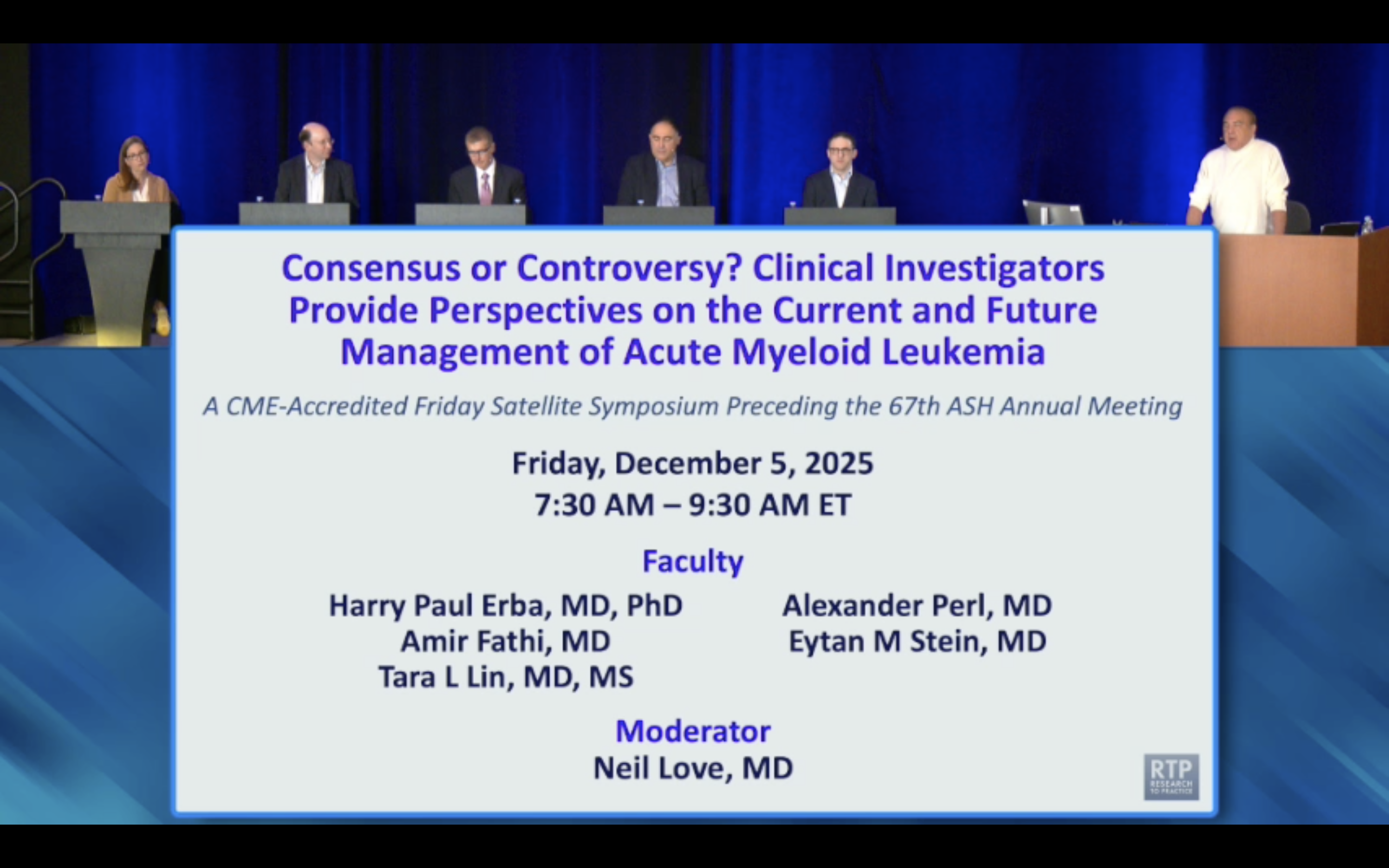
The differentiation syndrome with menin inhibitors can be far more severe than with other agents, manifesting as a life-threatening, HLH-like state with massive inflammatory marker elevation (e.g., ferritin >300,000) that may be unresponsive to high-dose steroids.
Preclinical data and early clinical findings suggest menin inhibitors could be effective against rare NUP98-rearranged leukemias. This is based on similarities in downstream pathways to the approved KMT2A and NPM1 mutations, hinting at a broader mechanism of action for this drug class.

Combining menin inhibitors with intensive chemotherapy can decrease the risk of differentiation syndrome, a severe side effect. The chemotherapy debulks the tumor, reducing the number of malignant cells available to cause this inflammatory reaction when they differentiate, improving tolerability.

The activity of menin inhibitors is not strictly limited to patients with KMT2A or NPM1 mutations. Emerging data shows responses in patients with rare NUC98 rearrangements and those with a specific HOXA9 transcriptome signature, suggesting a wider potential use.
When menin inhibitors are combined with a chemotherapy backbone like induction or Aza/Ven for newly diagnosed AML, the risk of differentiation syndrome (DS) is significantly lower than when they are used as monotherapy in the relapsed setting.
Because menin inhibitors work by inducing cell differentiation rather than immediate cell death, clinicians must not expect rapid blast clearance. Complete remission may take two or more cycles to achieve, a significant departure from cytotoxic therapy timelines.