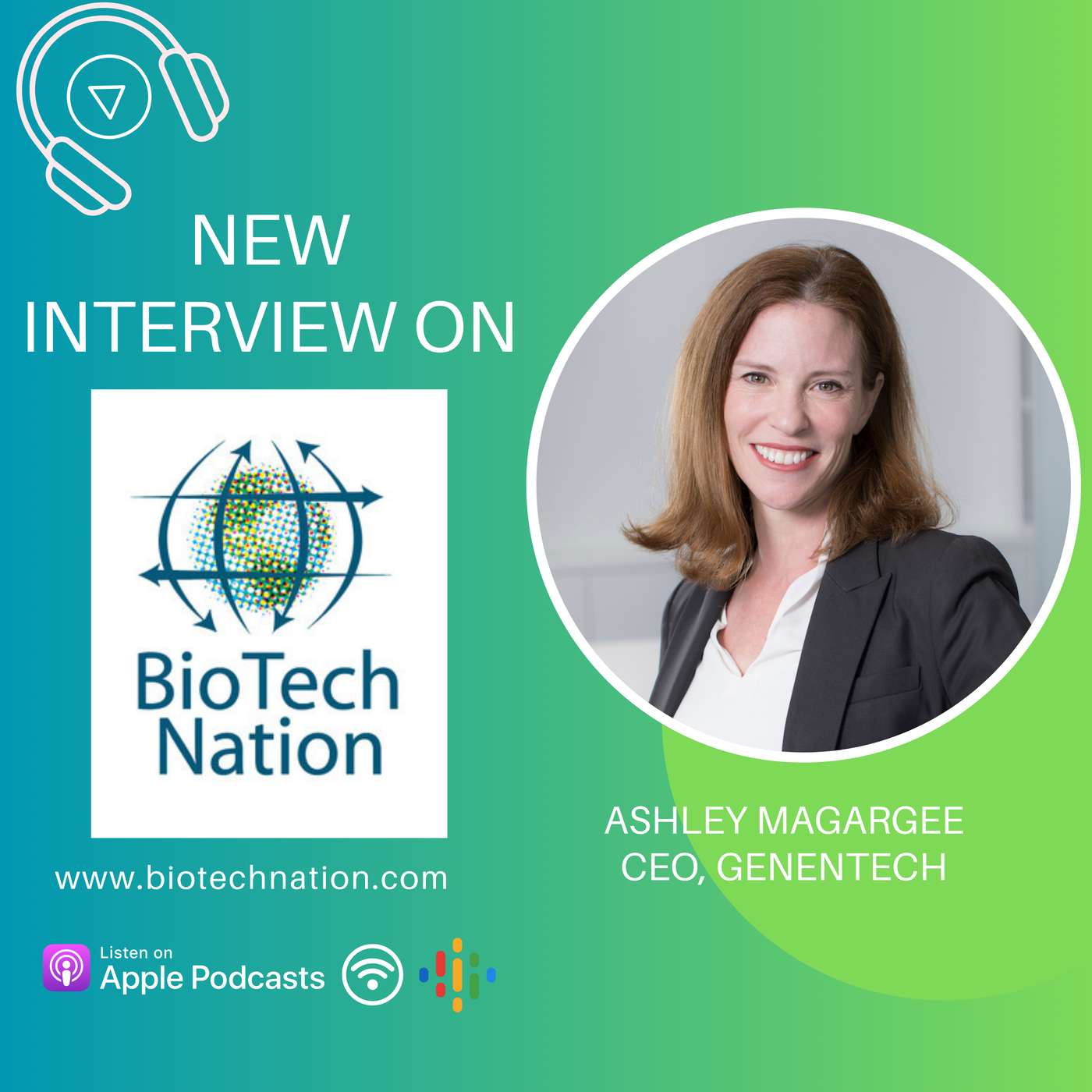
After acquiring Genentech in 2009, Roche made the radical decision to shut down its established New Jersey site and relocate staff to California. This protected Genentech's unique, entrepreneurial culture, demonstrating a "do no harm" approach to acquiring innovative companies, described as not wanting to "kill the golden goose."
CEO Ashley Magargee's career pivoted from education to biotech after her experience as an assistant principal in Harlem. Witnessing students constantly miss school for sickle cell crises convinced her that health is more foundational than education for a better life, providing a powerful, mission-driven motivation for her work.
Genentech uses an iterative AI model where an algorithm predicts an experiment, scientists run it in a wet lab, and the results are fed back to improve the model. This human-in-the-loop system has dramatically increased R&D productivity, cutting molecule design time from a typical 36 months down to just 10.
The company's approach to Alzheimer's is a complete system, not just a drug. By leveraging Roche's diagnostic arm, they are pairing a new treatment with a simple, blood-based biomarker test for primary care physicians. This strategic pairing enables earlier patient identification, creating a more effective and accessible treatment paradigm.
Genentech tackles affordability with a multi-pronged approach beyond pricing. They provide a call center to help patients navigate insurance, offer free medicine through a foundation, and re-engineer drugs for at-home administration, aiming to shift 75% of their portfolio out of hospital settings and into patients' living rooms.
The CEO's favorite company t-shirt, reading "Clone or Die," originated from the company's existential race to synthesize human insulin. This phrase is a powerful cultural artifact that symbolizes the intense, do-or-die urgency and patient focus that has been core to Genentech's identity since its founding days.